
24/7 Customer Support

Free returns

Same-day & Next-day Delivery

Quality Guaranteed

Unlock Your Welcome Offers: FREE Delivery | Up to 80% OFF | Free 30-day JoyPlus trial
Download the APP
Preparing meals at home can become frustrating when an appliance is too small for a family batch, difficult to clean or advertised for ingredients it cannot safely handle. The right kitchen food preparation appliances should match your ingredients, cooking frequency, available storage and preferred level of control.
Before choosing an electric food chopper, vegetable chopper, mini food processor or grinder, look beyond headline wattage and long feature lists. Several common buying traps can lead to unnecessary expense.
A larger wattage figure does not automatically mean an appliance can process coffee beans, ice, bones or frozen food. Motor design, blade construction, operating limits and suitable ingredients matter just as much.
For example, the BEAR QSJ-D03W5 has a 300W motor and two speeds, but its instructions specifically exclude dry ingredients such as coffee beans and grains, as well as bones, ice cubes and frozen food. It is designed for chopping meat and vegetables instead.
A compact appliance can save cupboard space, but a small bowl may require several batches for a family meal. Conversely, a 2L bowl may be inconvenient if you usually prepare only herbs, garlic or a small dip.
Consider the quantity you normally prepare for weekday meals, packed lunches and batch cooking. Bowl capacity should be useful rather than simply impressive on a product page.
Removable blades and dishwasher-safe parts can simplify maintenance, but the motor housing usually must remain dry. Some metal attachments also need hand washing to prevent discolouration or corrosion.
Check whether the bowl, blade, grinder head and accessories can be removed, and read the cleaning instructions before buying. Sharp components should always be handled carefully, even when the appliance appears simple.
Power is most useful when considered alongside the appliance’s operating instructions. A food chopper with a 300W motor may be suitable for vegetables, herbs and prepared meat, while a meat grinder needs appropriate cutting discs, feeding space and cooling breaks for repeated batches.
The BEAR chopper permits up to 40 seconds of continuous operation, followed by at least a two-minute interval. After three consecutive cycles, it requires a 15-minute cooling period. These limits are important for home meal preparation because ignoring them can put unnecessary strain on the motor.
For electric appliances sold for UK use, check the stated 220–240V supply, plug format, user instructions and responsible-person information. Do not use an appliance outside its specified electrical or ingredient requirements.
Look for clearly stated materials rather than vague wording such as “premium cutting system”. Stainless steel blades are commonly used for chopping and slicing, while coffee grinders use burrs designed specifically for coffee beans.
A vegetable chopper may include several blade styles for slicing, dicing, grating and julienne cuts. A manual food chopper with rotating blades offers a different experience from an electric model: it avoids electricity and can provide direct control, but it requires repeated hand movement.
Coffee grinders should not be substituted with general-purpose food processors. The STARSEEKER models listed here are intended for coffee beans only, and their safety instructions warn against grinding spices, grains, nuts or other materials.
Two speeds or a pulse function can help you control texture, especially when moving from a coarse chop to a finer consistency. Transparent bowls also make it easier to monitor progress without repeatedly opening the lid.
For small kitchens, a mini food processor such as the Kenwood CH180B offers a 350ml bowl, two speeds and a pulse function. Its bowl and stainless steel blade are listed as dishwasher safe, although its motor must still be kept away from water.
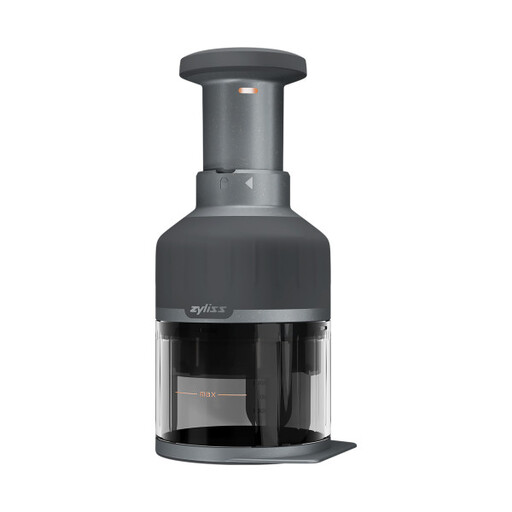
Why This Fits Their Persona: Its push-down mechanism requires no electricity, making it suitable for quick chopping in flats, student kitchens and households that prefer a simple manual food chopper.
It avoids motor limits, electrical setup and continuous-run concerns. Users can see the ingredients in the clear container while chopping.
Push-down operation; stainless steel rotating blades; suitable for vegetables, herbs and nuts according to the product description.
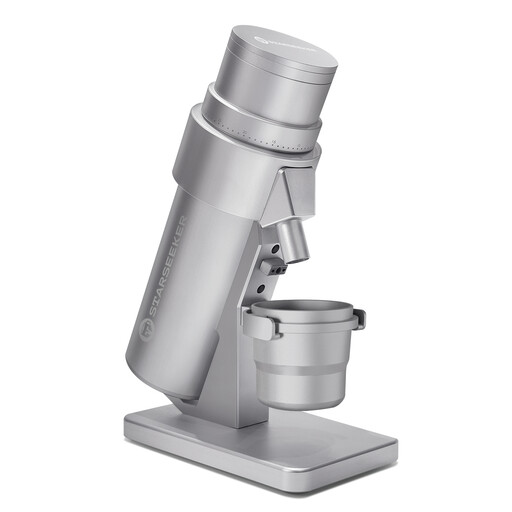
Why This Fits Their Persona: Coffee lovers who prepare espresso or pour-over coffee at home may prefer a dedicated grinder rather than a general-purpose chopper.
Its stated use is coffee-bean grinding, avoiding the mistake of using a food chopper for dry coffee beans or grains.
63mm burrs; designed for espresso and pour-over coffee; base and burr area require dry cleaning procedures.
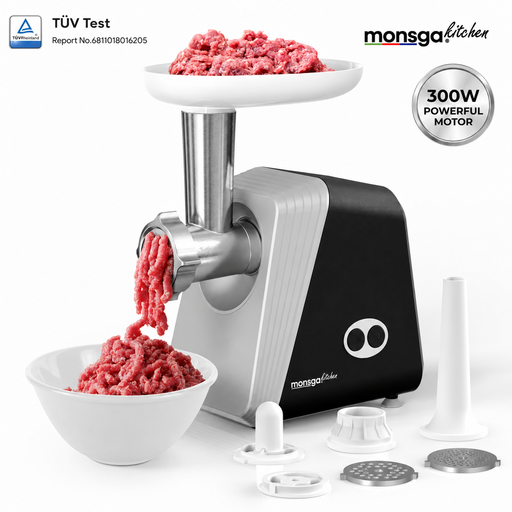
Why This Fits Their Persona: Households preparing burgers, meatballs, sausages or larger home-cooked batches may benefit from a dedicated meat grinder with multiple accessories.
It provides three grinding plates and a reverse function, while its instructions specify cutting meat into small pieces and allowing cooling breaks.
Fine, medium and coarse discs; sausage and kibbeh accessories; removable parts for hand washing.
An electric food chopper is useful when you regularly prepare onions, garlic, vegetables or meat and want to reduce hand effort. A manual model is quieter, easier to store and independent of a socket, but it may be less convenient for repeated or larger batches.
For varied vegetable preparation, a 5-in-1 vegetable chopper can provide slicing, dicing, grating and julienne functions with an integrated collection container. Always use the supplied food pusher or safety guard, as the blades are sharp.
If storage space is the main concern, compare the footprint and bowl capacity of compact kitchen appliances rather than focusing only on motor power. A 350ml mini food processor may suit sauces and garnishes, while a 2L glass-bowl chopper is more suitable for larger vegetable or meat quantities, subject to its operating limits.
We have compiled a complete, real-time list of products that fully satisfy these strict selection criteria and UK safety regulations.
A bowl between 350ml and 1L can suit herbs, garlic, onions, sauces and small portions. If you prepare ingredients for several people or batch cooking, a larger bowl such as 2L may reduce the number of batches.
Not unless the product instructions specifically permit it. General food choppers may be intended for vegetables and meat only. Use a dedicated coffee grinder for beans, and never grind materials excluded by the manufacturer.
There is no single limit for every appliance. Follow the stated duty cycle. For instance, the BEAR QSJ-D03W5 specifies a maximum 40-second cycle with cooling intervals, while the Kenwood CH180B warns against running its motor for more than 30 seconds continuously. Always unplug the appliance before cleaning or changing blades.