
24/7 Customer Support

Free returns

Same-day & Next-day Delivery

Quality Guaranteed

Unlock Your Welcome Offers: FREE Delivery | Up to 80% OFF | Free 30-day JoyPlus trial
Download the APP
Separating food scraps is a simple step towards a more sustainable household, but choosing the right container can be surprisingly tricky. A good kitchen food waste caddy should make your daily routine easier, not add another chore to your list. Yet, many of us end up with a caddy that is smelly, awkward to clean or simply the wrong size for our kitchen.
As a Joybuy Product Recommendation Officer, my role is to help you navigate the options and avoid common purchasing mistakes. Before you buy, be aware of these frequent pitfalls:
To find a durable and practical compost bin for kitchen use, focus on these core features rather than marketing hype.
The ideal capacity depends on your household size and cooking habits. For most individuals or small families in the UK, a 4.5-litre food caddy strikes the right balance. It’s large enough to hold a day or two’s worth of peelings, tea bags and leftovers without taking up excessive space. Before buying, measure the intended spot, whether it’s a countertop compost bin or an under sink kitchen bin. Ensure the footprint is compact enough to keep your primary work surfaces clear.
Look for a caddy made from high-quality, non-porous plastic, such as polypropylene. This material is durable, less prone to staining and won't retain odours after washing. A key feature to check is whether the caddy is easy to wipe down or, even better, dishwasher-safe. A smooth interior with rounded corners, free from awkward crevices, will make cleaning significantly faster and more effective.
A good caddy is defined by its usability. A sturdy, comfortable carry handle is essential for transporting waste to your main council food waste bin or garden compost heap without spills. The lid should be simple to open and close, ideally with one hand, but fit securely enough to contain odours between uses.
Instead of a one-size-fits-all approach, we match products to different household needs. Here are some recommendations based on common user profiles.
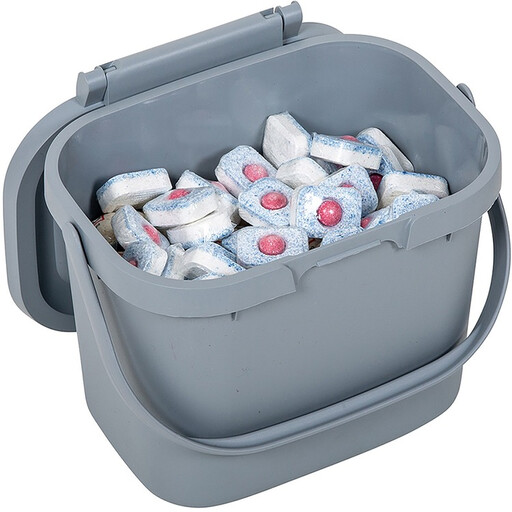
Why This Fits Their Persona: This is a no-fuss workhorse for the busy kitchen. It prioritises function over flair, offering a reliable solution for daily food prep waste. Its neutral colour and simple form fit into any utility space or kitchen without fuss.
It features a simple, solid lid without complex filters, and its 4.5-litre capacity is the ideal size for most households. The durable plastic construction (made from recycled materials) resists staining and odours.
Made from recycled household plastic for a more sustainable choice. Features a robust carry handle for easy transport to outdoor bins.
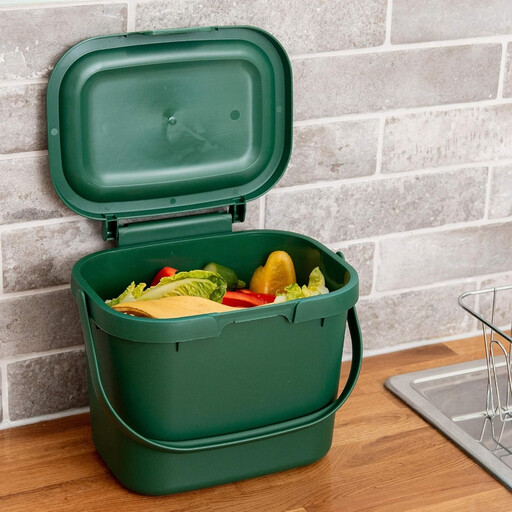
Why This Fits Their Persona: For those who believe utility items should still look good. The modern sage green finish elevates this caddy from a simple bin to a coordinated kitchen accessory that complements contemporary décor.
This caddy proves you don't have to sacrifice style for function. It uses the same practical design and durable, easy-clean plastic as other models in the range, avoiding the common pitfall of prioritising looks over usability.
The attractive colourway blends seamlessly into modern kitchens. Its versatile design also makes it suitable as a small caddy for cleaning supplies.
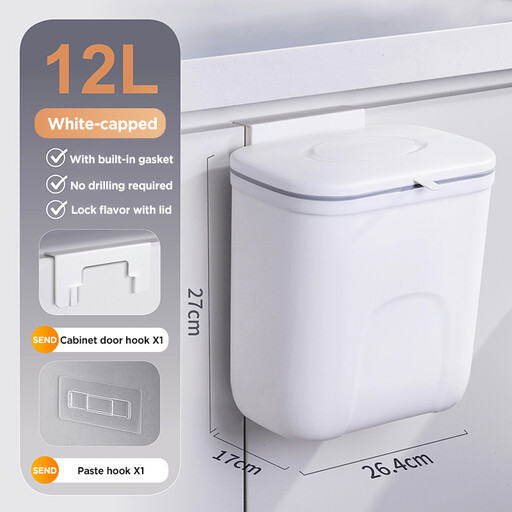
Why This Fits Their Persona: Ideal for those in flats, motorhomes or kitchens with limited worktop space. This bin hangs over a cupboard door, keeping your counters clear while you prep food. The foldable design is a clever feature for ultra-compact living.
It directly solves the "size mismatch" and footprint problem by moving the bin off the counter entirely. This makes it a practical under sink kitchen bin solution that stays out of the way but remains easily accessible.
The wall-mounted or hanging design frees up valuable counter space. Its foldable nature allows it to be collapsed when not in use, perfect for small kitchens.
We have compiled a complete, real-time list of products that fully satisfy these strict selection criteria and UK safety regulations.
For a typical 4-5 litre caddy, it’s good practice to empty it every 1-2 days, or whenever it is full. Regular emptying is the most effective way to prevent odours and keep your kitchen hygienic, especially in warmer weather.
Besides frequent emptying, you can line your caddy with a compostable bag or a sheet of newspaper to absorb moisture. Rinsing the caddy with a bit of vinegar or a solution of water and bicarbonate of soda after emptying can also help neutralise any lingering smells. Ensure the caddy is completely dry before using it again.
This depends entirely on your local council's regulations. Some councils accept all types of compostable liners, some only accept specific brands and others do not accept them at all, preferring you to put food waste directly into the bin. Always check your local council's website for their specific guidelines on food waste collection to avoid your bin being rejected.