
24/7 Customer Support

Free returns

Same-day & Next-day Delivery

Quality Guaranteed

Unlock Your Welcome Offers: FREE Delivery | Up to 80% OFF | Free 30-day JoyPlus trial
Download the APP
A kitchen food waste caddy is a small change that makes a big difference. It streamlines your cooking routine, keeps your main bin cleaner and makes participating in your local council's food waste collection scheme effortless. However, choosing the right one isn't as simple as it seems. A poorly chosen caddy can quickly become a source of odours, pests and frustration.
As the Joybuy Product Recommendation Officer, my role is to help you navigate the options and find a practical solution that genuinely works for your home. Before you buy, let's look at the common pitfalls that lead to buyer's remorse.
To ensure your new kitchen food waste caddy is a help, not a hindrance, focus on these three core parameters.
The ideal material for a food scrap container is a durable, non-porous plastic. It’s lightweight, robust enough for daily use and, most importantly, easy to clean. Unlike some other materials, a smooth plastic surface won't absorb liquids or odours, and a quick wipe-down or rinse is usually all that's needed to keep it hygienic.
For most UK households, a 4.5L food caddy strikes the right balance. It’s large enough to hold a day or two's worth of peelings, tea bags and leftovers without being so big that it encourages waste to sit for too long. Consider where you'll place it. A compact countertop compost bin keeps it within easy reach as you cook, while an under sink food waste bin can save precious counter space. Measure your intended spot before you buy.
Look for a caddy with a simple, functional lid that sits securely but isn't a struggle to open with one hand. A sturdy, integrated carry handle is non-negotiable. It needs to be comfortable to hold and strong enough to carry the caddy to your main compost heap or the kerbside bin for council food waste collection without any risk of breaking.
We've matched some practical options to different household needs, focusing on designs that solve the common problems mentioned earlier.
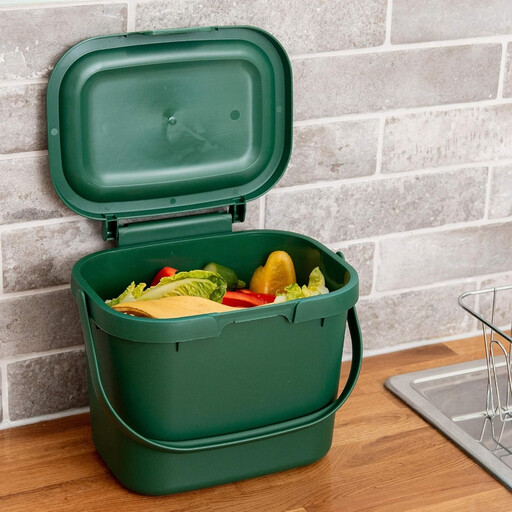
Why This Fits Their Persona: This is a straightforward, no-fuss solution for those who want a reliable countertop caddy for daily scraps. Its classic design and modern sage green kitchen bin colour fit well in most kitchens and it's perfectly sized for regular council collections.
Its 4.5L capacity is the ideal size to avoid leaving waste for too long. The simple, durable plastic construction and integrated carry handle directly address the common failure points of flimsy designs.
It's a multi-purpose kitchen utility caddy. The durable, easy-to-clean plastic and strong handle make it useful for carrying cleaning supplies or other small items, offering great value.
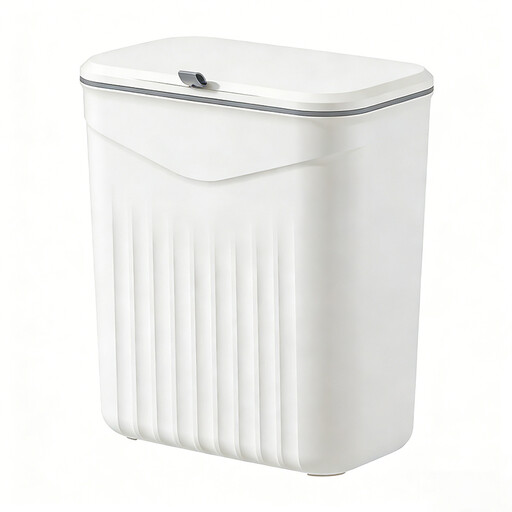
Why This Fits Their Persona: This is for anyone with a smaller kitchen or who simply wants to keep their worktops clear. The hook-mounted design allows it to be hung over a cabinet door, making it an excellent alternative to a countertop or under sink food waste bin.
The flip-top lid is designed to block odours effectively, and its clever placement means you can sweep scraps directly off the counter, improving kitchen hygiene and workflow. It solves the footprint problem entirely.
Its main advantage is ergonomic convenience. There's no need to bend down or open a cupboard to dispose of waste during food prep. The smooth plastic is also simple to remove and clean.
We have compiled a complete, real-time list of products that fully satisfy these strict selection criteria and UK safety regulations.
To prevent odours and pests like fruit flies, it is advisable to empty your caddy every one to two days, particularly during warmer months. A capacity of around 4-5 litres is generally well-suited for this frequency in an average household.
This depends on the specific product. Most modern, high-quality plastic caddies are designed to be dishwasher safe for a thorough clean. However, you should always check the manufacturer's care instructions. For daily maintenance, a quick rinse and wipe with a damp cloth and mild detergent is usually sufficient.
While not always mandatory, using compostable liners is highly recommended. They make emptying the caddy a much cleaner and more hygienic process and they help keep the container itself free from residue. It's a good idea to check your local council's specific guidelines, as some have requirements regarding the type of liners that can be used.