
24/7 Customer Support

Free returns

Same-day & Next-day Delivery

Quality Guaranteed

Unlock Your Welcome Offers: FREE Delivery | Up to 80% OFF | Free 30-day JoyPlus trial
Download the APP
A kitchen food waste caddy is a small change that makes a big difference. It helps keep your kitchen tidy, reduces odours from your main bin and makes participating in your local council's food waste collection scheme simple. However, not all caddies are created equal. Choosing the wrong one can lead to frustration, mess and a waste of money.
As the Joybuy Product Recommendation Officer, my role is to help you navigate the options and find a product that genuinely works for your home. Before you buy, let's look at the common pitfalls that many shoppers fall into.
To ensure you get a compost bin for kitchen use that is practical and long-lasting, focus on these three core parameters.
For most UK households, a caddy with a capacity between 4 and 7 litres is ideal. A 4.5L food waste bin, for example, is large enough to hold a day or two's worth of scraps without them sitting for too long. Measure the intended space, whether it is a corner of your worktop or inside a cupboard, to ensure a good fit. A compact footprint is essential for keeping your countertop food scrap bin from cluttering your prep area.
The material directly impacts how easy the caddy is to clean and maintain. Look for products made from durable, non-porous plastic. This type of material resists staining and does not absorb odours. A smooth interior with rounded corners is also a key feature, as it prevents food from getting trapped. For ultimate convenience, check if the caddy is dishwasher-safe.
A good kitchen food waste caddy should be simple to use. A sturdy, comfortable carry handle is non-negotiable for spill-free trips to your outdoor compost heap or the main bin for council food waste. The lid should be secure enough to contain odours but easy to open with one hand when you are in the middle of cooking. A simple, lift-off or flip-top lid is often more reliable than a complicated locking system.
Based on these practical criteria, here are a few options matched to different household needs.
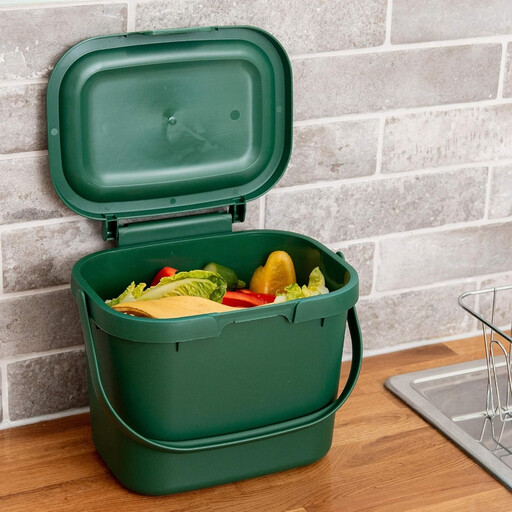
Why This Fits Their Persona: This is a no-fuss, reliable choice for the daily cook. It is perfectly sized for collecting vegetable peelings, tea bags and plate scrapings from a typical UK household's meal prep, without taking up too much counter space.
Its standard 4.5L size fits common compostable liners, avoiding the "one size fits none" flaw. The durable, smooth plastic is easy to wipe clean, preventing the staining and grime build-up seen in lower-quality models.
Features a robust carry handle for easy transport and is made from durable plastic built for long-lasting daily use. Its simple design is its strength.
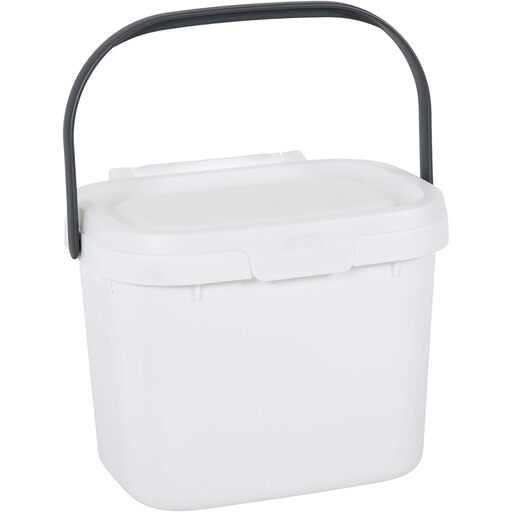
Why This Fits Their Persona: For those who believe utility items should not compromise on style. The clean white and metallic silver finish integrates seamlessly into contemporary kitchens with stainless steel appliances and minimalist decor.
It provides all the practical function of a great caddy—odour control and easy cleaning—while avoiding the trap of being a purely functional, unattractive object that you want to hide away.
The smart, two-tone colour scheme elevates a functional item, allowing it to sit on the countertop without disrupting the kitchen's aesthetic.
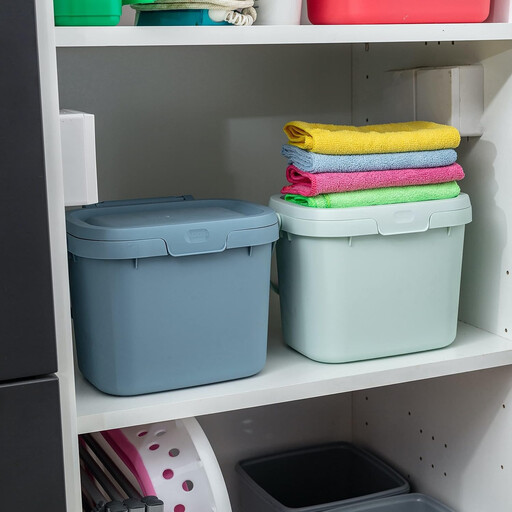
Why This Fits Their Persona: For a busy family, convenience is everything. This caddy is not only a great **small kitchen bin** for food scraps but is also made from BPA-free, dishwasher-safe plastic, making deep cleaning effortless.
It directly combats the hygiene trap. By being dishwasher-safe, it eliminates the chore of hand-washing and ensures the caddy can be thoroughly sanitised, preventing any long-term build-up of grime or odours.
The dishwasher-safe feature is a significant time-saver and hygiene benefit. Its versatile design also allows it to be used as a caddy for cleaning supplies.
We have compiled a complete, real-time list of products that fully satisfy these strict selection criteria and UK safety regulations.
To prevent odours and pests like fruit flies, it is good practice to empty your caddy every 2-3 days, or sooner if it becomes full. In warmer weather, you may want to empty it daily. Using compostable liners can make this process quicker and cleaner.
This depends entirely on the material. Many modern plastic caddies, such as the Addis compost caddy models, are specifically designed to be dishwasher-safe for easy and thorough cleaning. Always check the product's specifications before placing it in the dishwasher. If it is not dishwasher-safe, wash it regularly with hot, soapy water.
Most UK councils that offer food waste collection either provide a small indoor caddy (typically 5-7 litres) or recommend a size that fits their supplied compostable liners. A caddy around 4.5 to 5 litres is a very common and compatible size. It is always a good idea to check your local council's website for their specific guidelines.