
24/7 Customer Support

Free returns

Same-day & Next-day Delivery

Quality Guaranteed

Unlock Your Welcome Offers: FREE Delivery | Up to 80% OFF | Free 30-day JoyPlus trial
Download the APP
From handling sizzling oven trays to tackling a mountain of washing up, our hands go through a lot in the kitchen. The right pair of kitchen gloves isn't just a convenience; it's an essential tool for safety, hygiene and comfort. With so many options available, from heat-proof mitts to durable cleaning gloves, finding the perfect pair for your needs can be a challenge.
This guide is designed to cut through the clutter, offering practical advice to help you select the right hand protection for every kitchen task. We'll explore the key features to look for and share some of our top recommendations to keep your hands protected in 2026.
Before you buy, consider the primary tasks you need gloves for. A glove designed for washing dishes won't offer adequate protection from a hot oven, and vice versa. Here are a few key points to keep in mind.
The material of your gloves dictates their function. For handling hot pots, pans and baking sheets, heat resistant oven gloves are a must. Silicone cooking mitts are a popular choice as they offer excellent thermal protection, are typically waterproof kitchen gloves and can be cleaned easily.
For washing up and cleaning, you need flexibility and protection from water and detergents. Washing up gloves are commonly made from latex or nitrile. Nitrile is a strong synthetic rubber, making it a great option for heavy duty rubber gloves and for individuals with latex allergies.
A slippery grip can lead to dropped dishes or, more dangerously, hot cookware. Look for gloves with a textured surface that provides a reliable non-slip grip, even when wet. This feature is crucial for both oven mitts and household cleaning gloves. Durability is also key; a good pair of gloves should resist tears and punctures during regular use, protecting your hands from hot water and cleaning chemicals.
An ill-fitting glove can be cumbersome and unsafe. Look for options with features that enhance comfort for prolonged use. For washing up gloves, a cotton or flock lining can absorb sweat and make them more pleasant to wear. Rolled or beaded cuffs are another important feature, as they help prevent water from dripping down your arms and into the gloves.
Based on their features, materials and suitability for common household tasks, here are our recommendations.


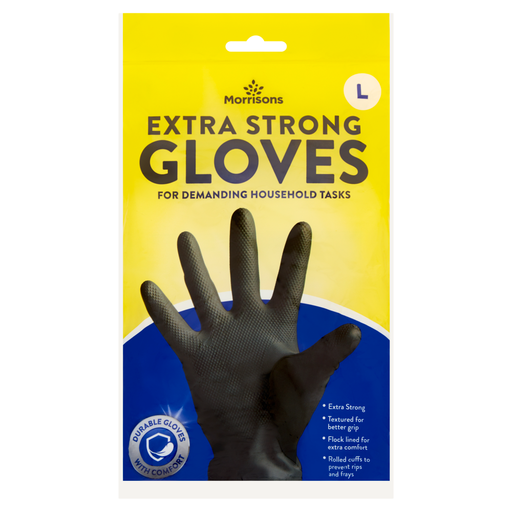
Our recommendations cover a range of common kitchen needs, but we know every home is different. If you're looking for different sizes, materials or specialised gloves for other tasks, it's worth exploring a wider selection.
Browse our complete range of lax gloves to find the perfect fit for your home.
1. Can you put silicone oven gloves in the dishwasher? Many food-grade silicone cooking mitts are designed to be dishwasher-safe on the top rack. However, it is always best to check the manufacturer's care instructions. For most daily grime, a simple rinse under warm, soapy water is all that is needed to clean them effectively.
2. What is the difference between latex and nitrile washing up gloves? Latex gloves are made from natural rubber and are known for their excellent flexibility and tactile sensitivity. Nitrile is a synthetic rubber that is generally more puncture-resistant and durable. It is also the preferred choice for individuals with latex allergies.
3. How often should I replace my household cleaning gloves? You should replace your gloves as soon as you notice any holes, tears or signs of perishing, as they will no longer be waterproof and cannot protect your hands. If they develop a persistent odour that cleaning doesn't remove, or if they become stiff and uncomfortable, it is also time for a new pair.