
24/7 Customer Support

Free returns

Same-day & Next-day Delivery

Quality Guaranteed

Unlock Your Welcome Offers: FREE Delivery | Up to 80% OFF | Free 30-day JoyPlus trial
Download the APP
From the aromatic burst of freshly ground coffee to the sharp bite of cracked black pepper, the right grinder is a cornerstone of any flavourful kitchen. Yet, choosing one can be a minefield. Many of us have been tempted by a stylish design, only to find it jams, rusts or produces a disappointingly inconsistent grind after only a few months. As the Joybuy Product Recommendation Officer, my role is to help you navigate past the marketing jargon and select a tool that delivers on its promise.
This guide focuses on the common pitfalls UK shoppers encounter and the essential features to look for, ensuring your next purchase is a lasting and valuable addition to your culinary toolkit.
Before you add a new grinder to your basket, be aware of these frequent issues that lead to buyer's remorse:
To make a smart purchase, focus on the functional heart of the grinder. Here are the three non-negotiable parameters to check.
The material of the grinding mechanism dictates its performance, longevity and suitability for different ingredients.
A truly adjustable grinder should provide distinct, repeatable settings. Look for models with a clearly marked, stepped adjustment system—often a knob on the top or base. This allows you to switch confidently between a fine powder for sauces and a coarse grind for seasoning a steak, knowing the result will be consistent every time.
The body of the grinder should be as robust as its mechanism. Solid wood, stainless steel and heavy marble offer superior durability compared to thin plastic or acrylic. Also, consider the practicalities of daily use. Is the grinder comfortable to hold? Is it a refillable pepper mill with a wide, easily accessible opening? These small details make a significant difference in the long run.
Instead of a one-size-fits-all approach, we have matched some well-regarded options to specific user needs.
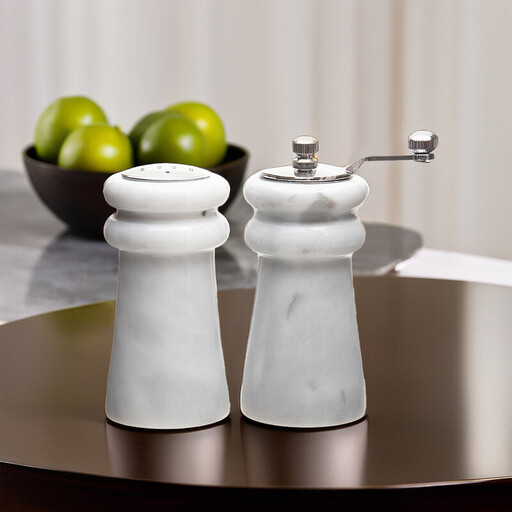
Why This Fits Their Persona: For those who see their kitchen tools as part of their home decor, this set is ideal. The natural white marble with unique veining makes it a functional statement piece for the dining table or countertop, perfect for a stylish kitchen gift set.
This set avoids the "stylish but weak" trap by using solid, heavy marble for the body. This provides excellent stability and durability, unlike lightweight acrylic alternatives.
Crafted from 90% natural white marble, ensuring each piece is unique. The stainless steel accents and chrome lids add to its robust and elegant construction.
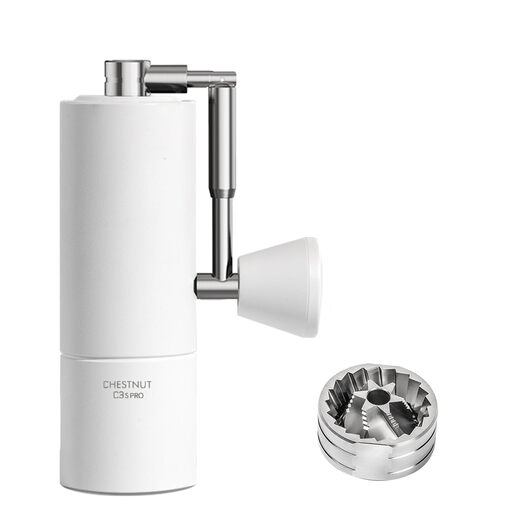
Why This Fits Their Persona: This user demands precision for their brewing methods, from espresso to French press. This manual coffee grinder is built for consistency and control, with a design that is also compact enough for travel.
It directly solves the "inconsistent grind" problem. Its high-precision stainless steel conical burr and point-to-point adjustable settings provide a uniform grind size that cheaper models cannot match.
Features a high-hardness S2C (Spike-to-Cut) stainless steel burr for efficient and uniform grinding. The all-metal body and foldable handle make it both durable and highly portable.
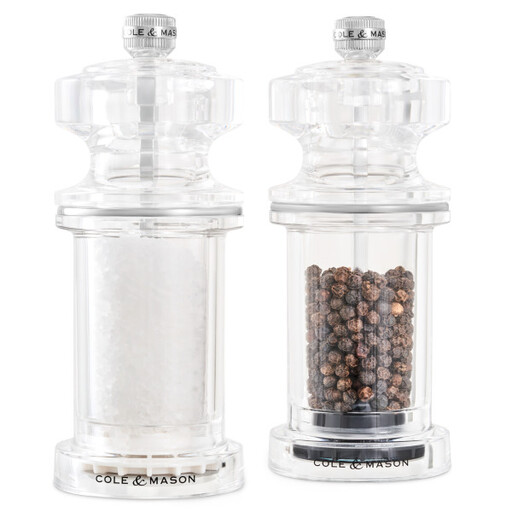
Why This Fits Their Persona: This user needs a reliable, no-fuss set for daily seasoning. This classic acrylic and stainless steel set is built for function and longevity, with a clear body to easily see when a refill is needed.
It avoids the corrosion pitfall by using two distinct, specialised mechanisms: a sharp carbon steel one for pepper and a non-corrosive ceramic one for salt, ensuring optimal performance for both.
Features a design-registered carbon steel mechanism for pepper and a sharp ceramic one for salt. According to the brand, the mechanisms are supported by a lifetime guarantee.
We have compiled a complete, real-time list of products that fully satisfy these strict selection criteria and UK safety regulations.
1. What is the difference between a ceramic and a steel grinder mechanism? A ceramic grinder is exceptionally hard and completely rust-proof, which makes it the standard for grinding corrosive salt. A carbon or stainless steel mechanism is typically sharper, designed to cut or strip ingredients like peppercorns and coffee beans to release maximum flavour and aroma.
2. How should I clean my kitchen grinders? For a manual coffee grinder or spice grinder, it is best to use a dry brush to remove any residual grounds from the burrs; avoid using water on steel parts to prevent rust. For salt and pepper mills, a wipe-down with a dry or slightly damp cloth is usually sufficient. A mortar and pestle should be washed by hand with warm, soapy water and dried thoroughly to prevent any transfer of flavours.
3. Can I use one grinder for salt, pepper and coffee? This is not advisable. Salt will corrode most steel mechanisms that are designed for pepper or coffee. Furthermore, the oils from coffee beans can leave a residue that will taint the flavour of any spices you grind afterwards. Using separate, dedicated grinders is the best practice for maintaining your tools and ensuring pure flavour.