
24/7 Customer Support

Free returns

Same-day & Next-day Delivery

Quality Guaranteed

Unlock Your Welcome Offers: FREE Delivery | Up to 80% OFF | Free 30-day JoyPlus trial
Download the APP
Buying kitchen knife sets can appear straightforward until you compare blade materials, piece counts, storage options and specialist accessories. A large block may look like good value, while a compact cheese board may suit your hosting habits more closely than a full cooking collection.
The main challenge is separating practical features from attractive packaging. Before choosing, consider how you prepare food, where the set will be stored and whether every included piece has a useful purpose.
A 19-piece knife block set may include several knives, scissors and kitchen utensils, but the headline number does not automatically represent better value. If you mainly prepare vegetables, meat and everyday meals, a chef’s knife, utility knife, paring knife and kitchen scissors may cover most tasks.
Check the actual contents rather than relying on the piece count. A set that combines knives with a kitchen utensil set can be useful in a new home, but may be unnecessary if your drawers are already well equipped.
A decorative handle can make a cheese knife set appealing for Christmas dinner or entertaining, but appearance should not be mistaken for suitability for heavy preparation. Likewise, a polished knife block may look tidy without offering convenient access or suitable blade protection.
For serving collections, assess the number and type of knives included. For cooking collections, look for clearly stated blade materials, handle construction and care instructions.
Even stainless steel kitchen knives need sensible care. Stainless steel can resist staining and corrosion, but it is not immune to damage from harsh detergents, prolonged soaking or unsuitable storage. A knife that is placed loose in a crowded drawer can also become blunt more quickly and create a handling risk.
Look for a block, sheath or other storage solution where appropriate. Confirm whether the knives are intended for hand washing and whether the handles require particular care.
The right blade depends on the task. A traditional Chinese cleaver is broad and useful for chopping vegetables, slicing meat and transferring prepared ingredients from board to pan. However, not every cleaver is designed for cutting bones. Check the product description for the intended use rather than assuming that a heavy-looking blade is suitable for all ingredients.
A chopping and slicing knife combination provides more flexibility. The heavier blade can handle firm ingredients, while a lighter slicing knife is better suited to thinner cuts and more controlled preparation.
For everyday sets, stainless steel is popular because it is relatively straightforward to clean and maintain. If a listing specifies high-carbon steel, check the care guidance carefully, as some high-carbon blades may require prompt drying to reduce the risk of surface marks.
Handle shape affects how confidently you can work. Look for a secure grip, balanced construction and a size that feels appropriate for your hand. Wooden handles can offer a traditional appearance, while silicone or synthetic handles are often easier to wipe clean.
A knife should not be selected solely because it feels heavy. Excess weight can become tiring during extended preparation, whereas a lighter blade may provide better control for slicing and mincing.
Measure the available worktop or drawer space before ordering a block set. Also check whether the included knives match your routine:
For entertaining, a cheese board with knives may combine presentation and function in one purchase. A slate cheese board can provide a dark, textured surface for arranging cheese and charcuterie, but slate should be handled and cleaned according to the care instructions supplied.
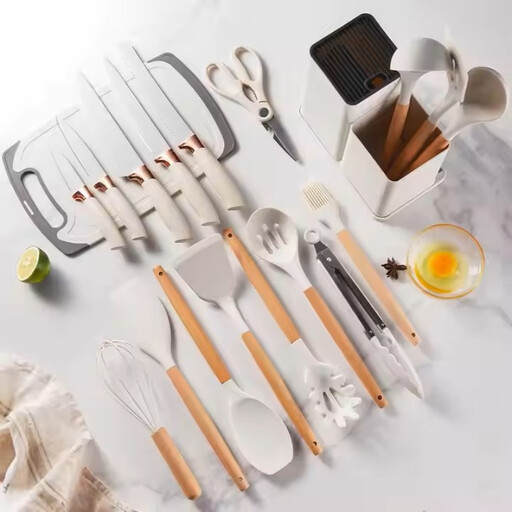
Why This Fits Their Persona: A practical choice for a first home, rental kitchen or anyone replacing several tools at once. The block keeps the collection together on a worktop.
The product description lists the included knife types and silicone utensils, making the piece count easier to assess against everyday needs.
Includes stainless steel knives, silicone utensils and a white storage block in one coordinated collection.
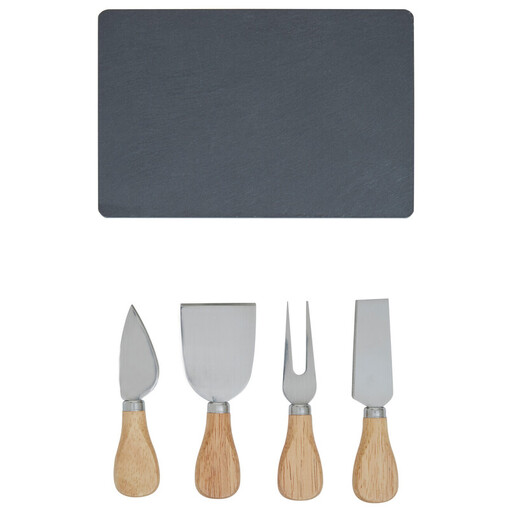
Why This Fits Their Persona: Designed for hosts who want a coordinated serving piece for dinner parties, informal gatherings and charcuterie presentations.
It combines the serving surface and four specialised knives, rather than offering decorative knives without a suitable presentation board.
Natural slate board paired with four stainless steel knives for slicing, spreading and serving.
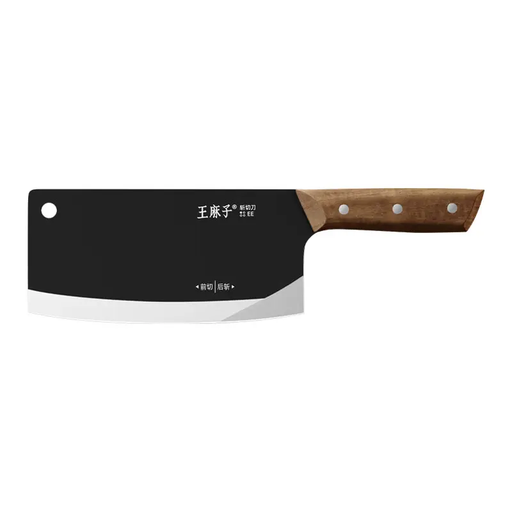
Why This Fits Their Persona: Suitable for cooks who regularly prepare vegetables, meat and Chinese-style dishes and want both chopping and slicing options.
The two-knife format clarifies the intended roles, avoiding the assumption that one cleaver must perform every preparation task.
The listed set includes a heavier chopping knife and lighter slicing knife, both described as high-carbon steel with wooden handles.
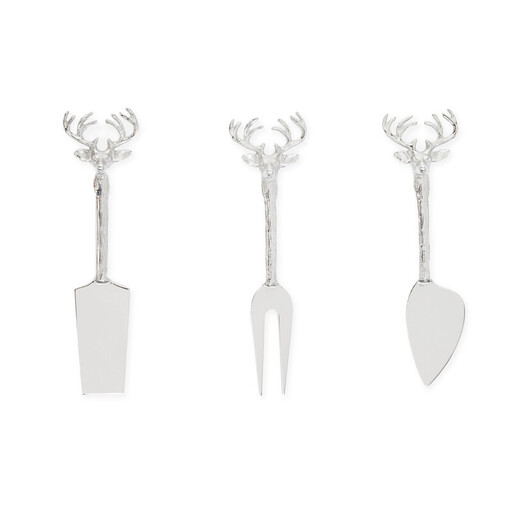
Why This Fits Their Persona: A compact knife set gift for cheese lovers, Christmas hosts or anyone who values table presentation alongside serving function.
Its three-piece format makes the intended serving use clear, while the handles provide a distinctive alternative to generic tableware.
Stag-head handles with a reflective nickel finish; the listed construction is 70% brass and 30% steel.
We have compiled a complete, real-time list of products that fully satisfy these strict selection criteria and UK safety regulations.
For everyday cooking, three to five useful knives can be more practical than a large collection. A chef’s knife, paring knife, utility knife and kitchen scissors cover many common tasks. Add specialist blades if you regularly prepare bread, cheese or particular cuisines.
Yes, provided the set matches the recipient’s habits. A coordinated cheese board with knives suits hosts and entertainers, while a compact Chinese chef knife set may appeal to someone who prepares stir-fries, vegetables and sliced meat. For a new household, a block set that also includes utensils can provide broader coverage.
Lifespan depends on blade material, frequency of use, cutting surfaces, storage and maintenance. Regular honing may help maintain an edge, while professional sharpening or careful replacement can be considered when a blade no longer performs comfortably. No piece count can compensate for unsuitable care or incorrect use.