
24/7 Customer Support

Free returns

Same-day & Next-day Delivery

Quality Guaranteed

Unlock Your Welcome Offers: FREE Delivery | Up to 80% OFF | Free 30-day JoyPlus trial
Download the APP
A blunt kitchen knife makes food preparation slower, less controlled and more frustrating. However, choosing a kitchen knife sharpener is not simply a matter of picking the model with the most sharpening slots. Some products are designed for routine edge maintenance, while others are intended for axes, outdoor tools or particular blade materials.
The wrong choice can waste money or damage a knife. Before buying, watch for these common pitfalls:
A manual knife sharpener may use one or more slots. A single-stage design can be convenient for quick maintenance, whereas a multi-stage knife sharpener may separate coarse sharpening, fine honing and polishing.
The number of stages is only useful when each stage has a clear purpose. Check whether the product description explains:
A fixed-angle kitchen knife sharpener tool can be easier for occasional home use because it reduces the need to judge the angle manually. A sharpening stone offers more control but requires greater technique and a stable setup.
The abrasive is the part that contacts the blade and removes or refines metal. Common materials include ceramic, tungsten carbide and abrasive stone.
A ceramic knife sharpener is often used for fine honing or light edge refinement, although the exact function depends on the design. Ceramic components can also be used in sharpeners for axes and knives. Tungsten carbide may remove material more quickly, so it should be used according to the manufacturer’s instructions rather than repeatedly on a well-maintained edge.
If you are buying a sharpener for household knives, confirm that its abrasive is intended for your knife material. Do not assume that a tool suitable for a carbon-steel or stainless-steel blade is also suitable for ceramic knives. Ceramic blades generally require a compatible diamond abrasive or a sharpening service specified for that material.
For a worktop sharpener, look for a broad base, non-slip feet or a suction mechanism. A compact handheld knife sharpener may be convenient to store in a drawer, toolbox or camping kit, but it still needs a secure grip.
Also check the dimensions. A portable tool around 165 mm long, for example, may fit easily into a gardening kit or outdoor bag. Read the safety information before use, keep fingers away from the blade path and store the sharpener out of children’s reach.
UK shoppers should also review the listing for manufacturer details, responsible-person information where applicable, material descriptions and usage warnings. These details are more useful than vague claims about producing a “razor-sharp” edge.
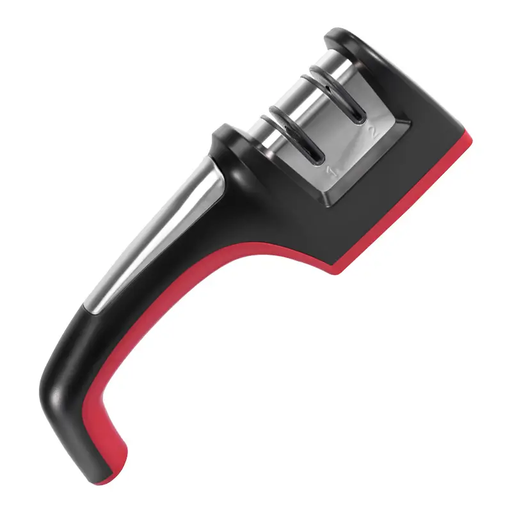
Why This Fits Their Persona: Its compact, straightforward design suits home cooks who want a simple sharpener for routine kitchen maintenance without setting up a whetstone.
The listing describes a dedicated sharpening slot and a draw-through method, avoiding the uncertainty of freehand angle control.
Multifunctional kitchen format; compact construction intended for regular household use.
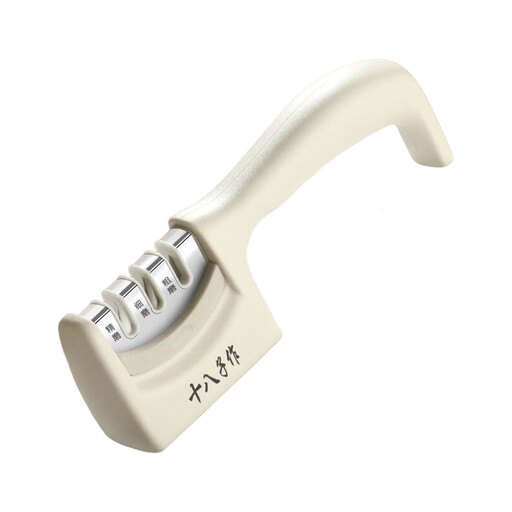
Why This Fits Their Persona: The three-stage format suits cooks who want separate steps for maintaining and refining several everyday kitchen knives.
Its stage count is clearly identified, allowing buyers to check the intended process instead of relying on an unexplained “quick sharpening” claim.
Three-stage configuration; single-handle format for a familiar draw-through motion.
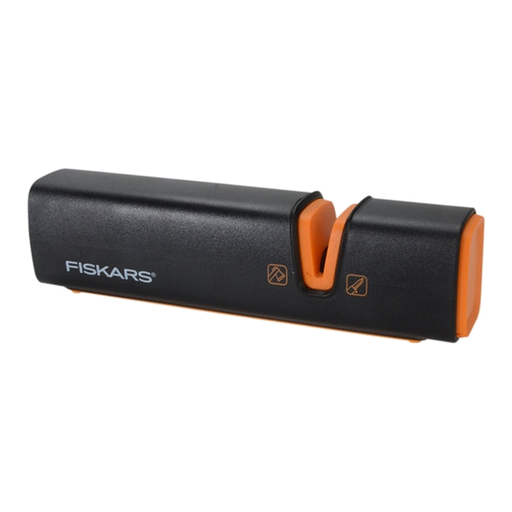
Why This Fits Their Persona: Gardeners, campers and outdoor users can use one compact tool for both axes and knives rather than carrying separate sharpening equipment.
The two sharpening grooves are clearly indicated for axes and knives, reducing the risk of using an unsuitable slot.
Ceramic grindstone; 165 mm compact length; separate axe and knife grooves.
Place a worktop sharpener on a stable, dry surface. Hold the handle or body firmly, keep the blade pointed away from your hand and draw it through the slot in the direction stated by the instructions. Use even, moderate pressure rather than forcing the knife.
Avoid sharpening a damaged or bent blade with a basic handheld knife sharpener. Check for loose components before each use and wipe away metal residue afterwards. A sharpener is a maintenance tool, not a substitute for replacing a cracked blade or seeking suitable care for specialist knives.
We have compiled a complete, real-time list of products that fully satisfy these strict selection criteria and UK safety regulations.
Use depends on knife frequency, cutting-board material and the condition of the edge. Light honing may be suitable when a knife begins to feel less controlled, while abrasive sharpening should be occasional because it removes material. Follow the product instructions and stop once the edge has been restored.
No. Many manual sharpeners are intended for standard, non-serrated kitchen knives. Check compatibility before using one on serrated, ceramic, thin or unusually thick blades. A ceramic knife sharpener should only be used when the listing specifically confirms suitability.
They can be useful if you understand what each stage does and regularly maintain several knives. For occasional users, a clearly labelled single-stage kitchen knife sharpener may be easier to operate. Compare the abrasive material, angle, stability and compatible blade types rather than choosing by stage count alone.