
24/7 Customer Support

Free returns

Same-day & Next-day Delivery

Quality Guaranteed

Unlock Your Welcome Offers: FREE Delivery | Up to 80% OFF | Free 30-day JoyPlus trial
Download the APP
A reliable set of kitchen knives can transform your cooking experience, turning tedious prep work into a satisfying, efficient process. However, the market is flooded with options, and it's easy to fall for marketing hype and end up with a drawer full of dull, impractical blades. As a Joybuy Product Recommendation Officer, my role is to help you cut through the clutter and identify what truly matters.
Before you invest in a new chef knife or a full set, let's look at the common traps that many UK shoppers encounter. Understanding these will help you make a choice that serves your kitchen well for years to come.
To avoid these pitfalls, focus on a few core features that define a durable and effective kitchen knife. These are the non-negotiable elements that separate a worthwhile investment from a future disappointment.
The material of the blade is the single most important factor. While most stainless steel kitchen knives offer good rust resistance, their ability to hold a sharp edge varies dramatically.
Always check if a knife has a full tang. This means the steel from the blade runs as a single, solid piece all the way to the end of the handle. You can often see it sandwiched between the two handle scales. A full tang provides:
Instead of buying a generic set, consider what you actually cook. A versatile chef knife (around 8 inches) can handle about 90% of kitchen tasks. From there, you can add specialised knives as needed. For instance, a heavy cleaver knife is essential for breaking down meat and bone, while a set of serrated steak knives is designed specifically for the dinner table, completing your cutlery set. Building your collection thoughtfully ensures every tool has a purpose.
To help you find the right fit, here are some options that align with different needs and cooking styles, all of which meet the quality criteria discussed above.
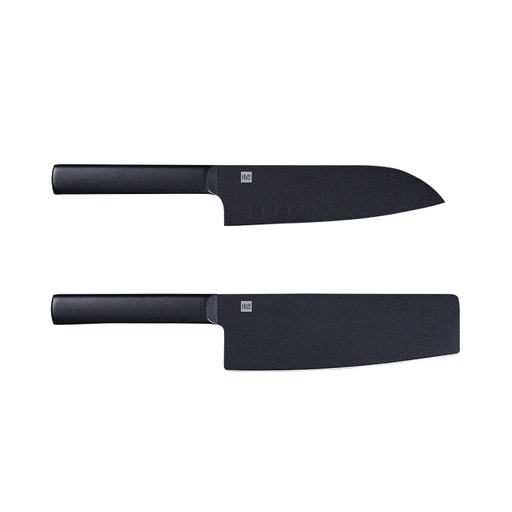
Why This Fits Their Persona: This single, versatile knife is perfect for the UK home cook who handles daily meal prep—from dicing onions for a cottage pie to slicing chicken for a stir-fry. It's a practical workhorse that doesn't require a whole block.
It sidesteps the vague "professional" label by specifying its 50Cr15MoV high-carbon stainless steel blade, a verifiable mark of quality that ensures long-lasting sharpness.
The food-safe nano non-stick coating prevents food from sticking for cleaner cuts and makes washing up quicker. Its ergonomic handle ensures comfort during prolonged use.
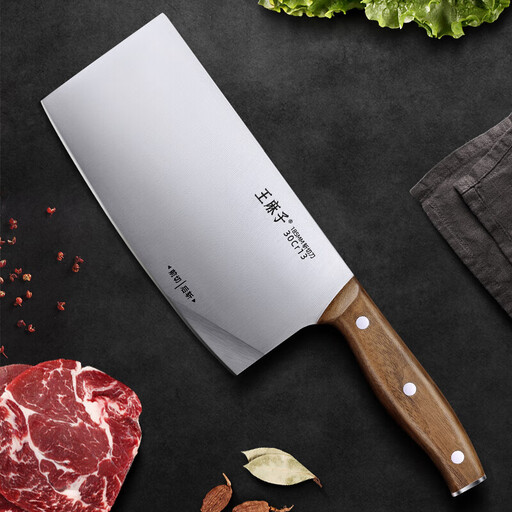
Why This Fits Their Persona: For the home cook who buys whole chickens or large joints of meat from the butcher, this cleaver is the right tool for the job. It provides the power needed to break down bone and cartilage safely and efficiently.
This knife avoids the "all-in-one" set illusion by being a highly specialised tool. It proves that having one purpose-built, high-quality knife is far more effective than a dozen flimsy, generic ones.
Its robust, heavy blade is forged from durable stainless steel for maximum force. The solid walnut handle provides a secure, comfortable grip for demanding chopping tasks.
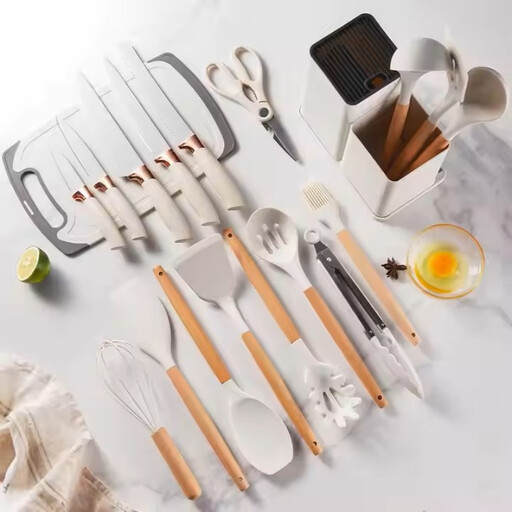
Why This Fits Their Persona: Perfect for someone setting up their first home or looking for a complete kitchen overhaul. This knife block set provides a comprehensive suite of tools, including essential knives and utensils, in one organised and stylish block.
Unlike cheap, bloated sets, this one focuses on utility. It includes genuinely useful knives made from high-carbon stainless steel and adds practical silicone utensils and a built-in sharpener, making it a functional system.
This is an all-in-one solution for a streamlined kitchen. The inclusion of durable steak knives and a built-in sharpener ensures you are equipped for both prep and dining, with easy maintenance.
We have compiled a complete, real-time list of products that fully satisfy these strict selection criteria and UK safety regulations.
This depends on the steel quality and how often you use them. For a good high-carbon steel kitchen knife used daily, honing it with a sharpening steel once a week will maintain the edge. A full sharpening is typically only needed every few months. Lower-quality steel knives will require more frequent sharpening to remain effective.
A high price tag doesn't automatically guarantee quality. It is more important to assess the material and construction. A single, well-made chef knife with a full tang and high-carbon steel blade is a far better long-term investment than a large, inexpensive kitchen knife set made from inferior materials. Focus on quality over quantity.
Although many knives are described as dishwasher safe, we advise against it. The combination of high temperatures, harsh detergents and the potential for the blade to knock against other items can quickly dull the edge, damage the handle and cause premature wear. To preserve the life and sharpness of your knives, hand washing with warm, soapy water and drying immediately is the recommended method.