
24/7 Customer Support

Free returns

Same-day & Next-day Delivery

Quality Guaranteed

Unlock Your Welcome Offers: FREE Delivery | Up to 80% OFF | Free 30-day JoyPlus trial
Download the APP
A useful kitchen knife should make food preparation easier, not create another storage or maintenance problem. Yet shoppers comparing kitchen knives and sharpeners often encounter unclear blade descriptions, oversized sets and handheld tools that are difficult to use safely.
Before choosing a fruit knife, paring knife, vegetable knife or knife sharpener, look beyond phrases such as “professional”, “ultra-sharp” or “multi-purpose”. The practical questions are simpler: what will you cut, where will you use it and how will you maintain the blade?
A kitchen knife set can appear economical, but unused pieces take up drawer space and may duplicate tools already in your kitchen. If your everyday tasks involve apples, potatoes, herbs and small portions, a paring knife or compact vegetable knife may be more useful than several specialised blades.
A handheld knife sharpener may use a fixed angle or abrasive material that is unsuitable for certain blades. Ceramic, serrated and unusually thick knives may require different care. A multi-stage knife sharpener can offer separate stages for different maintenance tasks, but buyers should still check the product instructions and avoid forcing a blade through the slot.
A foldable fruit knife is convenient for camping, travel or packed lunches, but its folding mechanism should be checked before purchase. The blade should remain securely folded when stored, and the handle should provide a controlled grip when open. Portability should not replace safe handling.
Stainless steel is a practical choice for everyday kitchen cutting tools because it is generally easy to wipe and maintain. However, “stainless” does not mean maintenance-free. Dry the blade after washing, particularly in a damp UK kitchen, and follow the manufacturer’s instructions. Some handles or folding mechanisms should not be soaked.
For peeling tasks, a food-grade stainless steel blade can be useful for fruit peeler and vegetable peeler applications. Look for a smooth cutting edge, a comfortable handle and clear instructions against using the tool on hard ingredients.
A small blade is easier to control for peeling, trimming and cutting smaller ingredients. A longer chef’s knife or Santoku knife is more suitable for larger chopping and slicing tasks. Consider:
Do not rely on the product title alone. Check the listed dimensions, handle material and included components before ordering.
A three-stage or multi-stage knife sharpener may divide maintenance into stages such as coarse correction, finer sharpening and polishing. A single-handle handheld knife sharpener is usually compact and easy to store, while a suction-cup model may offer additional stability on a suitable flat surface.
Whichever design you choose, place it on a stable worktop, keep fingers away from the sharpening slots and follow the supplied instructions. A sharpener is for blade maintenance, not for repairing severely damaged or chipped knives.
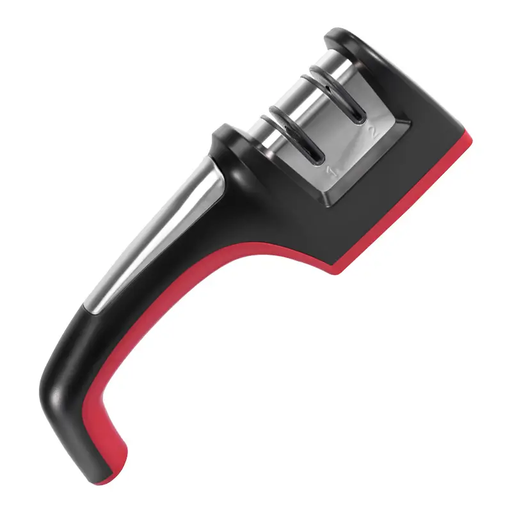
Why This Fits Their Persona: A compact option for households starting to maintain their kitchen blades without buying a larger sharpening system.
Its compact handheld format avoids unnecessary accessories and makes storage straightforward. Check compatibility before use.
Multifunctional format; designed for quick, repeated blade maintenance.
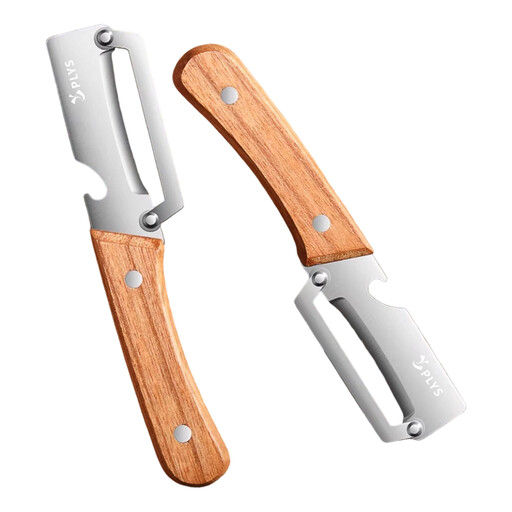
Why This Fits Their Persona: Suitable for shoppers who value specified materials, a shaped handle and a spare tool for home, office, RV or camping use.
The listing specifies a two-piece configuration, approximate dimensions and care guidance, reducing uncertainty about what is included.
Food-grade stainless steel blade; two knives, each approximately 19cm overall and 72.5g.
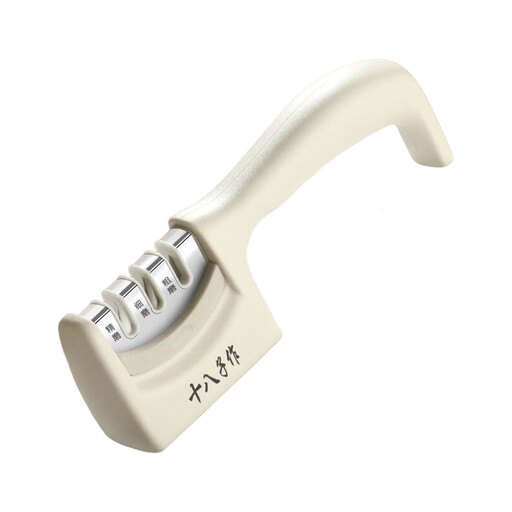
Why This Fits Their Persona: A practical choice for frequent home cooks who regularly use several kitchen knives and want a three-stage maintenance format.
The three-stage design makes the sharpening process more structured than relying on an unspecified single slot.
Three sharpening stages; single-handle household format for compact storage.
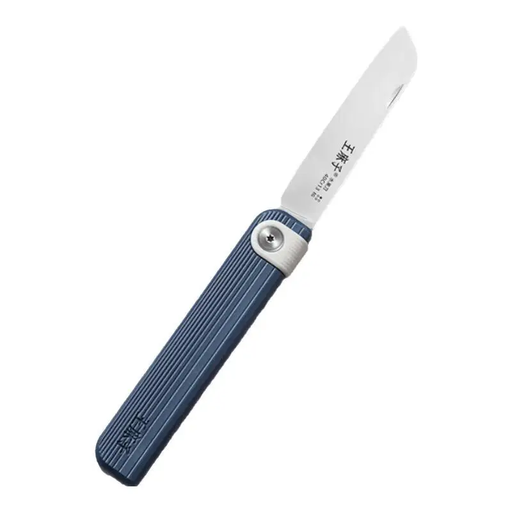
Why This Fits Their Persona: Designed for shoppers needing a compact cutting tool for outdoor meals, travel or limited kitchen storage.
The foldable structure addresses storage and transport, while the stated safety guidance advises keeping it folded when not in use.
Stainless steel blade; foldable design with a plastic handle for portable fruit cutting and peeling.
We have compiled a complete, real-time list of products that fully satisfy these strict selection criteria and UK safety regulations.
Usage depends on cutting frequency, blade condition and the sharpener type. Occasional home cooks may only need periodic maintenance, while busy households may check their main knife more often. Use light, controlled passes and stop if the blade or sharpener shows signs of damage.
For small preparation tasks, a fruit knife or paring knife can handle many fruits and vegetables. It may not replace a larger vegetable knife for repeated chopping, larger produce or heavier ingredients. Match the blade size to the task rather than expecting one small kitchen knife to do everything.
Follow the product instructions. In general, wash away food residue, dry the blade and store it safely. The PLYS peeling knife listing advises rinsing with clean water and wiping dry, while the foldable WANGMAZI knife should be wiped clean without soaking. Keep sharp tools away from children and avoid touching the cutting edge.