
24/7 Customer Support

Free returns

Same-day & Next-day Delivery

Quality Guaranteed

Unlock Your Welcome Offers: FREE Delivery | Up to 80% OFF | Free 30-day JoyPlus trial
Download the APP
A ladle may look like a simple purchase, but the wrong design can quickly become inconvenient. A shallow bowl spills soup, a short handle brings your hand too close to steam, and unsuitable materials can mark non-stick cookware. Many kitchen ladles also look similar online, making it difficult to judge which option suits everyday cooking.
Before buying, watch for these common pitfalls:
A stainless steel ladle is suitable for high-temperature cooking and can be useful for soups, stews, sauces and frying. Products made from 304 stainless steel are commonly selected for their corrosion resistance and straightforward cleaning. However, care still matters: salt, vinegar and acidic sauces should not be left on the surface for long periods.
For non-stick pans, a heat-resistant ladle with a silicone head is a practical choice. Silicone is less likely to scratch coated cookware than a metal edge. Check the product instructions for heat limitations, and keep silicone away from direct contact with open flames.
A wooden handle ladle can offer a comfortable grip and a warmer visual style, but hand washing and thorough drying are often recommended. Examine the material details rather than relying only on appearance.
A deeper bowl is useful for serving broth, soup and stew without repeated scooping. A longer handle can provide more distance from steam when using a wok or deep soup pot. For smaller saucepans, an oversized handle may be awkward to control.
If you cook hotpot dishes, look for a tool that combines a suitable reach with a stable grip. A hotpot ladle or spider strainer can help lift noodles, dumplings and vegetables while allowing liquid to drain through.
A solid ladle is designed for transferring liquid and semi-liquid food. A slotted spoon, skimmer ladle or spider strainer is more suitable for draining oil, broth or cooking water while retaining solid ingredients.
For frying, evenly spaced holes can help drain oil. For soup and sauce serving, holes would reduce the amount of liquid collected. Consider whether you need one versatile tool or separate utensils for different jobs.
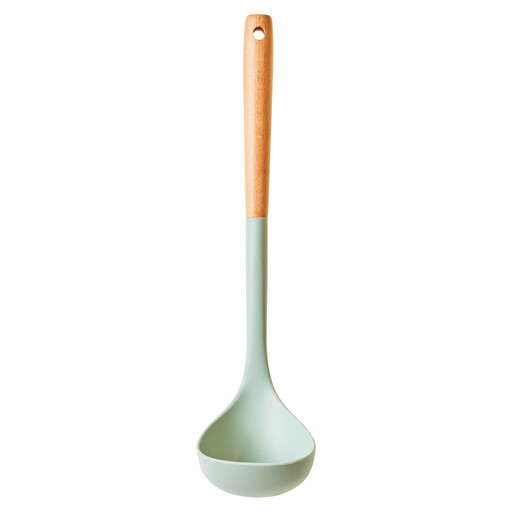
Why This Fits Their Persona: A practical option for students, first homes and everyday soup or sauce preparation, with a 35cm length and a hanging loop for compact kitchen storage.
The silicone head is designed for non-stick cookware, avoiding the risk of using a hard metal edge on coated pots and pans. Hand washing is recommended, helping preserve the wooden handle.
Heat-resistant silicone head; round wooden handle; hanging loop; suitable for soups, stews and sauces.
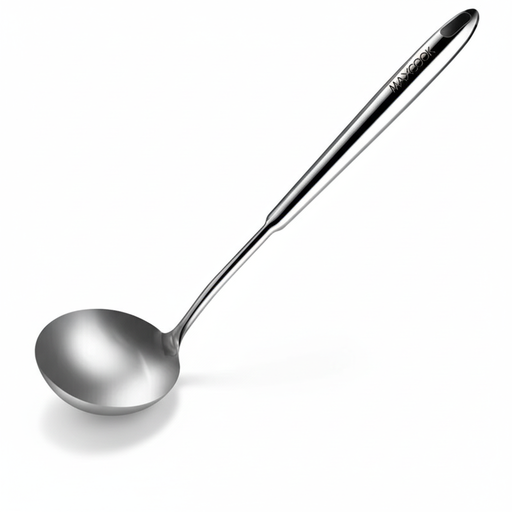
Why This Fits Their Persona: Suits keen home cooks who want a dedicated, long-handled utensil for serving from woks, stockpots and deep pans.
The 36cm length gives more separation from hot liquid than a short-handled utensil. The hollow handle is intended to reduce heat transfer, although it may still become warm during prolonged heating.
304 stainless steel construction; smooth polished edges; non-slip handle design; hanging hole for storage.
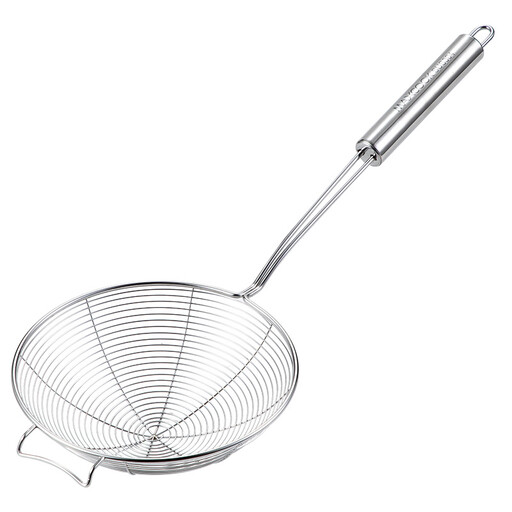
Why This Fits Their Persona: Designed for hotpot meals, noodle dishes, dumplings and frying tasks where draining liquid or oil is as important as lifting food.
The perforated head is intended for draining rather than liquid serving, avoiding the mismatch of using a solid soup ladle for fried or boiled ingredients. The fixed pot-rim hook can support hands-free placement.
304 stainless steel; widened and deepened spoon head; pot-rim hook; hanging hole; smooth rounded edges.
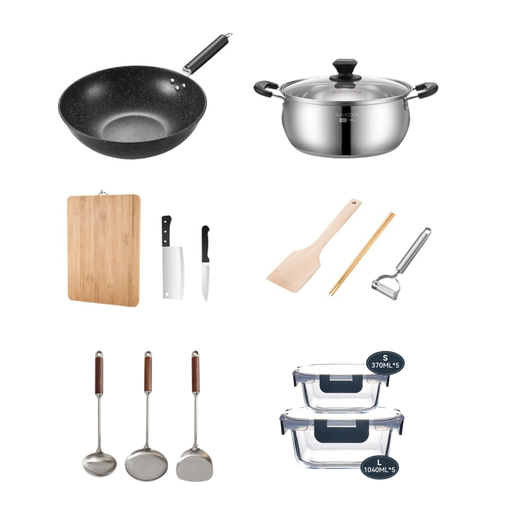
Why This Fits Their Persona: A convenient starting point for a new flat, student kitchen or home cook who needs cookware, preparation tools, a ladle, a slotted spoon and food storage together.
The listed contents make it easier to see what is included instead of buying a utensil set based only on a high piece count. The bundle includes a wok, soup pot and stainless steel utensil pieces alongside preparation and storage items.
Includes a ladle, slotted spoon and slotted turner; cookware and preparation tools; glass food containers in two listed capacities.
We have compiled a complete, real-time list of products that fully satisfy these strict selection criteria and UK safety regulations.
They can be used around non-stick cookware, but metal edges may scratch or damage some coatings. A silicone ladle is a more suitable choice where protecting the pan surface is a priority. Always follow the cookware manufacturer’s instructions.
A handle around 30–36cm can be useful for deep pots and woks, while a shorter design may offer better control in small saucepans. Bowl depth also matters: deeper bowls are generally more convenient for soups and broths, while perforated heads suit draining.
A set can be cost-effective when you are furnishing a kitchen from scratch, but check the contents carefully. For established kitchens, buying individual kitchen ladles, a soup ladle or a skimmer ladle may avoid paying for tools you rarely use.