
24/7 Customer Support

Free returns

Same-day & Next-day Delivery

Quality Guaranteed

Unlock Your Welcome Offers: FREE Delivery | Up to 80% OFF | Free 30-day JoyPlus trial
Download the APP
Finding the right kitchen recycling bin can feel surprisingly complicated. It’s a simple household item, yet a poor choice can lead to daily frustration. Many of us have been there: a lid that slams shut, a pedal that snaps, or a unit that’s a nightmare to clean. The goal is to find a solution that makes waste separation effortless, hygienic and even stylish.
As the Joybuy Product Recommendation Officer, my role is to help you navigate the options and avoid the common pitfalls that lead to buyer's remorse. Before you buy, be aware of these frequent issues:
To ensure your new bin is a long-term solution rather than a short-term frustration, focus on these core features.
The first step is to match the bin's size to your household's needs. A single person might manage with 30 litres, but a family of four will likely need a 60L recycling bin or larger to avoid constant trips outside.
Consider your local council's recycling requirements. A dual compartment bin is often sufficient for separating general waste from mixed recycling. However, if you need to separate food waste, paper and plastics, a 3 compartment recycling bin offers a more organised waste separation bin system in one unit. Look for clearly defined sections that make sorting intuitive for everyone in the household.
The material dictates not only the bin's appearance but also its lifespan.
The small details are what elevate a bin from functional to fantastic. A reliable kitchen pedal bin is essential for hands-free operation, crucial for hygiene when you're handling food.
Another feature to look for is a soft close kitchen bin lid. This mechanism prevents the loud clang of a closing lid, contributing to a calmer kitchen environment. It also reduces wear and tear on the hinge. Finally, check that the inner buckets have sturdy metal handles, making them easy to lift out for emptying and cleaning.
Based on these practical criteria, here are a few options suited to different UK households.
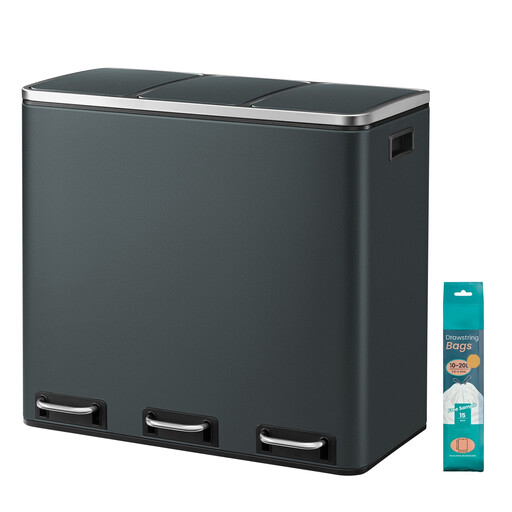
Why This Fits Their Persona: For families juggling general waste, mixed recycling and food scraps, this all-in-one unit simplifies the process. The three separate compartments make it easy for everyone to sort waste correctly without needing multiple bins cluttering the kitchen.
It features three independent pedals for each compartment, reducing strain on a single mechanism. The removable inner buckets are equipped with handles, directly addressing the 'awkward bucket' issue.
Provides a complete waste separation solution in a single, space-efficient footprint. The steel body is durable and the soft-close lids prevent noise.
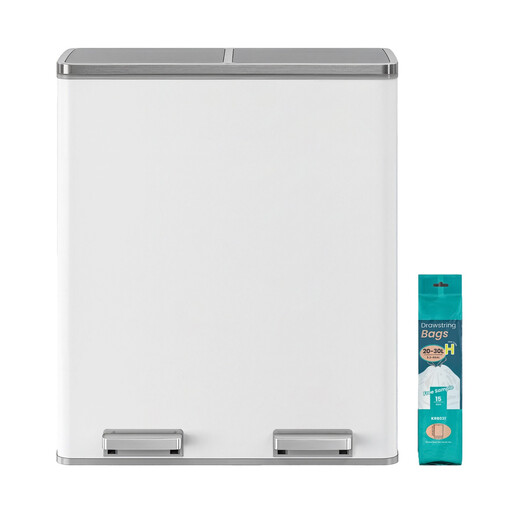
Why This Fits Their Persona: With its clean lines and contemporary white and grey finish, this bin is designed to complement modern kitchen aesthetics. The generous 60L total capacity is perfect for couples or small families who value both style and function.
The stainless steel construction is built for longevity, avoiding the rust and fingerprint issues of lower-quality metals. Its soft-close lid mechanism is robust, preventing damage from slamming and ensuring quiet operation.
Combines a large 60L capacity with a sleek, minimalist design. The dual 30L compartments are ideal for a simple waste and recycling split.

Why This Fits Their Persona: This bin is a strong choice for those prioritising sustainability without sacrificing function. Made in the UK from 100% recycled household plastics, it's a practical choice for smaller households or kitchens where a single, large-capacity bin is preferred.
It directly counters the 'flimsy pedal' concern with a hard-wearing design backed by a 10-year guarantee from the manufacturer, Addis. This provides confidence in its long-term durability.
Excellent sustainability credentials and the reassurance of a long guarantee. The 40L capacity is a good balance for smaller spaces.
We have compiled a complete, real-time list of products that fully satisfy these strict selection criteria and UK safety regulations.
1. What size kitchen recycling bin do I need for a family of 4? For a typical family of four in the UK, a total capacity of 50 to 60 litres is a good starting point. This could be a 60L dual compartment bin (2 x 30L) or a triple compartment model with a similar total volume. This size generally allows you to go a few days between emptying, aligning with most council collection schedules.
2. How can I stop my kitchen recycling bin from smelling? The primary cause of odours is food waste. If you have a food caddy, empty it frequently. For all bins, rinsing recyclable containers like tins and plastic bottles before disposal makes a significant difference. Using good quality, correctly-sized bin liners helps contain moisture and odours. Finally, wiping the inner buckets clean with a disinfectant spray each time you change the bag will prevent build-up.
3. Are stainless steel bins worth the extra cost? While they often have a higher initial price, high-quality stainless steel bins can be a worthwhile investment. They are generally more durable than plastic alternatives, less likely to stain or absorb odours and their sturdy construction often means the pedal mechanisms and hinges last longer. For a modern kitchen where aesthetics and longevity are priorities, they are often worth the cost.