
24/7 Customer Support

Free returns

Same-day & Next-day Delivery

Quality Guaranteed

Unlock Your Welcome Offers: FREE Delivery | Up to 80% OFF | Free 30-day JoyPlus trial
Download the APP
Finding the right kitchen recycling bin can feel surprisingly complicated. It’s a functional item, yet it needs to fit your kitchen's style, withstand daily use and make recycling less of a chore. Many of us have been let down by a bin that looked good online but failed in practice. As a Joybuy Product Recommendation Officer, my role is to help you see past the marketing and focus on what truly matters for a long-lasting, practical purchase.
Before you choose, be aware of a few common pitfalls that can lead to buyer's remorse:
To ensure your new kitchen recycling bin is an asset rather than an annoyance, focus on these core parameters.
The first step is to assess your household's needs. A single person or couple might find a 40L kitchen bin sufficient, while a larger family will likely need a 60L recycling bin or more to avoid constant emptying.
For effective recycling, a waste separation bin is essential. A dual compartment bin is the most common setup in the UK, allowing you to separate general rubbish from mixed recyclables. Some models offer three or more compartments, which can be useful if your local council requires further separation of glass, paper and plastics.
The opening mechanism is a key usability feature. A traditional pedal bin offers simple, hands-free operation. When choosing one, look for models with sturdy metal pedal components rather than plastic. For an even more hygienic option, sensor-activated bins open with a wave of your hand.
Regardless of the mechanism, a soft close bin is a highly recommended feature. It prevents the lid from slamming shut, reducing noise and wear on the hinge. The material of the bin itself is also crucial. A high-grade stainless steel kitchen bin offers excellent durability, is easy to clean and provides a modern aesthetic.
Small details can make a big difference. Look for removable inner buckets with their own handles, which makes taking the rubbish out far easier. A "stay-open" function, which holds the lid open, is incredibly useful when you're peeling vegetables or clearing plates after a meal. Finally, check the dimensions carefully, including the total height with the lid fully open, to ensure it fits comfortably in your designated space.
To help you match a product to your specific needs, here are a few recommendations for different household profiles.

Why This Fits Their Persona: With a generous 60-litre total capacity split across two 30-litre compartments, this bin is built to handle the demands of a busy family. It simplifies the daily task of separating general waste and recycling without needing to be emptied constantly.
It directly addresses the fragile pedal issue with high-density stainless steel pedals designed for durability. The inner buckets also feature handles, avoiding the frustration of awkward, messy removal.
Robust pedal mechanism and large, separate inner buckets for straightforward waste management. The soft-close lid ensures quiet operation in a busy home.
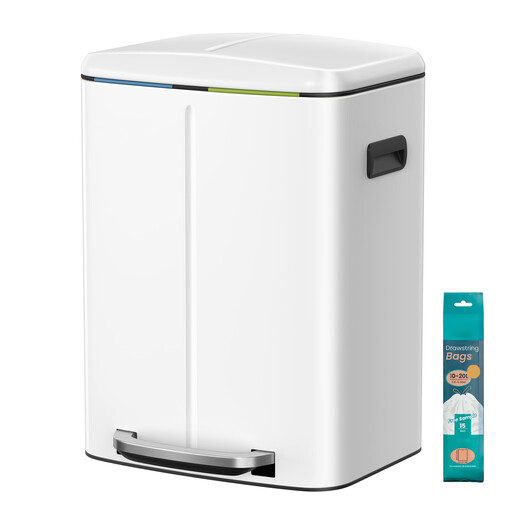
Why This Fits Their Persona: For those who see their kitchen bin as part of the decor, this model's clean white steel finish and sleek profile are a perfect fit. The 40-litre capacity is ideal for couples or smaller households, providing function without dominating the space.
The rust-resistant steel body is easy to wipe clean, and the inner buckets include a rear bag hole. This clever feature keeps the bin liner tucked away neatly, preventing the unsightly and messy liner slip issue.
Elegant design with practical features like a quiet, soft-close lid and a stay-open function for longer tasks. The dual compartments make recycling effortless.
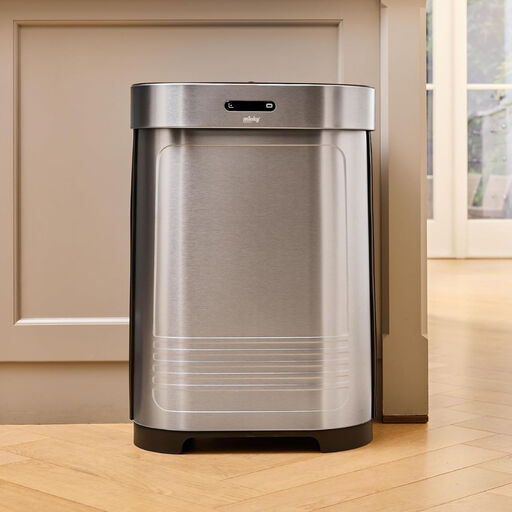
Why This Fits Their Persona: This bin offers completely touch-free operation, making it an excellent choice for households that prioritise hygiene. It's perfect for use during food preparation when your hands are messy, helping to minimise cross-contamination.
Its stainless steel exterior is specifically treated to be fingerprint and stain-resistant, effectively solving the "smudge magnet" problem and keeping the bin looking clean with minimal effort.
Hygienic, hands-free sensor operation combined with a large 55-litre single compartment for general waste. It also includes a manual override to keep the lid open for longer tasks.
We have compiled a complete, real-time list of products that fully satisfy these strict selection criteria and UK safety regulations.
The best approach is a combination of three things. First, clean the inner buckets regularly with a mild detergent. Second, always use good-quality bin liners that fit properly. Finally, ensure that food waste is not left for too long, especially in warmer months. Some advanced models also come with integrated carbon filters in the lid to help neutralise odours.
For a typical family of four, a total capacity of 50 to 60 litres is a good starting point. A dual compartment bin with a 30/30 split is often a practical choice, providing ample space for both general rubbish and mixed recycling, aligning with most council collection schedules.
For durability, hygiene and aesthetics, a quality stainless steel kitchen bin is generally a worthwhile investment. They are less prone to retaining odours than plastic bins and are very easy to wipe clean. To avoid the frustration of constant polishing, look for models that specifically mention a fingerprint-resistant coating.