
24/7 Customer Support

Free returns

Same-day & Next-day Delivery

Quality Guaranteed

Unlock Your Welcome Offers: FREE Delivery | Up to 80% OFF | Free 30-day JoyPlus trial
Download the APP
Finding the right kitchen recycling bin should be straightforward. Yet, many of us have been let down by a purchase that looked good online but failed in practice. A flimsy pedal that snaps, a lid that doesn't seal properly or compartments that are a nightmare to empty—these are common frustrations. A good bin should simplify your daily routine, not add to your chores.
As a Joybuy Product Recommendation Officer, my role is to help you navigate the market and identify the features that truly matter. Before you invest in a new waste and recycling separator bin, let's look at the common pitfalls that can lead to buyer's remorse.
To ensure your new kitchen recycling bin is a long-term asset, focus on these core parameters. They are the difference between a daily convenience and a daily frustration.
The outer body of the bin is crucial for both durability and aesthetics. A stainless steel kitchen bin is a popular choice for good reason. It is robust, easy to wipe clean and often features a fingerprint-resistant coating to maintain a tidy appearance. Cheaper coated steel or plastic alternatives may be prone to dents, scratches and staining over time. Pay attention to the material of the inner buckets as well; they should be made from durable, non-brittle plastic (like PP polypropylene) and feature strong handles for easy removal.
Choosing the right capacity depends on your household size and local council collection frequency. For a typical family, a 60L kitchen bin is often a suitable size. A dual compartment bin is the standard for separating general waste from mixed recycling. These are often configured as two 30L sections. This setup, also known as a double kitchen bin, streamlines your recycling process into one neat unit. If your household produces a lot of different recyclables, a three-compartment model might be even more efficient.
The opening mechanism is a point of frequent failure. Look for a pedal bin with two compartments that has a sturdy, wide metal pedal. This provides stability and is built to withstand repeated use. Equally important is the lid. A soft close recycling bin is more than a luxury; the gentle closing mechanism prevents loud slamming, reduces wear and tear on the hinge and helps create a more effective seal to contain odours. Also, check the total height of the bin with the lid fully open to ensure it fits comfortably under your kitchen counters.
Instead of a generic list, we've matched specific models to different household needs. This approach helps you find a bin that not only meets technical standards but also fits your lifestyle.
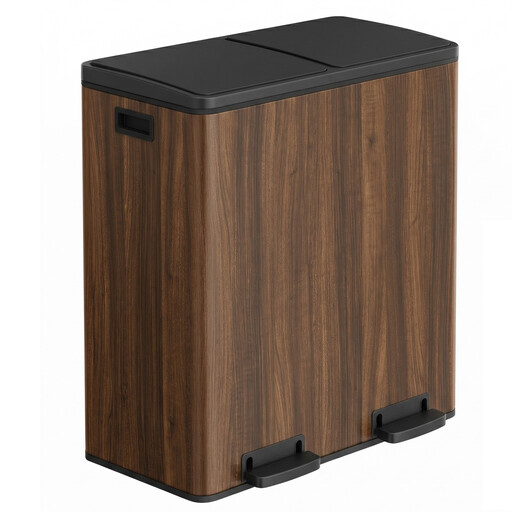
Why This Fits Their Persona: For those who believe functional items should also be beautiful, this bin's dark walnut finish offers a warm, sophisticated alternative to standard stainless steel, seamlessly integrating with modern kitchen cabinetry and decor.
It features robust metal pedal mechanisms and soft-close lids, addressing the common points of failure while ensuring quiet operation and effective odour control.
The main advantage is its unique aesthetic. It combines the functionality of a dual-compartment recycling system with a design that elevates the kitchen environment.

Why This Fits Their Persona: A busy family needs capacity, durability and hygiene. This 60L bin handles the high volume of waste, while the hands-free pedal operation is ideal for when your hands are full. The fingerprint-resistant finish keeps it looking clean despite many hands touching it.
It is built with a high-density stainless steel pedal designed for durability. The removable inner buckets have bag-fixing rings, preventing liners from slipping and making changes mess-free.
The combination of a large 60L capacity and a 90° stay-open lid function makes it exceptionally practical for big cooking sessions or clean-ups.
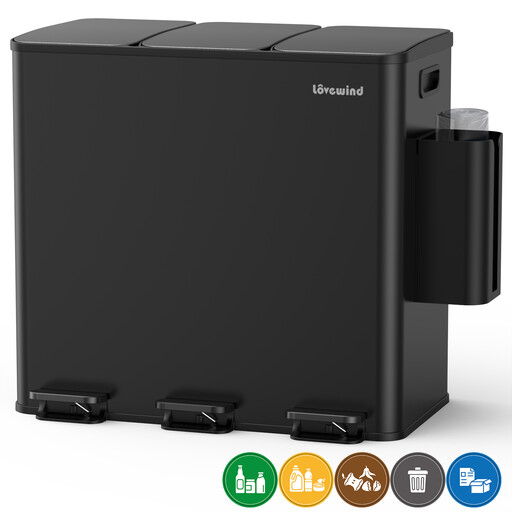
Why This Fits Their Persona: For the household that diligently separates plastics, paper and food waste, this three-compartment bin is the ultimate all-in-one solution. It eliminates the need for multiple caddies and bags, keeping the kitchen floor clear and organised.
This model features reinforced steel pedals tested for longevity. The three independent inner buckets are easy to remove and the included magnetic labels prevent cross-contamination.
Its key advantage is the three-way sorting capability within a single, space-efficient unit. The inclusion of magnetic labels and a trash bag storage box adds to its organisational value.
We have compiled a complete, real-time list of products that fully satisfy these strict selection criteria and UK safety regulations.
For a family of four, a total capacity of 50-60 litres is generally recommended. A 60L kitchen bin, often split into two 30L compartments for waste and recycling, usually provides enough space to last between council collections without overflowing.
First, choose a bin with a well-fitting, tight-sealing lid. Second, clean the inner buckets regularly with warm, soapy water. Rinsing recyclable containers before binning them also helps significantly. Some models even include features like activated carbon filters to further absorb odours.
Yes, for several reasons. A soft close recycling bin prevents the loud crash of a closing lid, which is a welcome feature in any home. It also reduces stress on the hinge mechanism, potentially extending the life of the bin. Finally, the controlled closure often creates a better seal, which is more effective at containing odours.