
24/7 Customer Support

Free returns

Same-day & Next-day Delivery

Quality Guaranteed

Unlock Your Welcome Offers: FREE Delivery | Up to 80% OFF | Free 30-day JoyPlus trial
Download the APP
Finding the right kitchen recycling bin can feel surprisingly complicated. You need a solution that simplifies your household recycling, contains odours and doesn't clash with your kitchen's design. Yet, many of us have been let down by a purchase that looked good online but failed in practice. Before you invest in a new waste separation bin, it's worth knowing the common design flaws that lead to disappointment.
Many bins suffer from a few recurring issues. First is the flimsy pedal mechanism that bends or snaps after just a few months of daily use, leaving you with a lid that won't open. Second, poorly designed inner buckets can be a constant source of frustration; they either create a vacuum seal that makes removing a full bag a struggle or lack sturdy handles for easy lifting. Finally, a lid that doesn't close securely will fail at its most basic job: containing odours, a non-negotiable for any kitchen environment.
This guide will help you navigate these potential pitfalls by breaking down the essential features to look for, ensuring your next kitchen bin is a lasting and practical addition to your home.
To choose a bin that truly meets your needs, focus on a few core parameters beyond just its appearance. These details determine how well the bin will function in your daily routine.
The first step is to assess your household's waste output. A single person or couple might find a 30-40 litre bin sufficient, whereas a family of four or more will likely benefit from a larger 60L recycling bin to avoid constant emptying.
For effective recycling, a dual compartment bin is essential. A 2 compartment kitchen bin allows you to separate general waste from recyclables in one tidy unit, eliminating the need for multiple containers cluttering your floor. Check your local council's recycling guidelines to determine the ideal capacity split between compartments.
How you interact with your bin matters. A pedal bin for recycling offers hygienic, hands-free operation, which is invaluable when you're cooking or cleaning. For households sensitive to noise, a soft close kitchen bin is a significant upgrade, preventing the lid from slamming shut.
The material also plays a crucial role in both durability and aesthetics.
Always measure the space where you plan to place your bin. Remember to account for not just the width and depth, but also the total height with the lid fully open. A bin that fits perfectly under a counter when closed might be unusable if the lid collides with the worktop every time you open it.
Based on these practical considerations, we've matched a few options to different household needs.
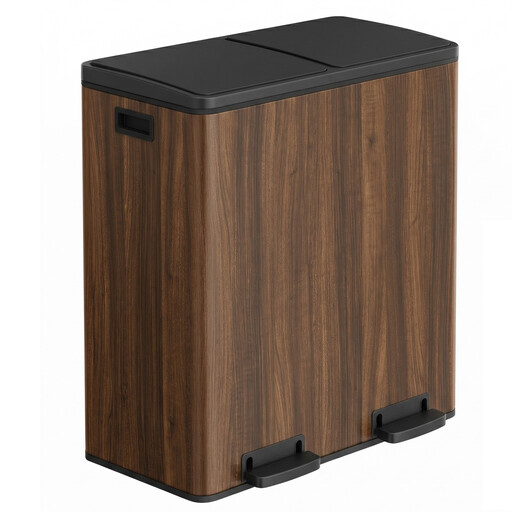
Why This Fits Their Persona: This bin is for those who see every kitchen item as part of the overall design. The dark walnut finish on a steel body offers a warm, sophisticated alternative to standard metal or plastic, complementing modern and traditional kitchens with wood accents.
It features two independent, robust foot pedals and soft-close lids, addressing the common failure points of flimsy mechanisms and noisy operation. The removable inner buckets have metal handles for easy lifting.
The combination of a 60L total capacity and a premium aesthetic means no compromise between function and form. The dual 30L compartments are ideal for balanced waste and recycling separation.
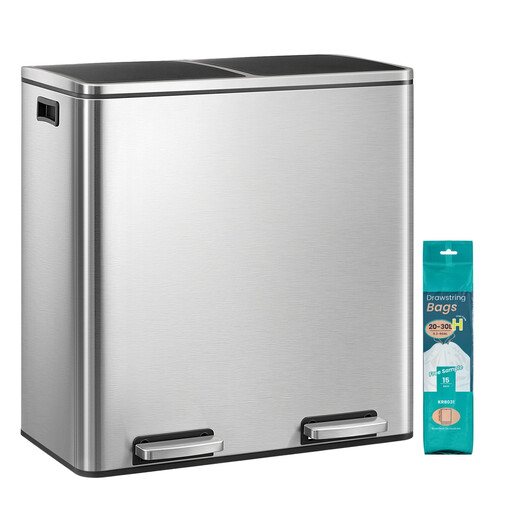
Why This Fits Their Persona: For a busy family, capacity, durability and hygiene are paramount. This 60L recycling bin is built to handle high volumes of waste, while the stainless steel finish is resilient and easy to clean after inevitable spills and fingerprints.
The sturdy pedal mechanism is designed for frequent use. The airtight, soft-close lids effectively contain odours, a must-have in a family kitchen. Each inner bucket is fully removable for simple emptying and cleaning.
Its large dual-compartment design streamlines the family's recycling efforts into one unit. The hands-free operation is practical for maintaining hygiene in a high-traffic area.
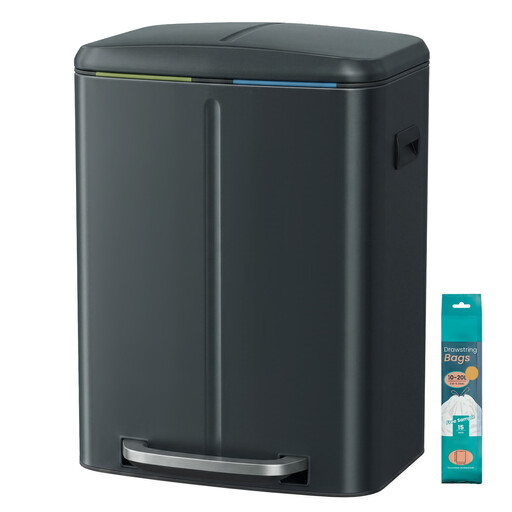
Why This Fits Their Persona: For those in flats or smaller kitchens, floor space is precious. This bin offers the full functionality of a dual-compartment recycling system but with a more compact, space-efficient footprint. The 40L total capacity is ample for one or two people.
Despite its smaller size, it doesn't compromise on features. It includes a soft-close lid to prevent noise in a smaller living space and removable inner buckets that make bag changes quick and mess-free.
It provides a complete waste separation solution without dominating the room. The rear bag hole is a thoughtful detail that keeps liners tidy and prevents them from slipping inside the bucket.
We have compiled a complete, real-time list of products that fully satisfy these strict selection criteria and UK safety regulations.
1. How can I stop my kitchen recycling bin from smelling? The most effective way is to choose a bin with a well-fitting, airtight lid that seals in odours. Regularly cleaning the inner buckets with soap and water also helps prevent residue build-up. For food waste, using compostable liners and emptying the compartment frequently is key. Some modern bins also come with integrated carbon filters to help neutralise smells.
2. What size recycling bin is suitable for a family of four? For a family of four, a total capacity of 50 to 60 litres is generally a good starting point. A 60L recycling bin, often split into two 30-litre compartments, provides enough space for both general waste and mixed recycling, reducing the frequency of trips to your outside bins.
3. Are metal or plastic kitchen bins better? This depends on your priorities. Metal bins, particularly those made from steel, offer superior durability, a more premium appearance and are less likely to absorb odours. They are an excellent long-term investment. Plastic bins are more affordable and lightweight but may be less resistant to scuffs and can sometimes retain smells over time. For a busy kitchen, a sturdy steel model is often the more practical choice.