
24/7 Customer Support

Free returns

Same-day & Next-day Delivery

Quality Guaranteed

Unlock Your Welcome Offers: FREE Delivery | Up to 80% OFF | Free 30-day JoyPlus trial
Download the APP
A reliable kitchen recycling bin is the unsung hero of a tidy, organised home. Yet, finding the right one can feel surprisingly complicated. Many promise convenience but deliver frustration, with flimsy pedals that snap or compartments too small for a week's worth of recycling. As a Joybuy Product Recommendation Officer, my role is to help you navigate the market and identify the features that truly matter, ensuring your next rubbish bin for the kitchen is a lasting investment, not a short-term regret.
Before you buy, be aware of these common pitfalls that catch out many UK households:
step on bin is a game-changer for hygiene, but many models use low-grade plastic or thin metal for the pedal mechanism. These are prone to snapping under daily use, often within months, leaving you with a lid you have to lift by hand.stainless steel recycling bin looks sleek and modern, but many so-called "fingerprint-resistant" coatings are little more than a thin lacquer. They can wear away quickly with regular cleaning, leaving the surface covered in smudges and water marks that are difficult to remove.dual compartment bin is essential for waste separation, but not all are designed with UK council collections in mind. Many have one tiny section for recycling that fills up in days, defeating the purpose of having an integrated system and leaving you with overflowing bags on the kitchen floor.To avoid these issues, focus on a few core parameters. Getting these right will ensure your bin is functional, durable and fits seamlessly into your home.
The first step is to match the bin's size to your household's needs. A single person or couple might find a 30-litre bin sufficient, whereas a family of four or more will likely need a large kitchen bin of 50-60 litres to avoid constant trips to the wheelie bin.
waste separation bin. Look for models with two equally sized sections (e.g., 2 x 30L) to comfortably hold both general waste and mixed recycling.The materials and build quality are what separate a bin that lasts two years from one that lasts ten.
pedal bin mechanism should be made from reinforced steel. Some manufacturers specify the number of steps their pedals are tested for (e.g., 200,000), which is a good indicator of durability.Based on these practical criteria, we've matched a few standout options to different household needs.
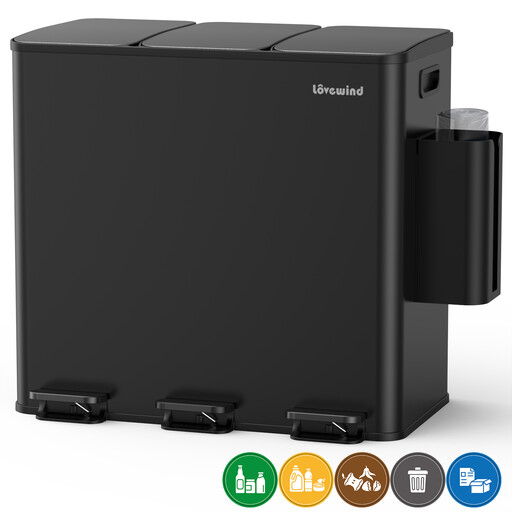
Why This Fits Their Persona: With a generous 60L kitchen bin capacity split across three 20L sections, this is ideal for families managing general waste, recycling and food scraps. The magnetic labels help everyone in the family sort waste correctly.
It directly addresses the weak pedal issue with a reinforced steel pedal tested for over 200,000 cycles. The three equally sized compartments avoid the problem of having an impractically small recycling section.
Features three independent lids for odour control and a silent, soft-close function. The fingerprint-resistant stainless steel finish is easy to wipe clean.
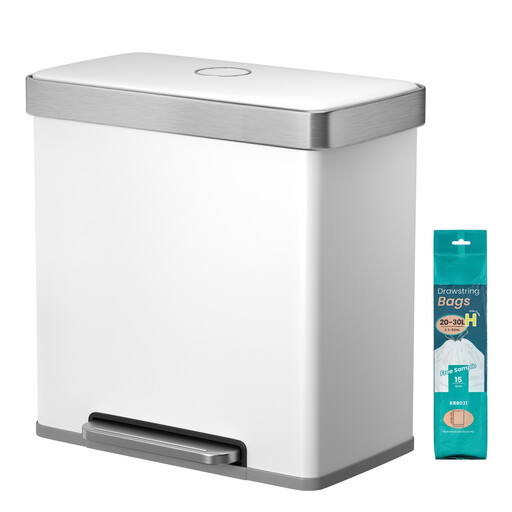
Why This Fits Their Persona: For those who value aesthetics as much as function, this bin's sleek white stainless steel body and clean lines add a modern touch to any kitchen. The 2 x 30L dual compartments are practical for a design-led home.
The rust-resistant stainless steel finish is designed to be wiped clean easily, avoiding the smudging issue. Its buffer system ensures the soft-close lid operates quietly and reliably, preventing premature wear.
Combines elegant design with practical features like hands-free pedal use, removable inner buckets and a quiet-close lid for a peaceful kitchen environment.
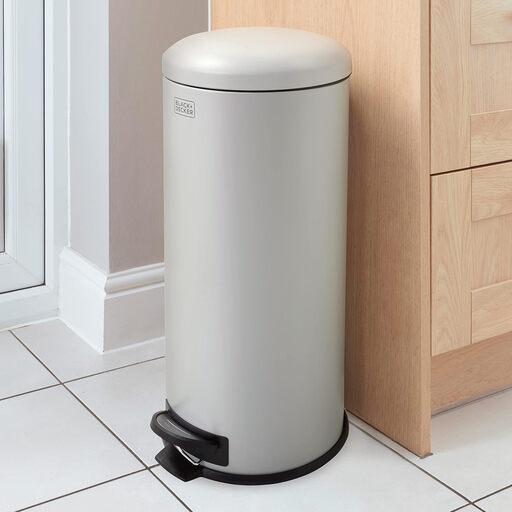
Why This Fits Their Persona: Its 30-litre capacity is perfectly suited for smaller kitchens, flats or 1-2 person households. The classic dome design and grey finish offer a timeless look with a small footprint.
This bin features a durable foot-operated pedal and a fingerprint-proof stainless steel body, tackling two of the most common pitfalls. The 30L size is a practical choice, avoiding the issue of oversized bins in smaller living spaces.
Offers a great balance of features, including a soft-closing lid and a removable inner bucket for easy emptying, in a compact and stylish package.
We have compiled a complete, real-time list of products that fully satisfy these strict selection criteria and UK safety regulations.
For a typical family of four, a 60L kitchen bin is generally a good starting point. A dual compartment bin with a 2 x 30L split is often ideal, as it provides ample space for a few days' worth of both general waste and recycling, aligning well with weekly or fortnightly council collections.
Both materials have their merits. A stainless steel recycling bin offers a premium, modern aesthetic and is very durable if made from a good grade of steel. However, it can be prone to dents and smudges if not cared for. High-quality plastic bins are often lighter, resistant to dents and easier to clean, with many modern options being made from recycled materials, offering a more sustainable choice. The decision often comes down to your budget and kitchen style.
For hygiene, it's good practice to wipe down the exterior and lid of your bin weekly with a damp cloth and a mild detergent. The removable inner buckets should be rinsed out every time you change the liner or at least once a week, to prevent odours and bacteria from building up. Allow them to dry completely before putting them back in.