
24/7 Customer Support

Free returns

Same-day & Next-day Delivery

Quality Guaranteed

Unlock Your Welcome Offers: FREE Delivery | Up to 80% OFF | Free 30-day JoyPlus trial
Download the APP
A kitchen bin is more than just a place for rubbish; it's a part of your daily routine. A poorly chosen one can quickly become a source of frustration, with stuck lids, lingering odours and a constant need for cleaning. Many of us have been tempted by sleek marketing photos, only to find our new bin has a flimsy pedal that snaps in months or a lid that doesn't quite seal.
As the Joybuy Product Recommendation Officer, my role is to help you navigate these common issues. Before you invest in a new kitchen waste bin, let's look at the frequent pitfalls that can lead to buyer's remorse and what to look for instead.
By understanding these potential flaws, you can make a more informed choice that balances style with long-term practicality.
To avoid the pitfalls, focus on a few key parameters. These are the non-negotiable features that determine whether a kitchen recycling bin will be a helpful tool or a daily annoyance.
The right capacity is crucial. A bin that's too small will need constant emptying, while one that's too large can waste space and lead to odours from waste sitting too long.
The construction of your bin will dictate its lifespan and ease of use.
Instead of a one-size-fits-all approach, we've matched a few models to different household needs and styles.
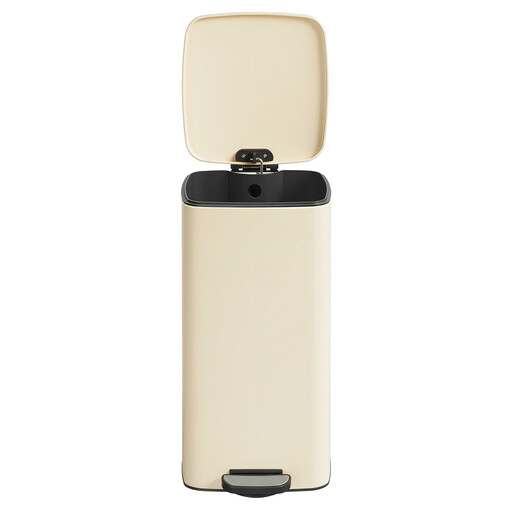
Why This Fits Their Persona: Perfect for style-conscious individuals in flats or modern homes where space is at a premium. The 30L capacity is ideal for one or two people, and the sleek, rectangular shape fits flush against a wall or cabinet, while the sand beige colour adds a warm, contemporary touch.
The steel body and robust pedal mechanism counter the flimsy pedal trap. Its soft-close lid provides an effective seal to contain odours, avoiding a common complaint.
Features a quiet, soft-close lid and a stay-open mode for convenience. The removable inner bucket simplifies bag changes and cleaning.

Why This Fits Their Persona: Designed for busy family life, this 60l kitchen bin simplifies household recycling. The two 30L compartments allow for easy separation of general waste and recyclables in one streamlined unit, reducing kitchen clutter and making bin day more organised.
It features two independent, high-density steel pedals, reducing strain on a single mechanism. The fingerprint-resistant stainless steel finish tackles the smudge problem head-on.
A true waste separation bin with dual soft-close lids and removable inner buckets with handles. The hands-free operation for both sides is ideal for a hygienic kitchen.
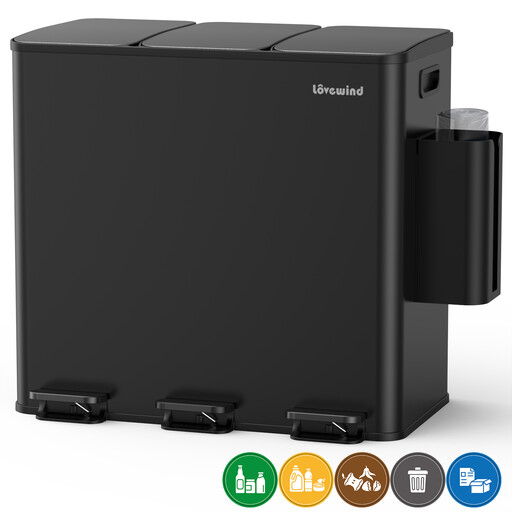
Why This Fits Their Persona: For the household that leaves nothing to chance. This bin offers maximum sorting capability with three 20L compartments, perfect for separating general waste, mixed recycling and food scraps or glass, all within a single, organised station.
This model uses three reinforced steel pedals, each tested for high-frequency use. The separate lids for each compartment provide superior odour containment compared to single-lid designs.
Includes magnetic, colour-coded labels for clear sorting and a magnetic box for storing spare bin bags. Each compartment has its own soft-close lid and removable bucket.
We have compiled a complete, real-time list of products that fully satisfy these strict selection criteria and UK safety regulations.
For a typical family of four in the UK, a bin with a total capacity of 50 to 60 litres is generally a good starting point. If you recycle diligently, a dual compartment bin with two 30L sections is an excellent choice, as it provides ample space for both general waste and recyclables, reducing the frequency of trips to your outside bins.
While basic stainless steel can show fingerprints, many modern bins are made with a fingerprint-resistant coating. This special finish significantly reduces smudges and marks, making the surface much easier to maintain. A quick wipe with a soft, damp cloth is usually all that's needed to keep it looking clean, avoiding the need for constant polishing.
The most effective way is to choose a bin with a well-fitting, soft-close lid, which creates a seal to trap odours. Regularly emptying the bin, especially with food waste, is also key. For added control, some models include built-in compartments for activated carbon filters, which can help neutralise smells. Finally, ensure you clean the inner bucket periodically with soap and water.