
24/7 Customer Support

Free returns

Same-day & Next-day Delivery

Quality Guaranteed

Unlock Your Welcome Offers: FREE Delivery | Up to 80% OFF | Free 30-day JoyPlus trial
Download the APP
A good kitchen recycling bin should be a silent, reliable partner in your home. Yet, many of us have faced the frustration of a lid that slams shut, a pedal that snaps or a finish that’s impossible to keep clean. Choosing the right one isn't just about looks; it's about finding a durable, hygienic solution that makes daily waste management simpler, not harder.
As a Product Recommendation Officer, I see where many designs fall short. Before you invest in a new waste separation bin, be aware of these common pitfalls that often lead to disappointment:
To avoid these issues, focus on a few core parameters. Getting these right will ensure your new kitchen recycling bin is a long-term asset, not a short-term frustration.
The first step is to realistically assess your needs. A single person or couple might find a 30-40 litre bin sufficient, whereas a family of four will likely need a 60l recycling bin to avoid constant trips to the outside bins.
The functional parts of a bin are what determine its lifespan. Pay close attention to the build quality of its moving parts and main body.
Finally, consider the small design choices that impact daily convenience.
Based on these practical criteria, here are a few options suited to different UK households.
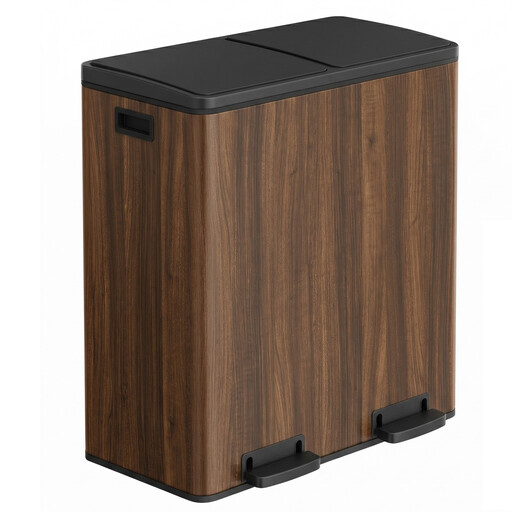
Why This Fits Their Persona: This bin is for those who see every kitchen item as part of the overall decor. The dark walnut finish on the steel body provides a warm, sophisticated alternative to cold stainless steel, integrating beautifully with modern cabinetry and flooring.
It sidesteps the "smudge-proof myth" by opting for a unique finish that doesn't show fingerprints like typical steel. The pedal mechanism is housed within a sturdy steel frame, addressing the flimsy pedal pitfall.
Elevated aesthetic with a durable steel body. Features all the necessary practicalities: dual 30L compartments, soft-close lids and removable inner buckets.
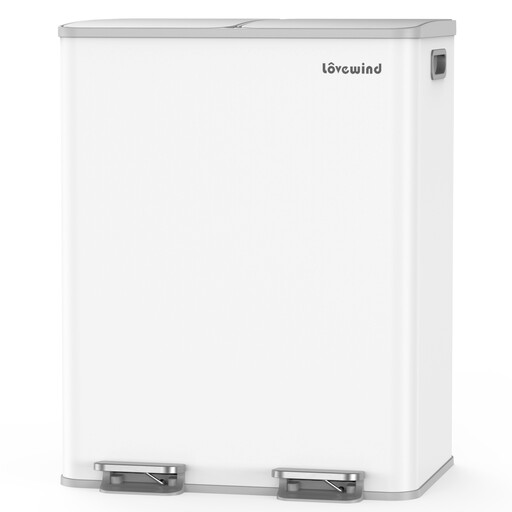
Why This Fits Their Persona: For a busy family, capacity and convenience are paramount. This 60l recycling bin means fewer trips to the wheelie bin. The dual-pedal design allows for hygienic, hands-free disposal of both waste and recycling, crucial in a high-traffic kitchen.
It directly solves the "awkward inner bucket" problem with two large, easily removable 30L buckets with handles and bag-fixing rings. The high-density stainless steel pedals are built for frequent use, avoiding the flimsy pedal issue.
Large family-sized capacity and independent operation for each compartment. The stay-open lid function is a practical bonus for bigger clean-up jobs.
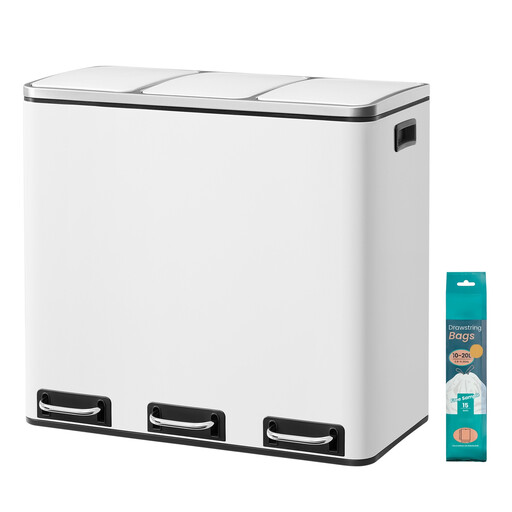
Why This Fits Their Persona: For the household that diligently separates everything, this triple-compartment bin is the ultimate organiser. It provides dedicated sections for general waste, mixed recycling and food scraps or glass, all within one sleek unit.
This design prevents the clutter of having multiple, separate bins and caddies around the kitchen. Each of the three compartments has its own pedal and soft-close lid, ensuring the entire system is hygienic and easy to use.
Provides a comprehensive waste separation solution in a single footprint. The steel construction is durable and easy to clean, while the individual pedals offer maximum convenience.
We have compiled a complete, real-time list of products that fully satisfy these strict selection criteria and UK safety regulations.
1. How can I stop my kitchen recycling bin from smelling? Regular cleaning is key. Wipe the inner buckets with a disinfectant or a solution of vinegar and water weekly. For food waste compartments, using compostable liners can help significantly. Some modern bins also come with integrated carbon filters in the lid to help neutralise odours. Ensure wet items are drained before being placed in the recycling section.
2. What size bin liner do I need for a 30L compartment? While a 30-litre compartment has a 30L capacity, it's often better to buy a slightly larger bin liner, such as a 40L or 50L bag. This provides extra length to fold over the rim of the inner bucket, preventing the bag from slipping down when it gets heavy. Many bin manufacturers also sell custom-fit liners designed for a perfect, no-slip fit.
3. Is a stainless steel recycling bin worth the extra cost? For many households, yes. Stainless steel is generally more durable and resistant to absorbing odours than plastic. It's also easier to clean and maintain a hygienic surface. While the initial cost may be higher, a well-made stainless steel bin with a solid pedal mechanism can last for many years, making it a worthwhile long-term investment for a high-use item.