
24/7 Customer Support

Free returns

Same-day & Next-day Delivery

Quality Guaranteed

Unlock Your Welcome Offers: FREE Delivery | Up to 80% OFF | Free 30-day JoyPlus trial
Download the APP
Finding the right kitchen recycling bin can feel surprisingly complicated. With council recycling rules varying and kitchen space often at a premium, it’s easy to end up with a solution that’s more of a hindrance than a help. As the Joybuy Product Recommendation Officer, my role is to help you navigate the options and avoid the common pitfalls that lead to buyer's remorse.
Many of us have been there: you buy a bin that looks great online, only to find it’s a magnet for fingerprints, the pedal snaps within months, or it fails at the one job it’s meant to do—contain odours. Let’s look at the three most common design flaws to watch out for before you buy.
To ensure your new bin is a lasting and practical addition to your home, focus on these core parameters. They are far more important than flashy marketing claims.
The first step is to assess your household's needs. A common mistake is choosing a bin that's too small, leading to constant emptying.
The material of your bin affects its durability, appearance and ease of cleaning.
Small details in the mechanism can make a big difference in daily use.
Based on these practical criteria, here are a few options suited to different UK households.
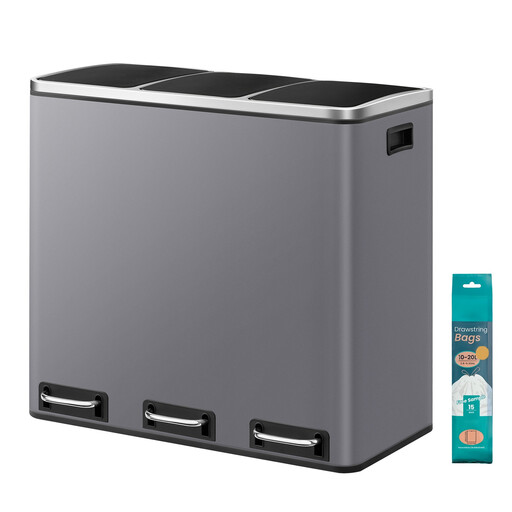
Why This Fits Their Persona: This all-in-one unit is ideal for families who need to separate general waste, mixed recycling and food scraps as per council guidelines. The three compartments keep everything neat in one place, saving floor space.
The steel construction and individual pedals for each compartment are more robust than a single, flimsy mechanism. The separate lids provide a better seal for odour control compared to one large lid.
Provides a complete waste separation bin solution in a single footprint. Features soft-close lids and removable inner buckets for easy cleaning.
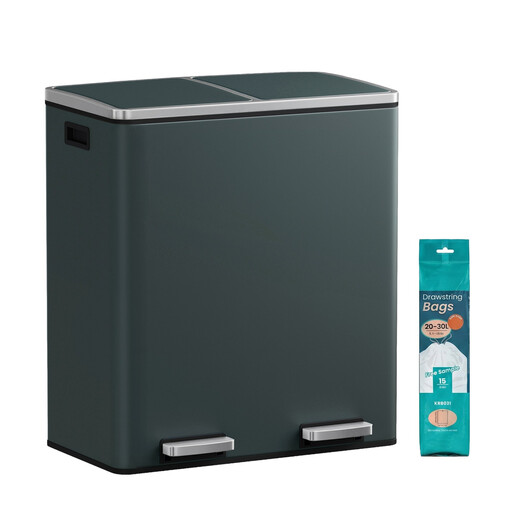
Why This Fits Their Persona: For those who value aesthetics as much as function, this 60L recycling bin offers a large capacity in a sleek package. The greenish-grey stainless steel finish blends seamlessly into modern kitchens without looking like a bulky utility item.
The soft-close mechanism prevents noisy lid slamming, and the well-fitted lids help contain odours effectively. Its sturdy steel construction and pedal mechanism are built for longevity, avoiding the flimsy pedal trap.
Combines a large total capacity with a sophisticated design. The dual 30L compartments are generous enough for both general waste and recycling.
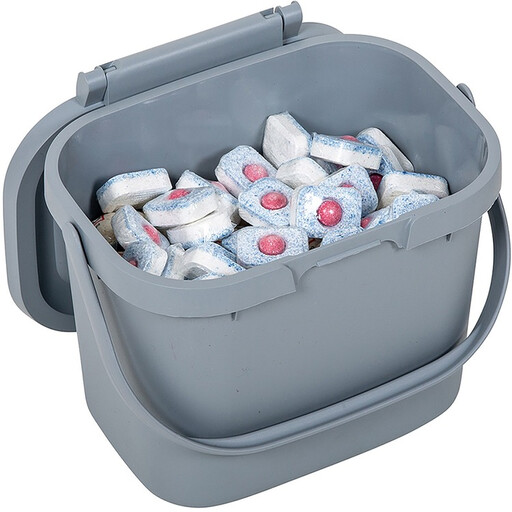
Why This Fits Their Persona: If you already have a main bin but need a dedicated solution for food scraps, this caddy is perfect. It's compact enough for the countertop, keeping peelings and coffee grounds contained during cooking and reducing trips to the outdoor bin.
This avoids the trap of buying an oversized, multi-compartment bin when all you need is a simple food waste solution. Its sturdy handle and easy-to-clean plastic body are designed for the specific, messy job of handling food scraps.
Made from recycled household plastic, it's a sustainable choice. The integrated carry handle makes it easy to transport to your main food waste bin or compost heap.
We have compiled a complete, real-time list of products that fully satisfy these strict selection criteria and UK safety regulations.
The key is regular cleaning and proper management. Firstly, rinse recyclable containers like tins and plastic bottles before binning them to remove food residue. For your food waste caddy, empty it every 2-3 days. Once a week, wash the inner buckets of your bin with warm, soapy water and allow them to dry completely before putting a new liner in. A sprinkle of bicarbonate of soda in the bottom of the bin can also help absorb odours.
For a family of four, a total capacity of 50-60 litres is generally a good starting point. A dual compartment bin with two 30-litre sections is a very popular and effective configuration. This provides ample space for a few days' worth of both general waste and mixed recycling, reducing the frequency of trips to your outdoor wheelie bins.
Both materials have their merits. Stainless steel is generally more durable, resistant to odours and offers a premium look. However, it can be heavier and more expensive. High-quality plastic bins are lightweight, won't dent and are often more affordable. A good plastic bin made from thick, sturdy material can be an excellent choice, but a stainless steel kitchen bin is often considered a better long-term investment for a busy kitchen.