
24/7 Customer Support

Free returns

Same-day & Next-day Delivery

Quality Guaranteed

Unlock Your Welcome Offers: FREE Delivery | Up to 80% OFF | Free 30-day JoyPlus trial
Download the APP
Finding the right kitchen recycling bin can feel surprisingly complicated. With council rules varying and kitchen space often at a premium, it’s easy to end up with a solution that’s more of a hindrance than a help. A well-chosen bin streamlines your recycling routine, keeps your kitchen tidy and contains odours. A poor choice, however, can lead to frustration, mess and wasted money.
As the Joybuy Product Recommendation Officer, I see where many people go wrong. Before you buy, let’s look at the common pitfalls that can turn a promising purchase into a daily annoyance.
To avoid these issues, focus on a few key parameters. Getting these right is the foundation of a successful purchase that will serve you well for years.
Your local council's recycling scheme is the most important factor here. Most UK households need to separate at least three types of waste: general, mixed recycling (paper, plastic, cans) and food.
The build quality dictates how pleasant a bin is to use daily and how long it will last.
Always measure the intended space before you buy, paying close attention to the height, width and depth. Remember to account for the extra height needed when the lid is fully open, especially if you plan to place the bin under a countertop or shelf. Capacities are measured in litres (L), with a 40-60L total capacity being suitable for most families of 2-4 people.
Instead of a generic list, we’ve matched specific products to the people they’re designed for.
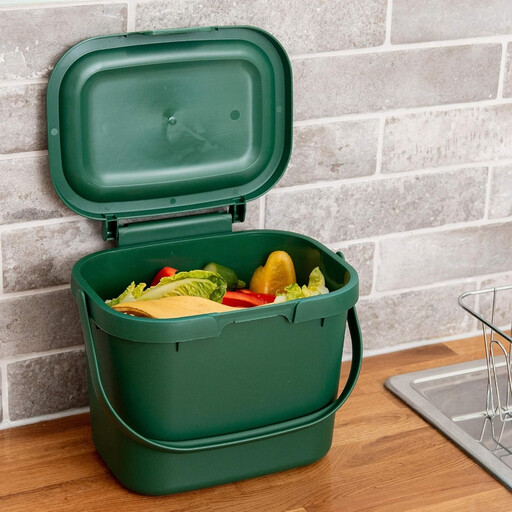
Why This Fits Their Persona: This user needs a simple, no-fuss way to collect food scraps for their council caddy or home compost. This compact bin sits on the worktop, ready for peelings and tea bags, keeping the main bin clean and odour-free.
Its 4.5L capacity is perfectly sized for daily scraps, avoiding the pitfall of waste sitting for too long. The simple, durable plastic design has no complex pedal to break.
Features a carry handle for easy transport to your main compost bin. Its compact size fits neatly on a countertop or under the sink.
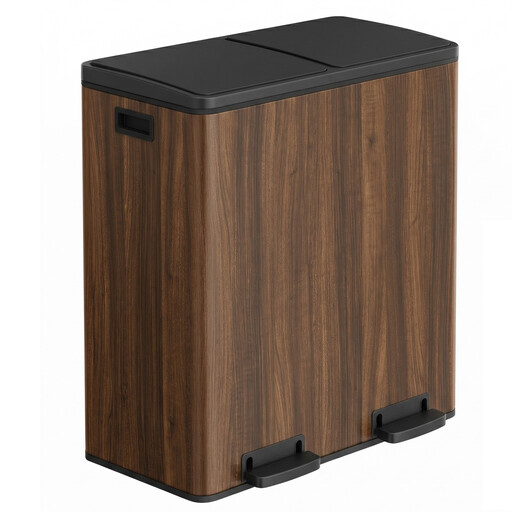
Why This Fits Their Persona: This user wants a functional waste separation bin that complements their modern kitchen decor. They value aesthetics as much as practicality and are looking for a premium, integrated solution for general waste and recycling.
The robust steel outer bin and sturdy pedal mechanism avoid the flimsy pedal pitfall. Its soft-close lids prevent slamming and help contain odours, tackling two common issues at once.
Features two 30L removable inner buckets for easy emptying. The elegant walnut finish elevates it from a simple utility item to a piece of kitchen furniture.
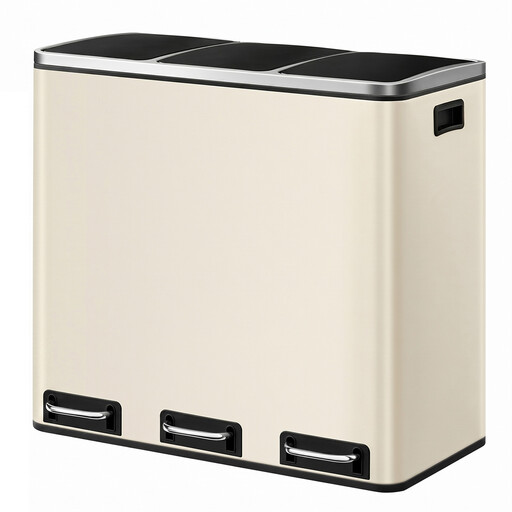
Why This Fits Their Persona: For a busy family or a diligent recycler, separating three waste streams is a daily reality. This user needs a single, consolidated unit to handle general waste, recycling and food scraps without cluttering the kitchen with multiple bins.
This 3 compartment recycling bin avoids the need for multiple containers, solving the space issue. The 54L total capacity (3 x 18L) is well-balanced to avoid any single compartment overflowing before collection day.
Offers a complete waste separation solution in one sleek, rust-resistant steel unit. Features hands-free pedals and soft-close lids for all three compartments.
We have compiled a complete, real-time list of products that fully satisfy these strict selection criteria and UK safety regulations.
The key is regular cleaning and proper waste management. For food waste, empty your countertop caddy daily. For your main bin, ensure you rinse recyclable containers like tins and plastic bottles before placing them inside. Once a week, wipe the interior of the bin and the removable buckets with a damp cloth and mild detergent. Allowing the bin to dry completely before putting in a new liner also helps prevent moisture buildup.
For a family of four in the UK, a total capacity of 50 to 60 litres is generally a good starting point. A popular configuration is a dual compartment bin with two 30L sections or a triple compartment bin with a combined capacity in that range. This provides enough space for a few days' worth of general waste and recycling without overflowing before your weekly collection.
Both materials have their merits. A steel rubbish bin is generally more durable, less likely to absorb odours and often has a more premium appearance. They are an excellent choice for the main kitchen bin. Plastic bins are lightweight, rust-proof and typically more affordable. They are ideal for smaller food waste caddies or for use in a utility room or garage where aesthetics are less of a concern.