
24/7 Customer Support

Free returns

Same-day & Next-day Delivery

Quality Guaranteed

Unlock Your Welcome Offers: FREE Delivery | Up to 80% OFF | Free 30-day JoyPlus trial
Download the APP
A kitchen bin is no longer just a box for rubbish; it's an essential tool for managing a modern household. With council recycling rules becoming more specific and our kitchens becoming more streamlined, selecting the right kitchen recycling bin is crucial. However, the market is filled with options that look great online but fail to perform in a busy home. As a Joybuy Product Recommendation Officer, my role is to help you see past the marketing and focus on what truly matters for a long-lasting, practical purchase.
Before you invest, be aware of these common pitfalls that can lead to buyer's remorse:
To ensure your new bin is an asset rather than an annoyance, focus on these core specifications.
The first step is to assess your household's needs. A 60l kitchen bin is a popular choice, but it's vital to understand how that capacity is divided. For a dedicated waste separation bin, this is often split into two 30-litre compartments—one for general waste and one for recyclables. This is generally a practical size for small to medium households.
Before purchasing, measure the available space in your kitchen, remembering to account for the lid's full opening height. Crucially, check the dimensions of the removable inner buckets. Compare these to the measurements of your preferred brand of bin liners to ensure a snug, non-slip fit. This simple check prevents the daily frustration of wrestling with oversized or undersized bags.
The opening mechanism is a key factor for both hygiene and convenience.
For a bin that withstands the rigours of a family kitchen, the material is paramount. A high-quality stainless steel rubbish bin should ideally feature a fingerprint-resistant coating. This significantly reduces smudges and makes cleaning much easier, maintaining a hygienic and polished look. The inner buckets are just as important; they should be made from durable, easy-to-clean plastic like ABS or Polypropylene (PP) and feature a sturdy handle for easy removal.
Based on these practical criteria, here are some recommendations matched to different household needs.
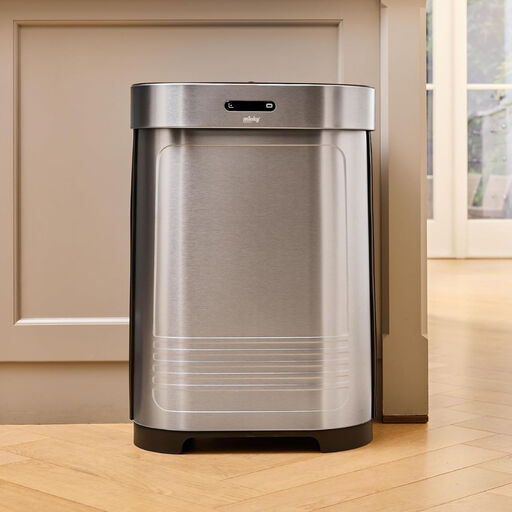
Why This Fits Their Persona: This user prioritises minimising contact with surfaces to maintain a clean kitchen environment for their family. The large, single-compartment design is ideal for managing the general waste of a busy household.
It directly counters the "fragile mechanism" flaw with a manual override option, ensuring functionality even if the sensor batteries fail. The fingerprint-resistant stainless steel finish addresses the "deceptive material" pitfall.
Offers a fully touchless operation for superior hygiene. The generous 55-litre capacity reduces the frequency of emptying.
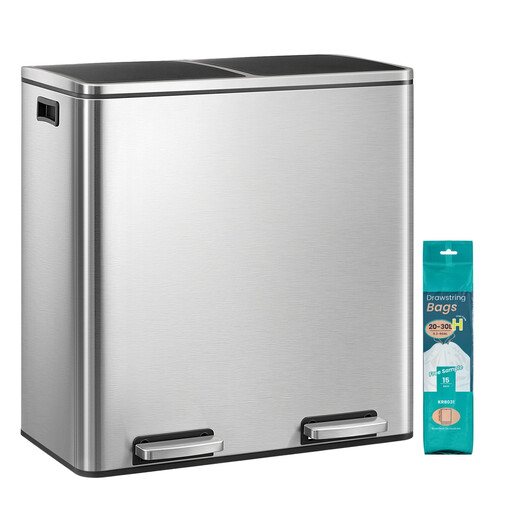
Why This Fits Their Persona: This user is committed to recycling and wants an all-in-one solution that is both efficient and fits the clean aesthetic of their modern kitchen. They need a practical system for daily waste separation.
The two 30L compartments provide a genuinely practical solution, avoiding the "impractical capacity" trap of many dual bins. Its sturdy steel pedal mechanism is built for longevity, countering the "fragile mechanism" flaw.
Provides an effective 60L total capacity for waste separation. The soft-close lids and durable stainless steel construction make it a quiet and long-lasting choice.
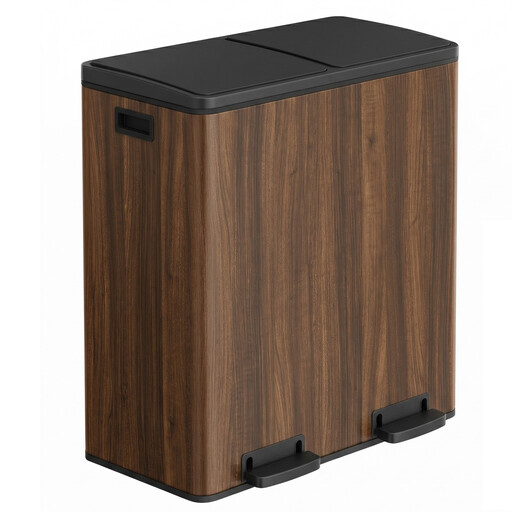
Why This Fits Their Persona: For this user, a bin must be a design element that complements their kitchen's decor. The unique walnut-effect finish offers a warm, sophisticated alternative to standard stainless steel, without sacrificing functionality.
This bin proves style doesn't mean compromising on quality. The body is made of durable steel and it uses the same reliable soft-close pedal mechanism as its stainless steel counterpart, avoiding the common pitfalls of poor materials and flimsy parts.
A distinctive, elegant finish that elevates kitchen decor. It combines this unique aesthetic with the proven practicality of a dual-compartment pedal bin.
We have compiled a complete, real-time list of products that fully satisfy these strict selection criteria and UK safety regulations.
This depends on the model, battery quality and frequency of use. With good quality AA batteries, you can typically expect them to last between 6 and 12 months. Most sensor bins have a low-battery indicator light to alert you when it's time for a change. Choosing a model with a manual override gives you a reliable backup.
A 60L bin split into two 30L compartments is a popular and effective solution for many families of three or four. The 30L recycling section is often sufficient for a week's worth of mixed recyclables, aligning well with kerbside collection schedules. However, larger families may find they fill the general waste side more quickly and might prefer a larger single bin for general waste, supplemented by a separate container for recycling.
The most effective method is to choose a bin that is advertised with a fingerprint-resistant or smudge-proof coating from the outset. If you have a standard stainless steel bin, you can keep it looking clean by wiping it regularly with a soft, damp microfibre cloth. For tougher marks, use a small amount of a specialised stainless steel cleaning spray, always wiping in the direction of the steel's grain to avoid streaks.