
24/7 Customer Support

Free returns

Same-day & Next-day Delivery

Quality Guaranteed

Unlock Your Welcome Offers: FREE Delivery | Up to 80% OFF | Free 30-day JoyPlus trial
Download the APP
A kitchen bin is one of the most used items in any home, yet it is often an afterthought. Many of us have experienced the frustration of a purchase that fails to deliver: a pedal that snaps, a lid that refuses to contain odours, or a design that makes changing the bag a daily struggle. Choosing the right kitchen recycling bin is about more than just looks; it is about finding a durable, hygienic and practical solution that simplifies your daily routine.
Before you invest, it is crucial to be aware of a few common pitfalls. Many bins on the market suffer from flimsy pedal mechanisms that break under the strain of daily family use. Others claim to be airtight but feature poor-quality seals that do little to contain odours. Finally, some designs incorporate awkwardly shaped inner buckets that make removing a full liner a messy and frustrating task. Navigating these issues is key to finding a bin that will serve your household well for years to come.
To avoid disappointment, focus on a few core parameters that determine a bin's long-term performance and suitability for your home.
The first consideration is size and configuration. A single person or couple might find a 30L bin sufficient, but for a family, a 60L kitchen bin is often a more practical choice to avoid constant emptying.
For households keen on simplifying their recycling, a dual compartment bin is an excellent solution. These models, often called a waste separation bin, allow you to sort general waste from recyclables in one convenient unit. This streamlines the process of adhering to local council collection requirements and keeps your kitchen organised. Some models even offer three compartments for separating food waste, recyclables and general rubbish.
While plastic bins are often cheaper, a stainless steel bin offers superior durability, hygiene and a more premium aesthetic that complements modern kitchens. Steel is less prone to retaining odours and is easier to wipe clean. Many modern stainless steel bins feature fingerprint-proof coatings, which are particularly useful in busy family kitchens. For a contemporary look, a sleek black kitchen bin made from coated steel can be a stylish alternative to traditional silver finishes.
A hands-free pedal bin is a must for maintaining kitchen hygiene, allowing you to dispose of waste without touching the lid. The quality of this mechanism is critical; look for models with reinforced steel pedals designed for longevity.
Equally important is a soft close kitchen bin lid. This feature prevents the loud clang of a slamming lid—a small but significant quality-of-life improvement, especially in open-plan living spaces or during late-night kitchen visits. A well-engineered soft-close lid also provides a better seal, helping to contain odours more effectively.
Based on these practical criteria, we have identified several models that align with the needs of different UK households.
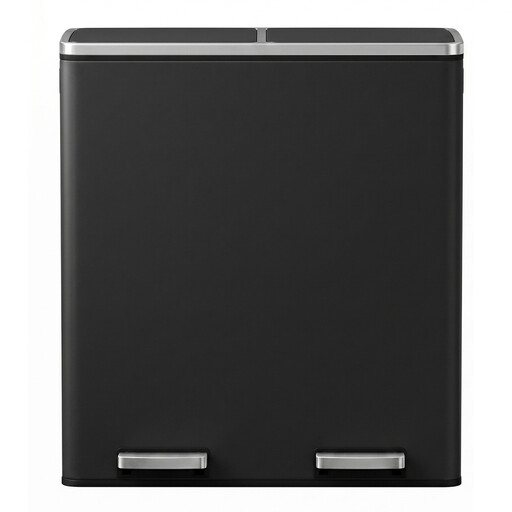
Why This Fits Their Persona: With a total 60L capacity split across two 30L sections, this two compartment pedal bin is ideal for families looking to separate general waste and recycling efficiently. The sleek black finish fits well in modern kitchens.
The two removable inner buckets with handles directly address the issue of awkward bag changes, making emptying simple and clean.
Features dual pedal-operated, soft-close lids for hygienic, quiet operation and effective odour containment.
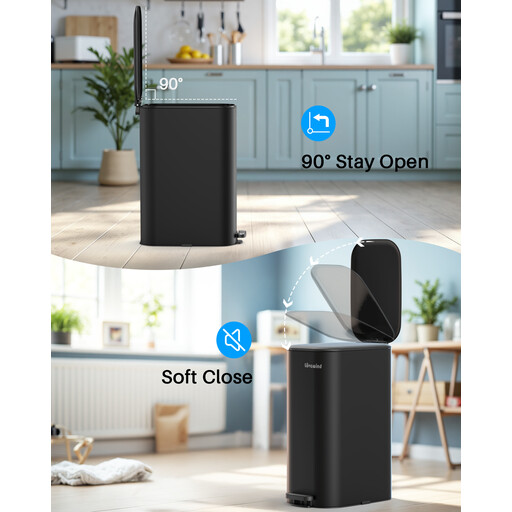
Why This Fits Their Persona: Its slim profile and stain-resistant black stainless steel finish make it a perfect fit for compact, modern kitchens where aesthetics are as important as function. The 30L capacity is ideal for smaller households.
The reinforced pedal mechanism is designed for durability, countering the common pitfall of flimsy pedals that fail prematurely.
Features a 90° stay-open lid for easier food prep and a quiet, soft-close function for a peaceful kitchen environment.
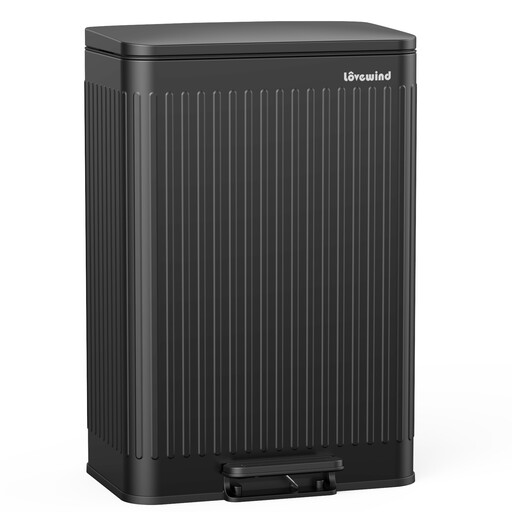
Why This Fits Their Persona: This large 60L kitchen bin is built for durability. It is ideal for busy families or shared houses that prioritise robust construction and large capacity over complex separation features.
Its reinforced stainless-steel pedal has been cycle-tested for longevity, directly addressing the common failure point of flimsy pedal mechanisms.
The fingerprint-proof coating on the stainless steel body keeps it looking clean, while the removable inner bucket with bag fixers simplifies liner changes.
We have compiled a complete, real-time list of products that fully satisfy these strict selection criteria and UK safety regulations.
Effective odour control starts with regular cleaning. Wash the inner bucket with warm, soapy water at least once a week. Ensure you are using the correct size bin liner to prevent spills. Some bins also come with integrated carbon filters in the lid, which can be replaced periodically to help neutralise odours. Finally, a well-fitting, soft-close lid provides a better seal than a basic, loose-fitting one.
For a family of three to four, a bin with a total capacity of 50L to 60L is generally recommended. This size is large enough to avoid needing to take the rubbish out every day. If you are actively recycling, a dual compartment bin with two 30L sections is an excellent choice, providing ample space for both general waste and recyclables.
While the initial cost is higher, a stainless steel bin is often a better long-term investment. Steel is more durable, less likely to crack and does not absorb odours the way plastic can over time. It is also easier to clean and maintain a hygienic surface. From an aesthetic perspective, stainless steel offers a more premium and modern look that integrates well with other kitchen appliances.