
24/7 Customer Support

Free returns

Same-day & Next-day Delivery

Quality Guaranteed

Unlock Your Welcome Offers: FREE Delivery | Up to 80% OFF | Free 30-day JoyPlus trial
Download the APP
Kitchen roll is a small household purchase that can create unnecessary waste when the wrong product is chosen. A roll may look generous on the shelf but contain fewer sheets, smaller perforations or paper that tears as soon as it becomes wet. For UK households, pet owners, hospitality businesses and workshops, the right choice depends on more than the number of rolls in a pack.
This guide explains the main buying traps, the specifications worth checking and our top recommendations for different uses.
A four-roll pack is not automatically better value than a two-roll pack. Rolls can vary considerably in sheet count, sheet dimensions and roll length. Extra-large sheets may cover more surface area, while smaller sheets can be more suitable for quick hand drying or minor spills.
Before comparing prices, check:
A lower price per pack may result in a higher cost per usable sheet.
2-ply kitchen roll is often suitable for everyday spills, food preparation and light surface cleaning. 3-ply kitchen roll generally provides a thicker structure, but it may not be necessary for every task. A well-textured 2-ply towel can be more practical for routine wiping, while thicker paper may be preferable for larger spills or scrubbing.
Performance also depends on the paper texture, bonding and sheet size. Marketing terms such as “ultra absorbent” should be considered alongside measurable details rather than treated as a guarantee.
Some products are designed to be rinsed, wrung and reused for short cleaning tasks. Others are disposable household paper towels. These are not interchangeable with washable microfibre cloths or traditional tea towels.
If hygiene and convenience are priorities, disposable reusable kitchen wipes may help reduce the need to wash cleaning rags after every small job. However, follow the product instructions and dispose of used wipes responsibly. Do not flush paper towels or cleaning wipes down a toilet.
For kitchens, bathrooms and food service areas, look for an absorbent kitchen roll that can hold water, soup, oil or cleaning solution without immediately breaking apart. Textured or embossed surfaces can help trap liquid and improve grip during wiping.
Wet strength is particularly important for:
A product that remains intact when damp may use fewer sheets per task, although actual usage will depend on the size of the spill.
The number of layers is only one part of the specification. A larger sheet can be useful for wide surfaces, while compact sheets are easier to control for small messes.
For example, the Splesh Culina XL roll lists 3-ply paper, 69 sheets per roll and 250mm × 230mm sheets. This format may suit households managing larger spills or users who prefer broad coverage. By contrast, a conventional 2-ply roll can be more convenient for everyday kitchen tasks.
For commercial premises, consider centrefeed towels. The roll dispenses from the centre, allowing one-handed use and reducing the need to touch the outside of the roll. This can be practical in garages, workshops, cafés and food preparation areas.
Sustainability claims should be checked carefully. Look for clear information about:
“Eco-friendly kitchen roll” can refer to different attributes, so compare the specific claim rather than relying on the phrase alone. Packaging and local waste facilities also affect the overall environmental impact.
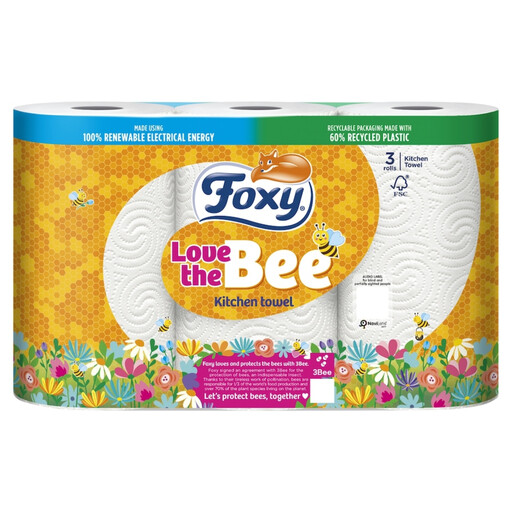
Why This Fits Their Persona: A straightforward three-roll pack for households that want everyday paper towels without moving immediately to a large bulk purchase.
Its listed 2-ply construction and three-roll quantity make the format clear, avoiding a purchase based only on decorative packaging or vague pack-size wording.
2-ply paper; three-roll pack; designed for spills, food residue, hand drying and general household cleaning.
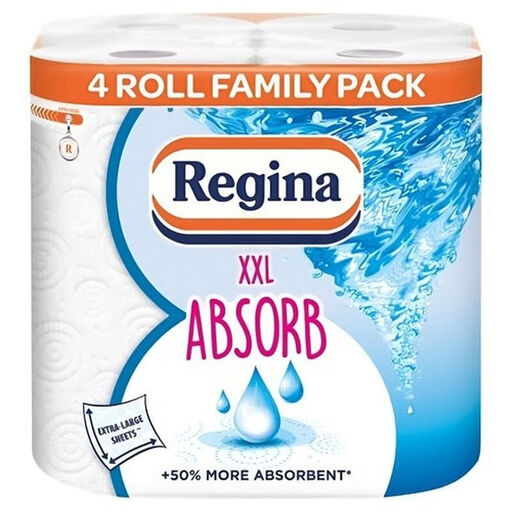
Why This Fits Their Persona: Suitable for busy families and shoppers who prefer large sheets for cooking spills, gatherings and broader cleaning jobs.
The listing specifies four rolls and 75 extra-large sheets per roll, making it easier to assess coverage instead of judging value by roll count alone.
2-ply format; extra-large sheets; 100% pure cellulose listed; FSC-certified materials stated in the product information.
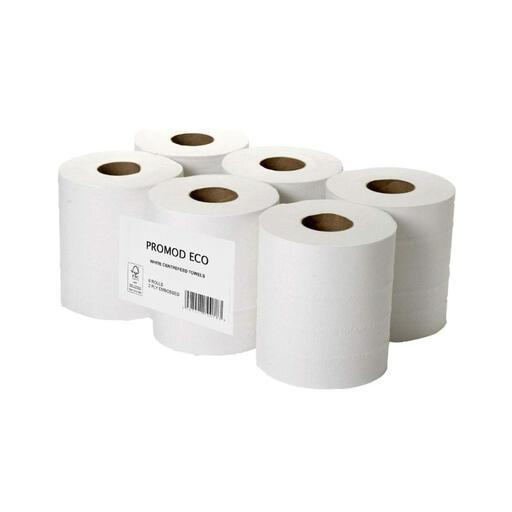
Why This Fits Their Persona: A practical option for garages, workshops, hospitality areas and food service environments requiring quick, one-handed access.
The centrefeed format is specified clearly, while the six-roll pack is suited to regular use rather than occasional domestic wiping.
Embossed, high-strength construction; 6-roll pack; centre dispensing; suitable for wiping equipment and absorbing spills.
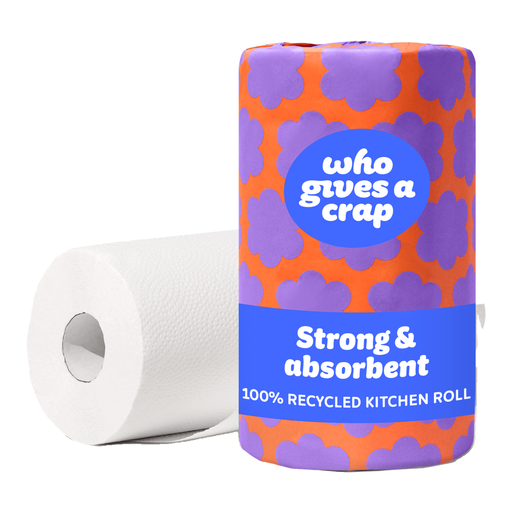
Why This Fits Their Persona: A single-roll option for shoppers wanting recycled paper and plastic-free packaging without committing to a bulk pack.
The product information identifies 100% recycled paper, no virgin wood pulp and plastic-free recyclable paper wrapping, giving specific details behind its environmental positioning.
2-ply paper; 100% recycled material listed; no inks, dyes or scents stated; 120 or 150 sheets per roll depending on batch.
We have compiled a complete, real-time list of products that fully satisfy these strict selection criteria and UK safety regulations.
For regular household cleaning, calculate the cost per roll and compare the sheet count. For larger households, bulk packs can reduce restocking, but only if you have a dry storage area. Damp storage can weaken paper before use.
Businesses should also consider dispenser compatibility. A centrefeed roll may reduce handling in busy areas, while a standard perforated roll is easier for domestic kitchens. Keep paper products away from heat, flames and moisture, and keep plastic packaging out of reach of children and pets.
Pet owners may prefer dedicated household cleaning towels for muddy paws and water-bowl spills. Avoid using scented products directly on animals unless the label specifically indicates that use is appropriate.
It depends on sheet size, strength and how many sheets each task requires. 2-ply kitchen roll can be suitable for everyday spills, while 3-ply paper may offer greater thickness for heavier cleaning. Compare the total sheet count and dimensions rather than ply alone.
No. Used kitchen roll and cleaning wipes should be placed in household waste unless the packaging gives specific local disposal guidance. Paper towels are designed to absorb liquid and may contribute to pipe blockages when flushed.
Store unopened rolls in a cool, dry place, away from sinks, steam, naked flames and direct heat. For larger packs, use a cupboard or shelf that protects the paper from moisture and crushing.