
24/7 Customer Support

Free returns

Same-day & Next-day Delivery

Quality Guaranteed

Unlock Your Welcome Offers: FREE Delivery | Up to 80% OFF | Free 30-day JoyPlus trial
Download the APP
A kitchen rubbish bin needs to do more than hold waste. It must fit the available floor space, accommodate the right volume, operate cleanly and remain practical when the bag is full. Yet product listings can make simple comparisons surprisingly difficult.
Three common buying traps are worth avoiding:
The right kitchen rubbish bin should match your household’s waste volume, cleaning routine and layout. The options below cover compact homes, family kitchens, recycling systems and food-waste collection.
For a single-person household, home office or small kitchen, a 20L kitchen bin can reduce the amount of waste sitting indoors. A 30L pedal bin is a flexible middle-ground option for flats, couples and general household use. Larger households may prefer a 50L kitchen bin, also commonly listed as a 13-gallon bin, particularly where rubbish is collected less frequently.
Capacity should always be considered alongside width, depth and height:
For a narrow kitchen, measure the complete space rather than relying on the stated litre capacity. A slim kitchen bin with a rectangular footprint may use awkward corners more efficiently than a round model.
A removable inner bucket makes changing liners and cleaning spills simpler. Look for handles or a rear handle if you regularly carry the bucket to an outside wheelie bin.
Some designs include a bag hole or fixing ring. These features help secure the liner and conceal excess material, reducing the untidy overhang often seen around basic open bins. However, the inner bucket dimensions may be smaller than the external measurements, so check both when comparing capacity.
For UK households, liner compatibility also matters. A bin described as 30L may not suit every 30-litre bag if the bag has a narrow opening or short sides. The shape of the bucket is therefore as important as the headline volume.
A step-on bin or pedal bin allows hands-free disposal, which is useful when preparing food or handling packaging. A stay-open position can be helpful when peeling vegetables or cleaning out a fridge.
A soft-close rubbish bin should lower the lid gradually rather than slam shut. Some products also describe an odour-sealing bin design, using a closer-fitting lid to reduce the movement of smells into the room. This does not remove the need to empty food-contaminated waste regularly.
Stainless steel exteriors are generally straightforward to wipe with a soft, damp cloth. Follow the supplied care instructions and avoid abrasive cleaners, which can mark the finish. Plastic food-waste caddies are also easy to maintain when emptied frequently and cleaned with mild detergent.
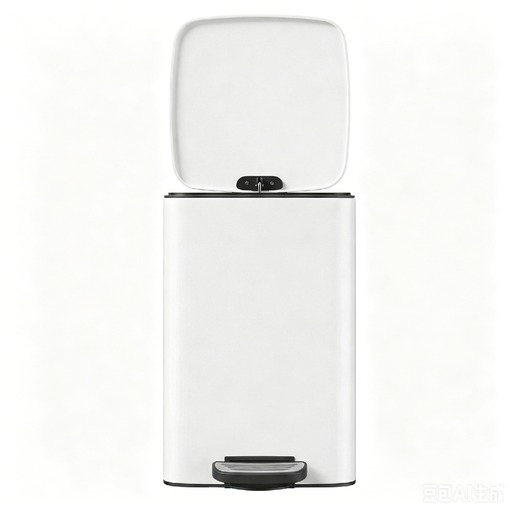
Why This Fits Their Persona: Its 20L capacity and 34.1 x 28.6 x 40.5 cm dimensions suit renters, smaller kitchens and households that prefer frequent emptying.
The stated capacity and external dimensions make it easier to judge space requirements before purchase, while the removable bucket supports simpler bag changes.
Steel body, non-slip base pads, soft-close lid and stay-open function.

Why This Fits Their Persona: Families wanting fewer bag changes can use its 50L capacity in a kitchen or home office, provided the 43.2 x 37.1 x 63.2 cm footprint fits.
The listing states the full dimensions, material and inner-bucket design, helping shoppers assess capacity rather than relying on appearance alone.
Steel construction, pedal opening, soft-close lid and bag-securing hole.
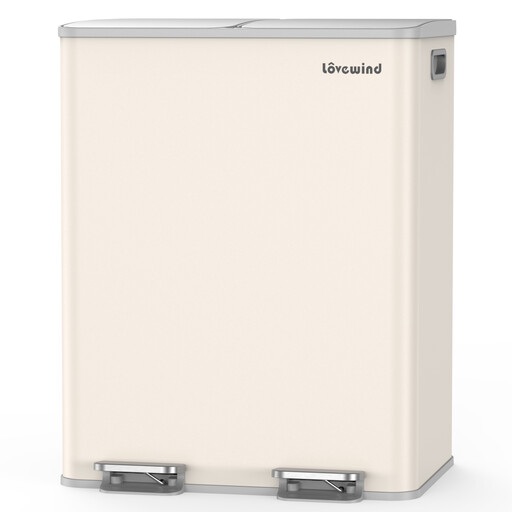
Why This Fits Their Persona: Two separate 30L compartments suit busy family kitchens, shared homes and offices that need to separate general waste from recycling.
The dual layout avoids the need to hide separate recycling containers elsewhere, while each compartment has its own inner bucket and fixing ring.
2 x 30L capacity, dual pedals, soft-close lids and 90-degree stay-open operation.
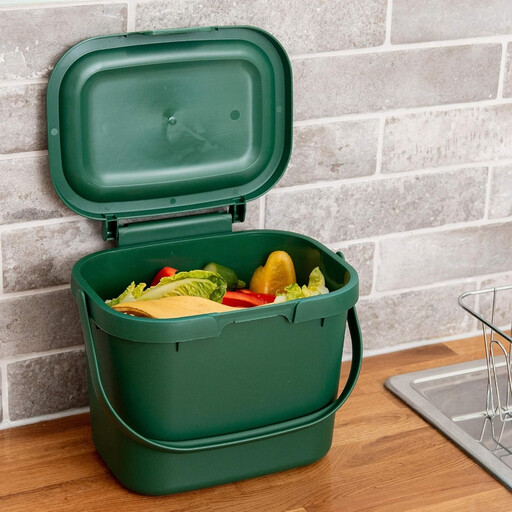
Why This Fits Their Persona: A 4.5L food waste caddy fits on a worktop or under a sink and is suitable for peelings, coffee grounds and other daily scraps.
Its compact size encourages regular emptying instead of allowing food scraps to remain indoors for extended periods.
18 x 25 x 19 cm footprint, carry handle, wipe-clean plastic and sage green finish.
We have compiled a complete, real-time list of products that fully satisfy these strict selection criteria and UK safety regulations.
A 20L model can suit a small household or compact kitchen, while a 30L bin works for many flats and couples. Families may find a 50L kitchen bin more convenient, especially if rubbish collection is less frequent. If recycling is a priority, a dual-compartment model can provide 2 x 30L storage, although it needs more floor width.
A pedal bin reduces the need to touch the lid during food preparation. It is still important to wash hands after handling waste, secure bags correctly and clean the inner bucket when leakage occurs. Keep liners away from children and pets, and follow the product’s indoor-use and weight instructions.
Choose a close-fitting or odour-sealing bin, empty food-contaminated waste regularly and wipe the inner bucket with mild detergent. A separate food waste caddy or compost caddy can make sorting easier, particularly where a local council food-waste collection is available. Check your council’s guidance for accepted materials, as collection rules vary across the UK.