
24/7 Customer Support

Free returns

Same-day & Next-day Delivery

Quality Guaranteed

Unlock Your Welcome Offers: FREE Delivery | Up to 80% OFF | Free 30-day JoyPlus trial
Download the APP
Choosing among kitchen rubbish bins is less straightforward than it appears. A bin may look suitable online, yet prove awkward when its lid hits a worktop, its inner bucket does not fit standard liners or its advertised capacity leaves little usable room.
For UK kitchens, the most practical choice depends on available floor space, household size, cooking habits and whether you separate general waste, recycling and food scraps. This guide explains the specifications worth checking before you buy, followed by tailored recommendations from the Joybuy range.
A 30L kitchen bin, 50L kitchen bin or 68L kitchen bin refers to the approximate internal volume. The removable inner bucket, lid mechanism and liner position can affect how much waste you can comfortably add. A tall, narrow bin may also be harder to fill efficiently than a wider design.
Capacity should therefore be considered alongside the bin’s external measurements. For example, a 30L model measuring around 34.8 x 29.7 x 63.3cm may suit a narrow kitchen, but its lid reaches approximately 85.5cm when open. Check overhead cupboards and nearby worktops before ordering.
A soft-close bin is designed to lower the lid gradually and quietly. It does not remove the need to empty food waste regularly or clean the inner bucket. A tight-fitting lid can help contain smells between disposal trips, but no household bin should be treated as a substitute for good waste hygiene.
If odour control is important, look for an odour-sealing bin with a close-fitting lid. Some larger models also include a carbon filter, although filters may need checking or replacing according to the product instructions.
A dual compartment recycling bin can make separation easier, but two compartments reduce the flexibility of one large cavity. Check whether each section is large enough for the waste streams your local council collects. Councils differ in what they accept, so confirm local collection guidance before relying on a particular configuration.
For peelings, tea bags and coffee grounds, a separate food waste caddy may be more convenient than placing scraps in the main kitchen waste bin.
Use your waste output as a starting point:
A 4.5L food waste caddy is intended for daily scraps rather than large quantities of general rubbish. Emptying it regularly can help prevent food waste sitting on the worktop for too long.
Measure the intended area, including:
Several pedal bin designs recommend keeping the rear around 5cm from the wall. This allows the lid and mechanism to operate without striking the wall. Place the bin on a flat, stable indoor surface and avoid positioning it where a door or drawer will obstruct the pedal.
A stainless steel bin or coated steel exterior is generally straightforward to wipe clean. However, finishes vary, so check whether the surface is described as fingerprint-resistant or smudge-resistant rather than assuming it will remain mark-free.
A removable inner bucket makes liner changes and occasional cleaning easier. Bag-fixing holes, rings or handles can also prevent the liner from slipping into the bin. Use a soft, damp cloth and mild detergent where specified, and avoid abrasive cleaners that may damage the finish.
A hands-free rubbish bin with a pedal is useful when preparing food, particularly when your hands are wet or occupied. A manual stay-open function can also help during longer tasks such as cleaning the fridge.
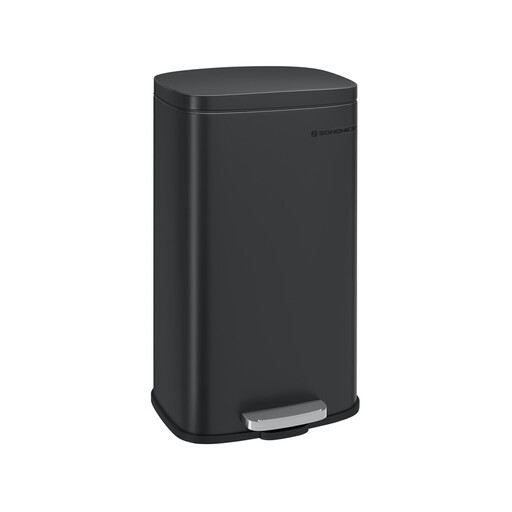
Why This Fits Their Persona: Its compact 30L capacity suits smaller UK kitchens, flats and households that prefer to empty waste regularly rather than store large quantities.
The listed external dimensions make floor-space planning easier, while the removable PP inner bucket supports simpler liner changes and cleaning.
Steel exterior, foot-pedal opening, soft-close lid, manual stay-open option and a two-year warranty.
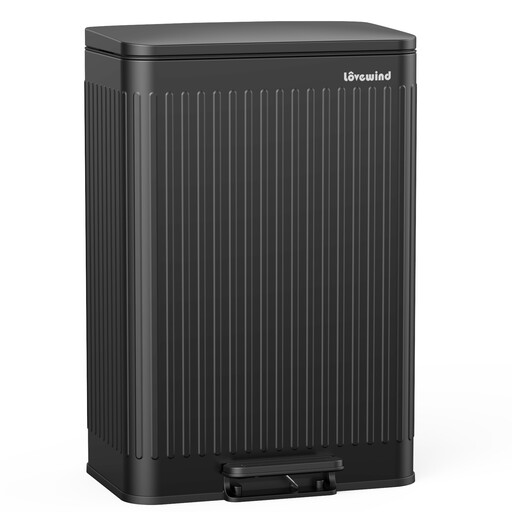
Why This Fits Their Persona: The 60L design provides a substantial single-body capacity for busy kitchens and households of around three to six people.
Its two removable inner buckets, carry handles and bag fixers address the inconvenience of lifting a full liner from a deep container.
Fingerprint-resistant coated stainless steel, 90-degree stay-open function and soft-close lid.
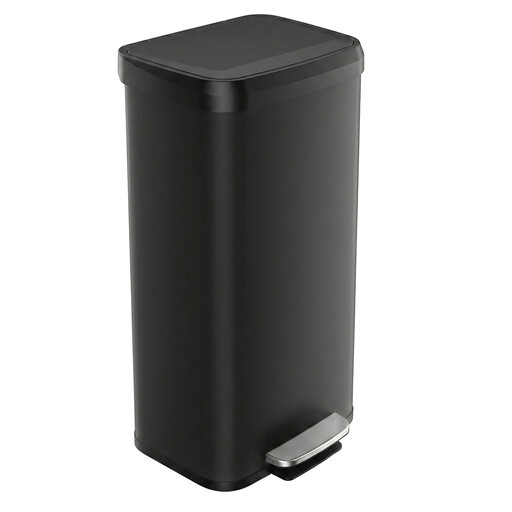
Why This Fits Their Persona: A large household or frequent home cook may prefer fewer trips to the outside waste bin and a wide pedal for regular hands-free use.
The 40.5 x 38.1 x 77.1cm footprint and height are clearly stated, helping buyers confirm that its generous volume will fit their kitchen.
68L capacity, steel pedal, soft-close lid, stay-open function, carbon filter and 15 supplied bin bags.
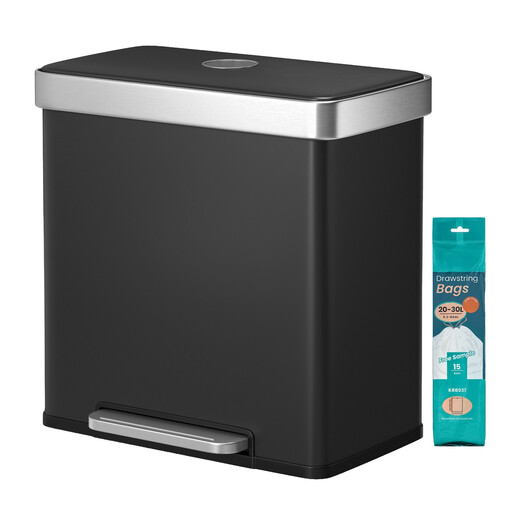
Why This Fits Their Persona: Two separate 30L sections help households sort general waste and recyclable materials at the point of disposal.
The dual-compartment layout makes the sorting method visible and practical, while removable inner buckets simplify separate liner changes.
Two 30L compartments, two pedals, removable buckets, stainless steel exterior and soft-close lid.
We have compiled a complete, real-time list of products that fully satisfy these strict selection criteria and UK safety regulations.
A dedicated food waste caddy can work alongside a larger kitchen waste bin. The Addis Everyday Kitchen Food Waste Compost Caddy has a 4.5L capacity, carry handle and compact 18 x 25 x 19cm dimensions. Its sage-green plastic body is designed to be wiped clean and can be used on a worktop, beneath a sink or in a utility room.
Use it for peelings, coffee grounds, tea bags and other daily scraps, then empty it into a home composting system or follow your council’s food-waste collection instructions.
A 50L kitchen bin is a practical starting point for many families, while a 60L or 68L model may suit larger households or frequent cooking. Measure the available space before choosing a larger capacity.
A pedal bin allows hands-free opening, which can reduce the need to touch the lid while cooking. It still requires regular cleaning, correct liner fitting and careful disposal of food waste.
Do not exceed the recommended load, avoid forcing the lid closed and keep the pedal and closing mechanism clear. Wipe the exterior with a soft cloth, clean the removable inner bucket regularly and keep the bin indoors on a stable surface.