
24/7 Customer Support

Free returns

Same-day & Next-day Delivery

Quality Guaranteed

Unlock Your Welcome Offers: FREE Delivery | Up to 80% OFF | Free 30-day JoyPlus trial
Download the APP
Choosing among kitchen rubbish bins is not simply a matter of picking a colour that matches your cupboards. The wrong capacity can mean constant emptying, an unsuitable lid can become irritating during food preparation and a bin that looks compact online may occupy more floor space than expected.
For UK homes, offices and recycling areas, the practical choice depends on available space, household size, waste habits and how easily the bin can be cleaned. This guide highlights common buying traps, explains the specifications worth checking and matches several options to different household needs.
A stated capacity does not show how much floor space a bin uses. A tall 68L kitchen bin may reduce emptying frequency, but it needs sufficient clearance beneath wall cupboards and around the lid. Conversely, a slim kitchen bin may fit beside a worktop but require more frequent emptying.
Always compare the listed width, depth and height, including the height with the lid open. Allow room to operate a pedal and, where specified, keep the rear of the bin at least 5cm from the wall.
A soft-close lid is designed to lower gradually and quietly. It does not automatically mean the lid can remain open during food preparation. If you regularly scrape plates, clean the fridge or handle bulky packaging, look for a stated stay-open or 90-degree opening function.
Avoid forcing a soft-close lid shut by hand, as this can put unnecessary strain on the mechanism.
A bin may look neat from the outside but become inconvenient if the liner slips, the bucket cannot be removed or food residue is difficult to clean. A removable inner bucket, handles and a liner-fixing hole can make emptying more manageable.
For households concerned about smells, a fitted lid can help contain odours between emptying. Some models also include a carbon filter, but this does not replace regular cleaning or timely disposal of food waste.
The appropriate capacity depends on how much waste your household produces and how often you want to empty the bin.
Capacity is usually measured in litres, but usable space may be affected by the inner bucket, lid design and liner fit.
A pedal bin allows hands-free opening, which is useful when preparing food or when your hands are wet. Check that the pedal has enough clearance and that the base is stable on your flooring. Non-slip pads can help reduce movement, particularly in homes with pets.
An open-top recycling bin can be convenient in offices, schools and high-traffic areas. However, a lidded bin may be more appropriate for kitchens where you want to contain odours and keep waste covered.
A stainless steel kitchen bin or coated steel model is generally easy to wipe clean. Check the care instructions before using abrasive products, as harsh cleaners may mark the surface. Plastic inner buckets are useful because they can be lifted out for cleaning rather than requiring the whole bin to be moved.
For UK use, place the bin on a stable, flat indoor surface and follow the manufacturer’s warnings about hot, hazardous or flammable waste. Recycling arrangements vary by local council, so check which materials your household collection accepts before selecting compartment layouts.
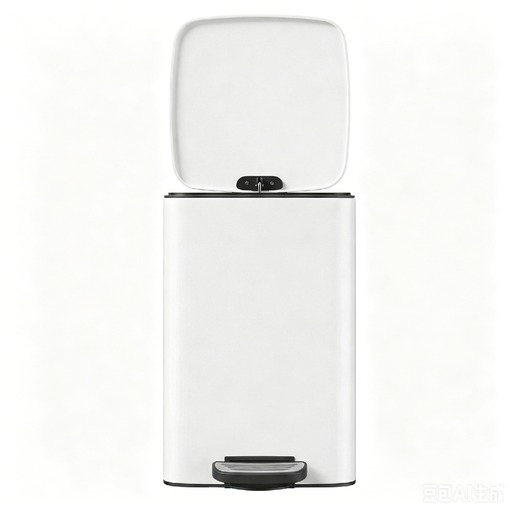
Why This Fits Their Persona: Its 34.1 x 28.6 x 40.5cm dimensions suit smaller kitchens, flats and light-duty spaces where a larger bin would be intrusive.
The removable inner bucket and bag holder address the common problem of awkward liner changes, while the stated stay-open function is useful during cleaning.
20L capacity, soft-close lid, non-slip base and steel body with a wipe-clean finish.
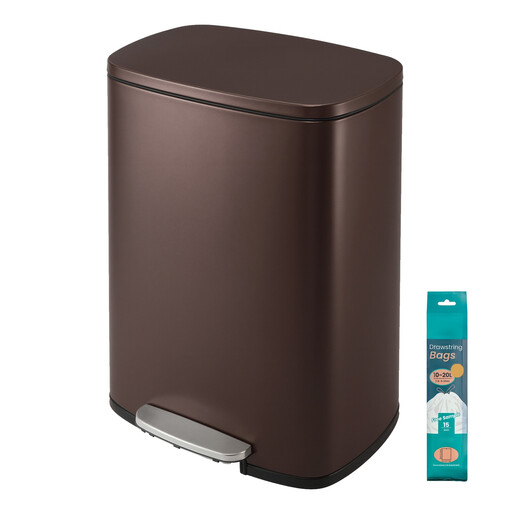
Why This Fits Their Persona: This steel model balances a 50L capacity with a relatively narrow footprint for family kitchens that need more volume without moving to a very large bin.
The specification clearly lists the 43.2 x 37.1 x 63.2cm size, soft-close lid and removable inner bucket, making the key fit and maintenance details easier to check.
Hands-free pedal operation, stainless steel body, concealed liner-fixing hole and a soft-closing lid.
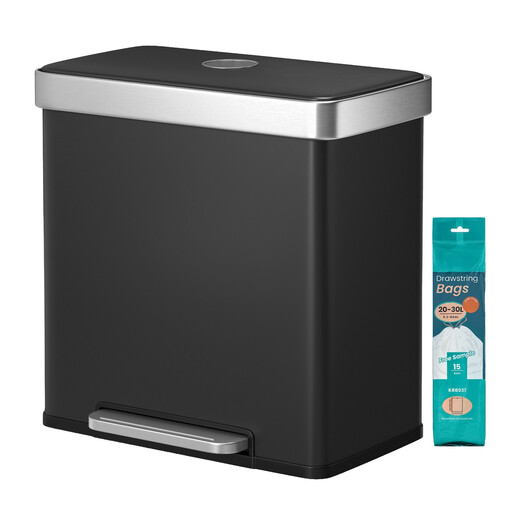
Why This Fits Their Persona: Two 30L sections are suited to larger households and environmentally conscious users who want general waste and recycling separated at the point of disposal.
The two removable buckets make each compartment easier to empty and clean, while separate sections avoid relying on vague recycling claims.
2 x 30L compartments, pedal opening, soft-close lid, stainless steel exterior and 15 rubbish bags included.
A large kitchen bin is not always suitable for peelings and other wet food scraps. The Addis Everyday Kitchen Food Waste Compost Caddy, 4.5L is compact enough for a worktop or under-sink space. Its carry handle supports easy transfer to an outdoor compost heap or council food-waste container, while the plastic body can be wiped clean.
View the Addis 4.5L food waste caddy if you want to keep food waste separate from dry rubbish.
We have compiled a complete, real-time list of products that fully satisfy these strict selection criteria and UK safety regulations.
A 40L or 50L kitchen bin is often a practical starting point for a family, but waste volume and collection frequency matter more than household size alone. Measure the available space and check whether the lid can open fully before ordering.
They can be useful when your local recycling arrangements match the compartment sizes. Check the internal division, total external dimensions and whether both buckets are removable. A dual compartment bin is not a substitute for following your council’s recycling guidance.
Use a correctly sized liner, empty wet waste regularly and wipe the inner bucket with mild detergent. Keep the lid mechanism clear of residue. A carbon-filter odour control bin may help manage smells, but routine cleaning and suitable food-waste separation remain important.