For grain-based batch lunches, choose a digital scale that measures in grams, lets you zero the weight of a bowl and has enough capacity for the bowl and the complete batch together. A 5kg model may be enough for modest single-bowl preparation; heavier vessels or larger batches can justify more capacity, while a readable display and a platform you can clean easily matter during frequent use. Check the exact model's features rather than treating higher capacity or a stated 1g increment as proof of better accuracy.
Who needs a kitchen scale?
Portion-led lunch preparers
If you weigh rice or other grains to keep servings consistent, gram measurements give you a weight to use alongside your recipe or food label. Frimley Health NHS Foundation Trust advises weighing variable portions such as rice when calculating carbohydrates.
Single-session batch cooks
If you prepare several lunches in one bowl, check that the scale can hold the vessel and all its ingredients. A tare function lets you reset the display between additions; Salter and Lakeland list this feature on the models discussed here.
Small-kitchen meal preppers
If the scale must fit in a drawer between sessions, compare its dimensions with your storage space. Also check that your usual bowl leaves the display visible and that the cleaning instructions suit the ingredients you weigh.
What matters when choosing?
Start with the weight of your usual bowl and heaviest batch, then check whether the scale's units, tare control and layout make portioning practical.
| Concern |
What to check |
Who this matters to |
| Consistent grain portions |
Check for gram units, the stated increment and a display visible beside your bowl. A 1g increment is not an independent accuracy test. |
If I plan lunches around a particular grain portion, I need to weigh what I serve rather than rely on a standard scoop. Around 42% of consumers put consistent portions first. |
| Batch capacity and one-bowl preparation |
Compare the maximum load with your bowl and complete batch together; check for a tare or add-and-weigh control. |
When I prepare several lunches at once, I want to add ingredients to one vessel without exceeding the scale's limit. Capacity and one-bowl preparation come first for roughly 33% of consumers. |
| Cleaning, visibility and storage |
Check the cleaning instructions, platform dimensions and whether your bowl obscures the display. |
If I put the scale away after each session or weigh liquids alongside grains, setup and cleanup affect whether it fits my routine. For about 25% of consumers, those practical details are the primary concern. |
Mistakes to avoid
-
Counting the maximum load as grain capacity
The bowl or container counts towards the rated maximum, even after you reset the display to zero. Grains weighing less than the limit can still take the combined load over it.
Allow for your heaviest usual vessel and full batch before deciding whether 5kg leaves enough headroom or a higher-capacity model is warranted.
-
Treating a 1g increment as a tested accuracy result
A 1g display increment describes the steps shown on the screen, not how closely or consistently the scale measures. Which? describes using calibrated weights and repeated readings in its kitchen-scale tests.
If measurement repeatability is especially important to you, look for independent test results for the exact model rather than relying on its stated increment alone.
-
Assuming a domestic scale is suitable for selling food by weight
Personal lunch preparation and weighing food for trade are different uses. Norfolk County Council Trading Standards says that most weighing equipment used for trade must be of an approved form.
If you intend to sell portions by weight, ask local Trading Standards about the requirements for your intended use and the exact instrument before using it for trade.
Relevant brands to consider
Salter
Salter lists kitchen scales spanning compact 5kg models, a 10kg washable Expert model and a 15kg high-capacity model.
- Salter specifies 1g increments and add-and-weigh on its researched 5kg Aquatronic and 15kg models.
- Capacity, platform size and washability differ between models; check the features of the one you are considering.
Lakeland
Lakeland lists a slim digital glass scale with an 8kg maximum load for bowl-based cooking.
- The researched model lists a tare function, an LCD and gram, millilitre, pound and ounce units.
- If a particular display increment or waterproof construction matters to you, check the exact model's specifications and cleaning instructions.
OXO
OXO's Everyday Glass Food Scale is a 5kg-class model for general cooking and portion weighing.
- OXO lists tare, multiple units and a backlit display for this model.
- Check local availability and applicable warranty terms for the exact product before making a purchase decision.
Joybuy product choices
These scales offer options for weighing grain portions and lunch ingredients; the two Unique models state a 10kg capacity, while the RENPHO model includes smart-scale features. Check the combined weight of your bowl and ingredients, and confirm any one-bowl features you need on the exact product page.
 No image available
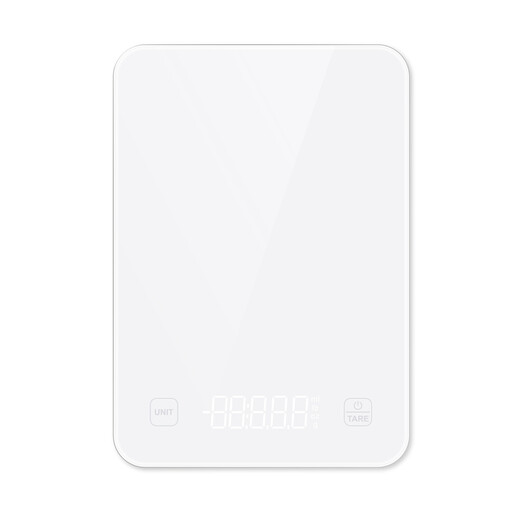
Unique Bluetooth Kitchen Scale, 10 kg, white
Consider this model if you weigh grains in a larger vessel and want its stated 10 kg capacity; the bowl and ingredients must remain within that limit.
The product name lists a 1 g figure, multiple units, tempered glass and app integration. Check the exact product details for tare if you plan to add ingredients sequentially in one bowl; the stated precision is not an independent accuracy result.
View on Joybuy
 No image available
Unique Bluetooth Kitchen Scale, 10 kg
This is another 10 kg option for weighing a bowl and a larger grain batch together, provided their combined weight stays within the rated limit.
The product name lists a 1 g figure, multiple units, tempered glass and app integration. Confirm tare on the exact listing if one-bowl preparation is important; a stated precision figure does not establish tested accuracy.
View on Joybuy
 No image available
RENPHO Calibra 1L Smart Nutritional Scale, black glass
Consider this model if you want to weigh lunch ingredients with a smart nutritional scale rather than choosing primarily for a stated high-capacity limit.
Its product name identifies the Calibra 1L variant and black-glass finish. Confirm its rated capacity and that it has the tare and app functions you intend to use before choosing it for a heavy bowl or larger batch.
View on Joybuy
Common questions
Do I need a smart scale to weigh grain portions?
No: a digital scale with gram measurements can give you the portion weight without a nutrition app. If you use that weight to calculate carbohydrates, consult the food's nutrition information as well; Frimley Health NHS Foundation Trust advises weighing variable portions such as rice.
Is a 5kg scale enough for batch-cooking grains?
It can be if your bowl and complete batch together stay below 5kg. Weigh the empty vessel and allow for every ingredient before deciding whether you need more capacity.
Should I choose a waterproof scale for lunch preparation?
A washable model is worth considering if splashes are a regular part of your preparation; it is not essential for weighing dry grains. Salter describes its researched Expert model as waterproof and washable, but follow the cleaning instructions for the exact scale rather than assuming every component can be submerged.
Can I use a household scale to weigh food sold by weight in the UK?
Do not assume a domestic kitchen scale is suitable for that use. Norfolk County Council Trading Standards says that most equipment used for trade must be of an approved form; confirm the requirements for your intended use and exact scale with local Trading Standards.


