Holiday-cottage bread bakers with limited storage
If cupboard and worktop space are tight, you need a scale that packs away easily while leaving enough room to weigh ingredients in a bowl.


For bread baking in a holiday cottage, look for gram measurements, a tare function and enough capacity for the bowl and ingredients together. A compact scale is easier to store, but a large bowl may hide its display; consider a visible or pull-out display, or a 10 kg capacity if a 5 kg limit would be restrictive.
If cupboard and worktop space are tight, you need a scale that packs away easily while leaving enough room to weigh ingredients in a bowl.
A broad or heavy bowl makes total capacity and display visibility especially important: the bowl contributes to the load and may cover the readout.
Gram measurements and tare let you reset the reading after placing a bowl on the scale, then add ingredients in sequence.
Start with the combined weight of your bowl and ingredients, then check whether you can read the display and store the scale in the space available.
| Concern | What to check | Who this matters to |
|---|---|---|
| Storage and power | Check stored dimensions, battery type and whether batteries are included. | I have little room to put a scale away and want it ready when I start baking. Around 44% of consumers put compact storage and ready-to-use power first. |
| Bowl and ingredient capacity | Compare the maximum load with the bowl and ingredients together; check for tare. | My mixing bowl is heavy, or I make larger batches, so I need room for more than the flour alone. Roughly 33% of consumers prioritise total capacity. |
| Display visibility | Check where the readout sits when your bowl is on the platform. | When I add flour to a wide bowl, I want to see the weight without moving it. Around 23% of consumers place readable measurements first. |
The bowl uses part of the scale’s capacity before you add flour, water or dough.
Allow for the combined load. If a heavy bowl or batch recipe could exceed 5 kg, consider a higher-capacity scale and check that it has tare.
A wide bowl can cover a fixed readout, making it harder to stop at the intended weight as you add ingredients.
Check the display position against the bowl you plan to use. OXO describes its pull-out display as a way to avoid shadowing from bowls or plates.
Batteries and electrical products need an appropriate disposal route when they are no longer usable.
GOV.UK advises using a battery collection point for batteries and a household recycling centre for electrical products.
Salter offers 5 kg kitchen scales as well as a British Bakes model specified at 10 kg.
OXO has different display designs for weighing into a bowl.
Haden’s white slim-line kitchen scale is a 5 kg option for compact storage.
A bowl-based option for bakers who would rather bring a matching weighing bowl.
These kitchen scales offer two different starting points for cottage baking: a stainless-steel model to assess for compact use and a 10 kg model to consider when bowl-and-ingredient capacity is the priority. Check tare and display placement for either one if you plan to add ingredients into a large bowl.
 No image available
Consider this model if you want a stainless-steel scale for a temporary kitchen. Before choosing it for bread, confirm its maximum bowl-and-ingredient load, tare function, gram measurements and display visibility with your intended bowl.
 No image available
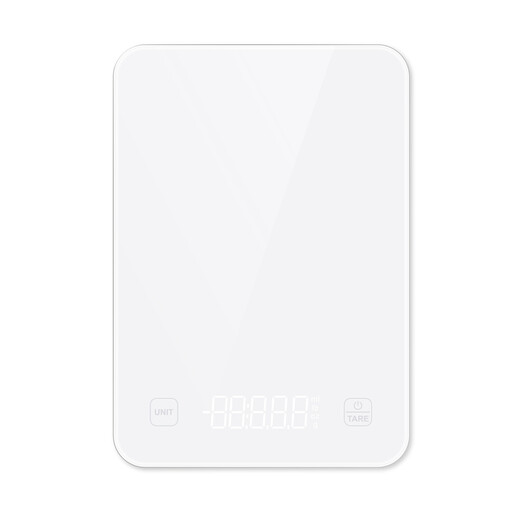
Consider the 10 kg capacity if your bowl and bread ingredients could exceed a 5 kg total load. The product name also specifies 1 g precision; check tare, display position, storage dimensions and power requirements before taking it to a cottage.
Check for gram measurements, tare and enough capacity for the bowl and ingredients combined. A 5 kg limit may suit a smaller load, while a heavy bowl or larger batch may call for more headroom.
Only if the combined load is within its capacity and you can still read the display. OXO says its pull-out-display design avoids bowl or plate shadowing; check the layout of the particular scale you are considering.
Personal baking is different from weighing goods for sale. GOV.UK says weighing and measuring equipment used in business must be passed as fit for use for trade; seek Trading Standards advice if you intend to sell bread by weight.
Take spent batteries to an appropriate collection point and the scale to a household recycling centre rather than putting them in household rubbish, as advised by GOV.UK.