
24/7 Customer Support

Free returns

Same-day & Next-day Delivery

Quality Guaranteed
Download the APP
Categories
Is your kitchen sink area a constant source of clutter? A damp sponge here, a stray brush there and a wet cloth draped over the tap. It’s a common sight in many UK homes, creating not just a messy look but also an unhygienic environment. A well-chosen kitchen sink organiser can transform this space, bringing order and cleanliness to the heart of your kitchen.
As the Joybuy Product Recommendation Officer, my role is to help you find practical solutions that genuinely work. This guide cuts through the clutter, focusing on what truly matters when selecting a sink caddy. We will explore different types, materials and features to help you find the right fit for your home, whether you have a spacious kitchen or a compact studio flat.
Before you decide, consider a few key points. The right choice depends entirely on your kitchen's layout and your daily habits.
The first decision is where your organiser will live. A countertop sink organiser sits on the worktop beside your sink. These models often offer more storage, with dedicated compartments for washing-up liquid, brushes and sponges. They are a great choice if you have the counter space to spare.
Alternatively, an in-sink caddy or sponge holder for kitchen sink fits directly inside the basin, held in place by suction cups or by hanging over the divider. This is an excellent space-saving option for smaller kitchens, keeping your worktops completely clear. It also ensures all drips fall directly into the sink.
The material of your sink tidy directly impacts its durability and how easy it is to keep clean.
Regardless of material, prioritise a design with excellent drainage. Holes or slats in the base are essential to allow water to escape and air to circulate, which helps prevent the build-up of grime and keeps your sponges and brushes drier.
Think about what you need to store. Do you just need a simple sponge holder for kitchen sink, or a more comprehensive washing up tidy? Some models include a dedicated dish brush holder to keep it upright, while others feature a rail for hanging a dishcloth. A removable drip tray is a highly practical feature for a countertop model, as it catches excess water and protects your worktop.
Here are a few standout options that address common organisational needs in the kitchen.
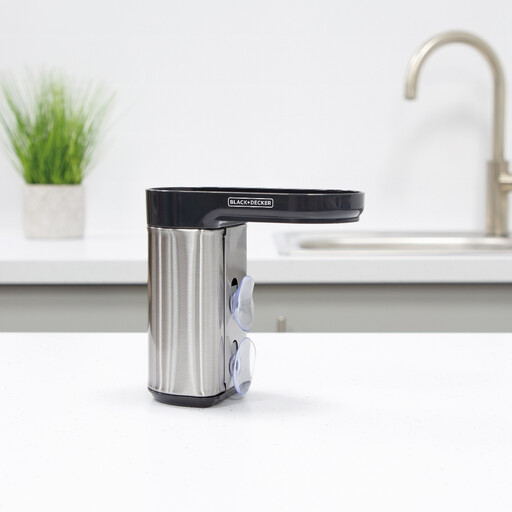
Why It Stands Out: This is a classic example of an effective in-sink caddy. Its primary appeal is its space-saving design and durable material. Made from rust-resistant stainless steel, it’s built to live inside your sink basin, keeping your countertops completely free of clutter. The open-wire design ensures water drains away immediately, promoting better hygiene.
Pros:
Who is it for? Anyone with limited counter space or those who prefer a minimalist aesthetic. It’s ideal for keeping a sponge and brush organised and out of sight.
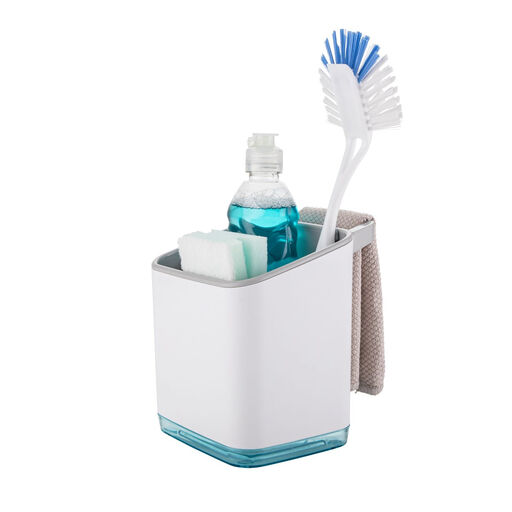
Why It Stands Out: The Minky Sink Tidy is a comprehensive countertop sink organiser designed for total convenience. It’s more than just a holder; it’s a complete station for your washing-up essentials. Its most practical feature is the removable drip tray with a built-in spout, which cleverly channels collected water back into the sink, keeping your worktop dry.
Pros:
Who is it for? Households that need an all-in-one solution to store washing-up liquid, a brush, a sponge and a cloth neatly on the countertop.
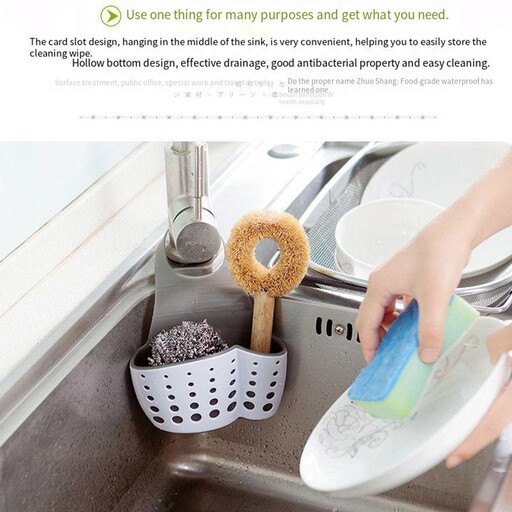
Why It Stands Out: This product excels in its simplicity and compact footprint. Designed as a narrow sink edge tray, it’s perfect for extremely tight spaces where even a standard caddy won’t fit. The angled base cleverly directs water run-off back into the sink. Its hybrid ABS and soft EVA construction makes it both sturdy and non-slip, protecting your surfaces.
Pros:
Who is it for? Those living in studio flats, motorhomes or homes with very limited kitchen counter space. It’s also a great secondary holder for small items.
Every kitchen has its own unique layout and needs. If the models above aren't quite the right fit, there are many other styles and sizes to consider. From larger caddies to different material finishes, the perfect solution for your home is out there.
Explore our full range of kitchen supplies to find the perfect match for your home.
Q: How do I stop my sink caddy from getting slimy? A: The key is consistent cleaning and good drainage. Choose a sink caddy with plenty of holes or slats to let water escape. It’s good practice to rinse it daily and give it a more thorough wash with soap and water at least once a week. Models that are easy to disassemble make this task much simpler.
Q: Where is the most hygienic place to put a kitchen sink organiser? A: For a countertop model, place it on a clean, dry surface where it has room for air to circulate around it. An in-sink caddy is also a hygienic choice, as drips and run-off go directly down the drain. The most important factor for hygiene is preventing stagnant water, so a location that allows the caddy and its contents to dry out between uses is ideal.
Q: Can a sink tidy damage my countertop or sink? A: Most organisers are designed to be safe for kitchen surfaces. To protect a countertop, look for a caddy with soft, non-slip feet or a base made from a material like silicone or EVA. For use inside a stainless steel sink, a caddy made of plastic or coated metal is a safe bet. Always ensure the unit is placed on a flat, stable surface to prevent it from tipping and causing scratches.