
24/7 Customer Support

Free returns

Same-day & Next-day Delivery

Quality Guaranteed

Unlock Your Welcome Offers: FREE Delivery | Up to 80% OFF | Free 30-day JoyPlus trial
Download the APP
A kitchen strainer can handle far more than draining pasta. The right design can rinse rice, separate frying oil, lift dumplings from hotpot broth, strain home-made jam or wash fruit and vegetables. The wrong one, however, may clog easily, feel unstable over a bowl or develop residue around poorly finished joints.
Before buying, look beyond attractive photographs and broad claims about durability. Three common shopping traps are worth checking first.
A small fine mesh sieve is useful for loose-leaf tea, icing sugar and single portions, but it is slow for draining pasta or washing a large quantity of vegetables. Conversely, a large colander may allow fine grains, seeds or pulp to pass through.
Consider the ingredients you handle most often and check the diameter, depth and handle length before ordering.
“Metal” does not necessarily mean stainless steel. Some products use plated steel or mixed materials, which may require more careful maintenance. If you want a stainless steel strainer, look for the stated grade and material details rather than relying on the product photograph.
304 stainless steel, also known as 18/8 stainless steel in some product descriptions, is commonly used for food-contact kitchenware. It is resistant to corrosion, but it is not maintenance-free. Salt, acidic sauces and moisture left on the surface can still cause marks over time.
A long handle can keep your hand further from hot oil, but metal handles may still become hot during extended cooking. Fine mesh can also trap seeds, flour or fried residue if it is not rinsed promptly.
Check whether the utensil is dishwasher safe, whether hand washing is recommended and whether the manufacturer advises avoiding steel wool, abrasive cleaners or prolonged soaking.
The opening size determines what the kitchen strainer can retain.
For preserving, mesh fineness matters more than capacity. A jam straining bag is designed to hold back pips and pulp while allowing juice to pass through, whereas a standard colander is not intended to create a smooth jelly.
For frequent cooking, look for clearly stated 304 stainless steel or another specified food-contact material. A single-piece or smoothly finished construction can reduce areas where food residue gathers. Polished edges are also useful when the utensil will be handled regularly.
Plastic can still be a practical choice for a lightweight drain basket, particularly when washing produce or storing ingredients in the fridge. Compare the material with the intended use rather than assuming one option suits every kitchen.
A soup ladle needs a deep bowl and a comfortable grip, while a frying skimmer needs enough surface area to lift food without excessive oil. For hotpot cooking, a pot-rim hook or hanging hole can make serving more convenient.
If cupboard space is limited, choose utensils with hanging holes, nesting shapes or a double-layer basket that can be stored together.
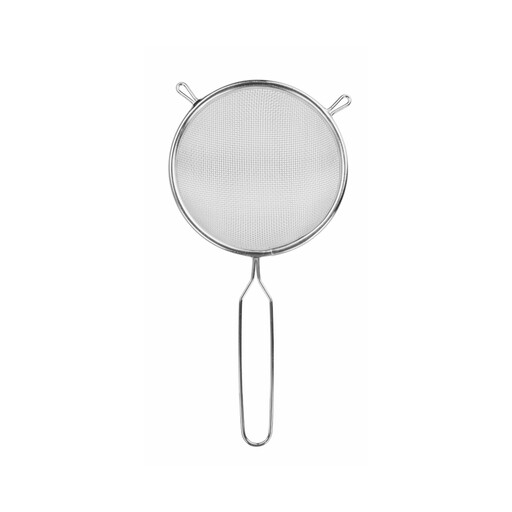
Why This Fits Their Persona: A straightforward option for first kitchens, flat shares and everyday rinsing of pulses, berries, grains and tinned foods.
Its stated 16cm diameter gives buyers a clear indication of capacity, while the fine mesh is more suitable for small particles than a wide-hole colander.
Fine mesh, long handle and a built-in rest for positioning over a bowl or pan.

Why This Fits Their Persona: Useful for cooks who regularly prepare noodles, dumplings, fried food, blanched vegetables or hotpot dishes and want several sizes available.
The listing specifies 304 stainless steel, dense woven mesh and single-piece construction rather than leaving the material or finish unclear.
Three stated sizes, hanging holes and dishwasher-safe care instructions.
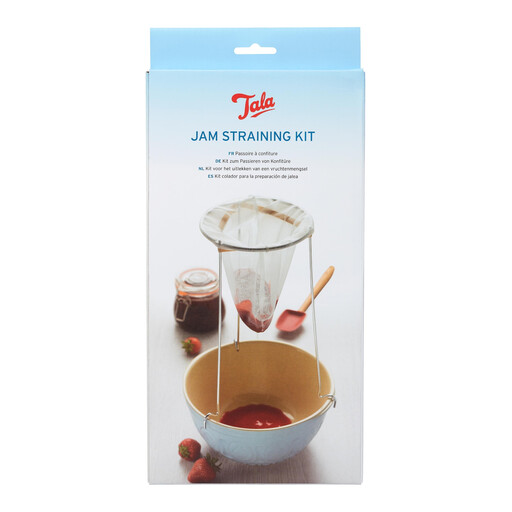
Why This Fits Their Persona: A focused choice for home-made jam, jelly, chutney, coulis and other preserving projects where ordinary sieves may not retain enough pulp or seeds.
It is a dedicated stand-and-bag setup, so buyers do not need to rely on improvised cheesecloth arrangements that may be unstable or messy.
Stainless steel frame, fine-weave nylon bag and compact 11 × 11 × 17cm dimensions.
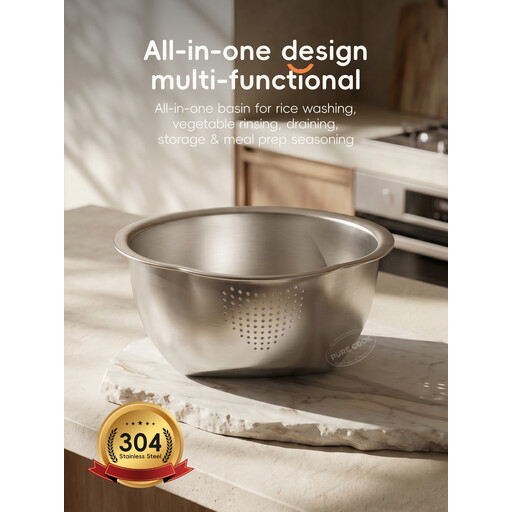
Why This Fits Their Persona: Suited to batch meal preparation, frequent rice washing and rinsing fruit, vegetables, beans or noodles.
Its 27cm diameter, side handles and slanted-bottom design give clearer practical information than a generic “multi-use” label.
304 stainless steel, dense drainage holes and dishwasher-safe cleaning instructions.
We have compiled a complete, real-time list of products that fully satisfy these strict selection criteria and UK safety regulations.
A rice washer or colander with evenly distributed, relatively fine drainage holes is usually more practical than a large-holed pasta colander. A wider basin also gives rice room to move while water drains. Check the stated dimensions if you regularly prepare several portions.
Some stainless steel strainers are dishwasher safe, while others recommend hand washing to preserve the finish. Always follow the individual care instructions. Rinse away salt, acid and food residue promptly, avoid steel wool where advised, and dry the utensil thoroughly.