
24/7 Customer Support

Free returns

Same-day & Next-day Delivery

Quality Guaranteed

Unlock Your Welcome Offers: FREE Delivery | Up to 80% OFF | Free 30-day JoyPlus trial
Download the APP
Kitchen strainers and filters cover a wide range of jobs, from removing seeds from homemade jam to keeping food scraps out of a sink drain. The right choice depends less on attractive packaging and more on mesh size, material, dimensions and intended use.
A low-cost purchase can become wasteful when the filter blocks quickly, the handle becomes uncomfortable, or the product simply does not fit the equipment it was bought for. Use this guide to compare practical options before choosing a kitchen utensil, food filter or sink accessory.
A fine mesh strainer may look similar to a general-purpose sieve, but the results can be very different. Coarse holes suit pasta, vegetables and larger food pieces, while a fine mesh is more suitable for flour, sauces, soy milk and small seeds.
For coffee, the hole pattern is equally important. A reusable coffee filter designed for pour-over brewing is not interchangeable with an espresso puck screen or a sink strainer basket.
Stainless steel is a broad description. Buyers should check whether the listing specifies a grade such as 304 stainless steel, whether the item is formed in one piece, and whether edges are rolled or polished.
For everyday utensils, a robust stainless steel slotted spoon can offer useful resistance to corrosion. For drainage, a 304 stainless steel sink strainer basket is designed for contact with water and food debris, but it still needs regular rinsing and drying.
A filter that does not sit securely over a bowl, pot, portafilter or sink opening will be difficult to use safely. Check:
Measurements in product listings should be compared with your existing equipment rather than estimated visually.
For cooking utensils and food preparation, look for clearly stated materials and care instructions. The BJ 304 Stainless Steel Mesh Strainer Skimmer is listed as a two-piece fine mesh utensil suitable for tasks including soy milk filtering, foam skimming and flour sieving. A nylon soy milk filter can be easier to fold and position over a container, while stainless steel offers a more rigid structure.
Care instructions matter as much as the material. Some products recommend hand washing, avoiding abrasive cleaners or drying thoroughly after rinsing. Following these instructions helps preserve finishes, coatings and fine openings.
A 200-mesh soy milk filter is intended for separating very small particles from blended liquids. The BJ nylon screens are available in 20 × 30 cm and 30 × 40 cm sizes, allowing shoppers to match the screen to the volume of liquid and container being used.
For pour-over coffee, the BJ 800-Mesh 304 Stainless Steel Pour Over Coffee Filter is designed as a reusable metal coffee filter. Metal filters generally allow a different flow of oils and fine particles compared with paper filters, so brewing technique and personal taste remain important considerations.
A puck screen needs to match the portafilter. The MHW-3BOMBER model measures 58.5 mm in diameter, is 0.2 mm thick and is specified for 58 mm portafilters. Its titanium-coated stainless steel construction and 10,385 precision-drilled holes are objective features, but the screen must still be rinsed and dried after use.
For a sink, check the drain opening before ordering. The PURECOOK sink strainer basket is listed for a 78 mm drain hole and supplied as a two-piece set. It is intended to catch food debris while allowing water to drain, but it should not be used as a sealed food storage container.
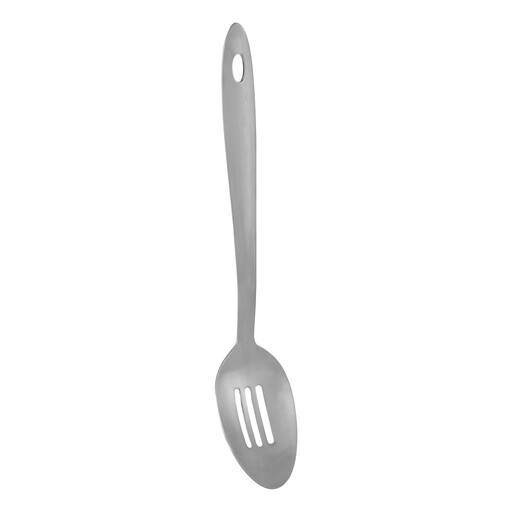
Why This Fits Their Persona: A straightforward everyday utensil for draining and serving vegetables, pasta or fried foods without investing in a larger specialist set.
The listing specifies stainless steel construction, a 33 cm length and a hanging loop, making its size and storage method clear.
Brushed silver finish, curved handle and integrated hanging hole. Hand washing is recommended.
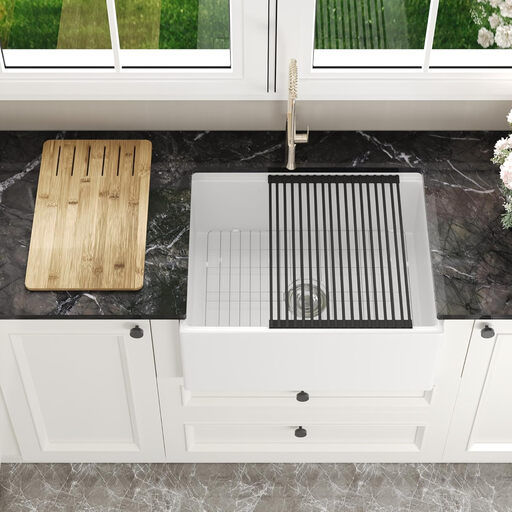
Why This Fits Their Persona: Suits kitchen renovators planning a farmhouse-style workstation with space for washing large cookware and using integrated accessories.
The listing provides external dimensions, a 35.5 kg weight, undermount installation details and a professional-installation warning.
Single 61 × 51 × 25 cm bowl, built-in overflow, basket strainer, cutting board, grid and drying rack included.
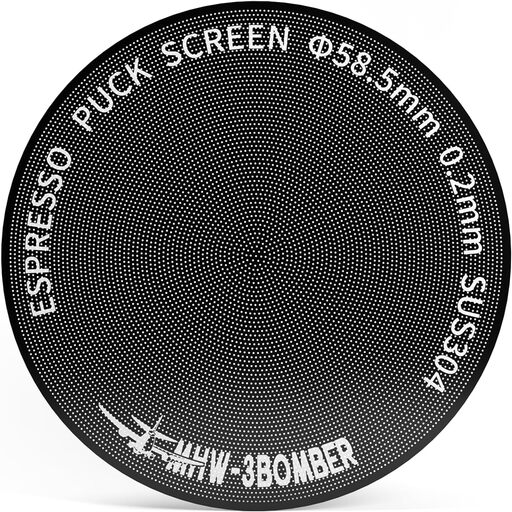
Why This Fits Their Persona: A targeted accessory for home baristas using compatible 58 mm portafilters and seeking a reusable barrier between coffee grounds and the brew head.
The diameter, thickness, hole count and portafilter compatibility are specified, reducing the risk of buying an ill-fitting puck screen.
0.2 mm titanium-coated stainless steel with 10,385 precision-drilled holes; reusable and rinse-clean after brewing.
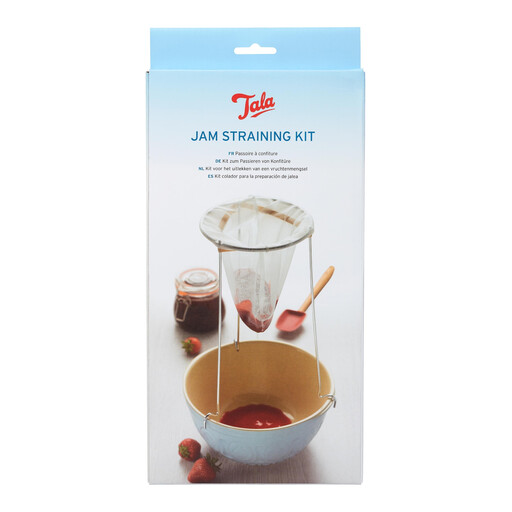
Why This Fits Their Persona: Designed for people who regularly make jams, jellies, chutneys or fruit sauces and want a supported setup rather than improvised cloth over a bowl.
The set includes both a stainless steel stand and a fine-weave nylon bag, so the support and filtering components are supplied together.
Stainless steel frame, nylon straining bag, 11 × 11 × 17 cm dimensions and gift-boxed presentation.
We have compiled a complete, real-time list of products that fully satisfy these strict selection criteria and UK safety regulations.
A strainer usually separates larger solids from liquids, such as pasta or vegetables. A filter uses finer openings to remove smaller particles, such as flour, fruit seeds, coffee grounds or soy pulp. Always match the mesh or hole size to the food being processed.
Rinse it after each use to remove trapped food debris and wash it with mild detergent as needed. Drying the basket helps reduce residue and odours. Avoid forcing large scraps through the holes, as this can slow drainage or contribute to blockages.
A reusable coffee filter does not require regular paper replacements, but the initial purchase price and cleaning time should be considered. Metal filters also produce a different cup profile, so choose according to your preferred brewing method and taste rather than running cost alone.