
24/7 Customer Support

Free returns

Same-day & Next-day Delivery

Quality Guaranteed

Unlock Your Welcome Offers: FREE Delivery | Up to 80% OFF | Free 30-day JoyPlus trial
Download the APP
Buying kitchen and utility knives can seem straightforward until a knife struggles with the first tough ingredient, loses its edge quickly or feels unsafe during a decorating job. The right choice depends less on impressive product wording and more on matching the blade, handle and locking system to the work you actually do.
This guide covers common buying traps, practical specifications and a selection of knives for cooking, food preparation, packaging, carpet fitting, decorating and entertaining.
A broad blade does not automatically make a knife suitable for bones or frozen food. A Chinese chef knife or vegetable chopping knife may be designed for vegetables, fish, herbs and boneless meat, while a dedicated meat cleaver has a thicker, heavier construction.
Using a lighter kitchen cleaver against bones or frozen ingredients can damage the edge, bend the blade or create unpredictable movement. Always check the product instructions and intended use before applying force.
A sharp blade is useful only when it can be maintained safely. Marketing descriptions may focus on edge retention, but buyers should also check whether the knife is suitable for hand washing, honing or sharpening.
Many stainless steel kitchen knives are convenient to clean, but this does not mean they should automatically go in the dishwasher. Heat, detergent and movement can affect the edge and handle over time. If the listing recommends hand washing, rinse and dry the knife promptly after use.
For a folding utility knife, carpet knife or cutter knife, the blade system is as important as the handle. A tool-free quick-change mechanism can reduce downtime, while a secure lock helps prevent the blade from shifting during a cut.
Check whether the knife uses standard replacement blades, how many are included and whether the blade retracts fully for storage. A snap-off cutter knife is useful for cardboard, paper and packaging, but it needs controlled pressure and safe disposal of used segments.
Common materials include stainless steel and SK5 high-carbon steel. Stainless steel is often selected for kitchen use because it offers practical resistance to corrosion when cleaned and dried properly. SK5 blades are commonly used in utility knives and are supplied as replaceable blades in several models.
For repeated food preparation, look for a clearly stated blade material, a stable handle and a design suitable for the ingredients involved. A full tang construction, where the blade extends through the handle, can provide additional structural support on suitable stripping or kitchen tools.
A 7-inch straight-edged cleaver offers a broad contact area for chopping vegetables, slicing boneless meat and preparing stir-fry ingredients. A narrower slicing knife is more suitable for controlled cuts and thinner portions.
For decorating work, a 50 mm stripping knife covers a useful area when removing old paint or wallpaper. By contrast, a folding utility knife with a shorter exposed blade is easier to carry and better suited to packaging, carpet and general craft work.
A handle should provide a secure grip without forcing the wrist into an awkward position. Look for features such as ergonomic shaping, rubber sections, wood inlays or a belt clip, depending on the intended task.
Utility knives should have a reliable lock, safe blade retraction and a straightforward replacement system. Use a stable cutting surface, keep sharp tools away from children and wear suitable hand protection for demanding non-food tasks.
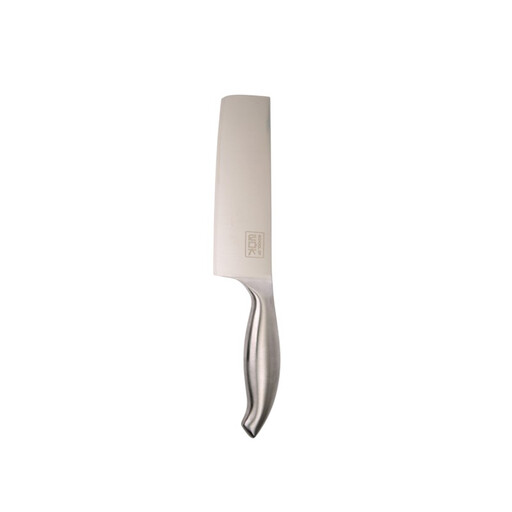
Why This Fits Their Persona: A practical option for home cooks who want one broad-bladed tool for vegetables, fish, meat and stir-fry preparation.
Its stated use covers everyday ingredients, while the instructions clearly advise against bones and frozen foods.
7-inch stainless steel blade, straight edge and ergonomic handle; hand washing is recommended.
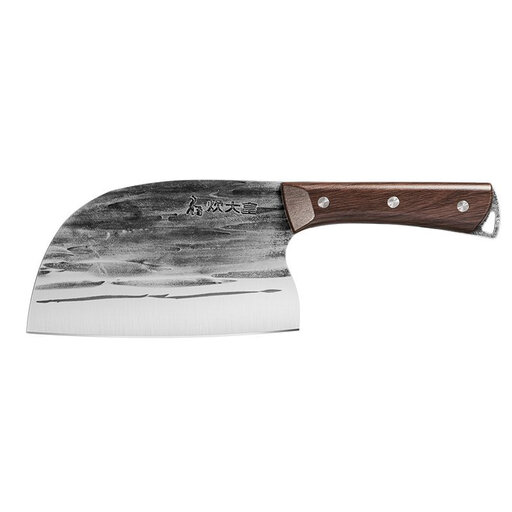
Why This Fits Their Persona: Suits cooks who value a balanced, multi-purpose slicing knife for regular chopping, dicing, mincing and food preparation.
The listing states the material, full-tang construction and hand-wash requirement instead of relying only on appearance-led claims.
Stainless steel blade, full-tang construction and a design intended for slicing, chopping, dicing and mincing.
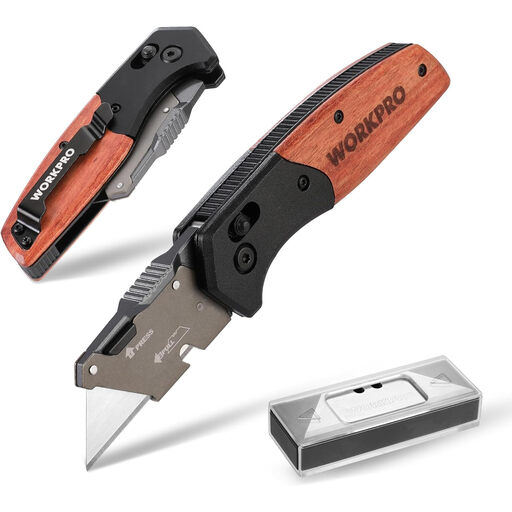
Why This Fits Their Persona: A portable choice for tradespeople, DIY users, decorators and craftspeople working with carpet, plasterboard, paper or packaging.
It includes an external slide lock, tool-free blade changes and 10 SK5 replacement blades, addressing common downtime issues.
130 g folding format, 61 mm blade length, aluminium alloy and wood handle, plus a belt clip.
For paint and wallpaper removal, the Stanley Professional Stripping Knife 50mm has a bevelled, taper-ground steel blade, hardwood handle and full-tang construction. Its 50 mm width is suited to lifting material across a reasonably broad section of wall.
For serving, the Fifty Five South 3Pc Cheese Knife Set provides three decorative cheese knives with stag head handles and a brass-and-steel construction. It is intended for cheese boards and dining rather than general chopping.
We have compiled a complete, real-time list of products that fully satisfy these strict selection criteria and UK safety regulations.
There is no fixed lifespan. It depends on blade material, frequency of use, cutting surfaces, cleaning and storage. A kitchen knife can remain useful longer when used on a suitable board, hand washed and sharpened or honed correctly. Utility knife blades should be replaced when dull rather than forced through materials.
Some may be labelled dishwasher safe, but hand washing and immediate drying are generally more suitable for preserving sharpness and handle condition. Always follow the individual product instructions.
A cutter knife often uses a fixed or snap-off blade for paper, cardboard and packaging. A folding utility knife houses the blade inside the handle when stored and may include a lock, belt clip and quick-change mechanism. Choose according to the material, portability and control required.