
24/7 Customer Support

Free returns

Same-day & Next-day Delivery

Quality Guaranteed

Unlock Your Welcome Offers: FREE Delivery | Up to 80% OFF | Free 30-day JoyPlus trial
Download the APP
A single sponge rarely handles every kitchen cleaning task well. Burnt-on food needs a different approach from delicate glassware, while bottle openings and cup lids often require narrow brushes rather than broad washing-up brushes.
The difficulty is knowing which features are genuinely useful and which can lead to wasted money. Before buying kitchen cleaning brushes and scourers, watch for these common pitfalls.
Steel scourers and heavy-duty scourers can remove baked-on grease from suitable metal cookware, grills and barbecue equipment. However, their abrasive fibres may scratch non-stick coatings, polished finishes, glass or delicate surfaces.
A product described as “tough” is not automatically suitable for every cleaning job. A well-equipped kitchen usually needs at least two options: an abrasive tool for durable cookware and a gentler sponge or brush for everyday washing-up.
A short handle can provide useful pressure when cleaning pans, but it may put your hands close to hot water, grease or sharp edges. A long-handled dish brush can improve reach inside deep pans and glasses, although an oversized head may be awkward in narrow cups.
Look for a handle that matches the task. Grip shape, hanging storage and head angle can affect everyday convenience more than promotional wording about cleaning power.
A 24-pack of non-scratch sponges may suit a busy household, restaurant or catering operation, but only if the sponge can be rinsed and dried properly between uses. Conversely, a refillable washing-up brush may reduce the need to replace the complete handle, but you will need compatible replacement heads.
Consider replacement frequency, storage space and compatibility rather than judging value by pack size alone.
The cleaning head should match the surface:
Do not rely on the word “gentle” alone. Check the stated surface recommendation and any warning about coatings or delicate finishes.
A large fan-shaped head can cover plates and pans quickly, while a slim cup cleaning brush is more suitable for bottle necks, lid grooves and narrow gaps. An angled head may reach corners in bakeware more easily.
For deep containers, compare the handle length and head width. For example, a long-handled bottle brush measuring around 36cm may reach further into tall bottles than a conventional dish brush. A compact double-ended brush set can be more practical for small grooves, seams and stubborn residue.
A brush or scourer should be easy to rinse thoroughly. Hanging hooks and open handles allow air to circulate, helping the item dry between uses. Follow the product instructions regarding dishwasher cleaning, water temperature and replacement.
For safety, rinse away loosened food debris after use, allow the item to dry and replace it when bristles become misshapen or fibres detach. Wear gloves when using particularly abrasive heavy-duty scourers and test an unfamiliar tool on a small area first.

Why This Fits Their Persona: A practical choice for smaller households and everyday washing-up, with a refillable handle and a bonus sponge head included.
The replaceable sponge means the handle does not need to be discarded when the cleaning head wears out. Its angled head is intended to reach corners and awkward areas.
Refillable liquid-dispensing design; bonus refill included; use only with water below 70°C as instructed.
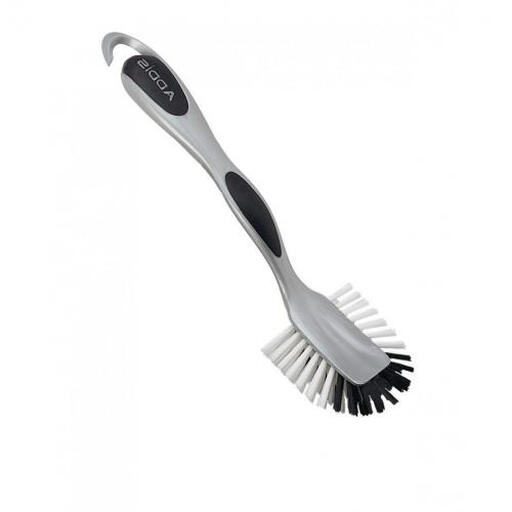
Why This Fits Their Persona: Suits frequent washing-up in family kitchens, restaurants and catering settings where grip, coverage and storage matter.
The product specifies a soft-grip handle, an open hanging hook and mixed bristles, addressing comfort, drying and varied cleaning needs.
27.5cm height; built-in scraper; mixed stiff and soft nylon bristles; open hook for hanging storage.
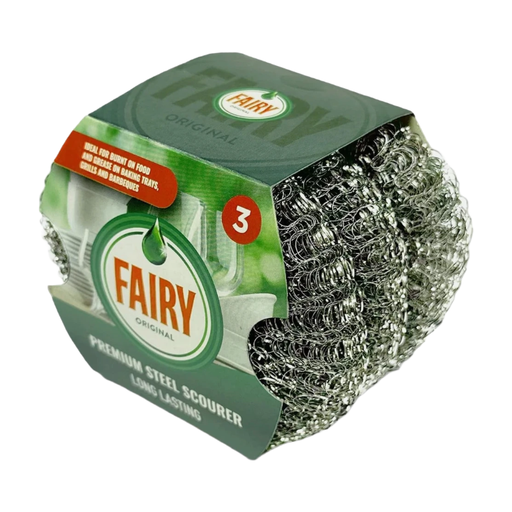
Why This Fits Their Persona: Designed for cooks and busy kitchens dealing with burnt-on food, roasting tins, grills and robust metal surfaces.
Its steel construction is clearly intended for abrasive cleaning, while the warnings make the surface limitation clear: avoid non-stick coatings and delicate finishes.
Steel material; three scourers per pack; suitable for stated durable cookware and barbecue equipment.
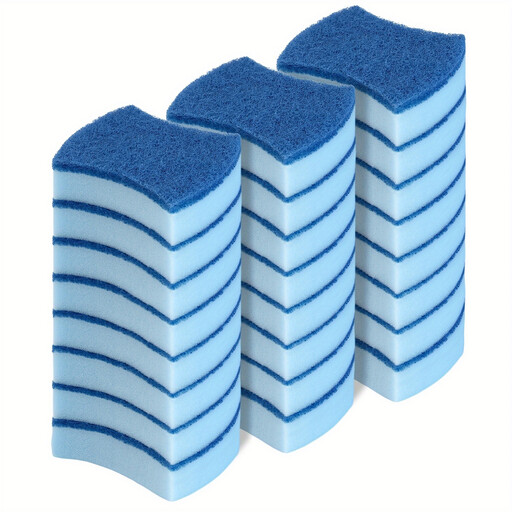
Why This Fits Their Persona: Useful for homes with glassware, non-stick pans and polished worktops that need regular cleaning without a metal scourer.
The dual-sided design separates wiping from scrubbing, and the product is described as suitable for delicate surfaces including glass and non-stick cookware.
Cellulose sponge with a non-scratch scrubbing layer; 24-piece pack; rinse, squeeze and air-dry after use.
We have compiled a complete, real-time list of products that fully satisfy these strict selection criteria and UK safety regulations.
Replace them when bristles become flattened, fibres detach, odours remain after washing or the material starts to break down. Rinse after every use and allow the item to dry fully. High-use kitchens may need more frequent replacement than occasional home users.
Generally, steel scourers should not be used on non-stick coatings. The metal fibres can scratch or damage the surface. Choose a non-scratch sponge or a brush specifically identified as suitable for coated cookware, and follow the pan manufacturer’s care instructions.
It can reduce waste because the handle is retained while the sponge or head is replaced. Running cost depends on the price and availability of compatible refills, how often the head is changed and how much washing-up liquid is dispensed. Check refill compatibility before purchase.