Who each setup suits

Seated live-album listeners

If you usually listen from the dining table, a defined listening position and the width of a stereo pair may matter more than having music playing throughout the room. Sonos documents a wider stereo presentation from a same-model pair; KEF offers a dedicated two-speaker system.

Space-limited kitchen listeners

If only one shelf or worktop position is practical, measure it and plan a safe location before choosing a speaker. A single unit avoids finding two positions, but it cannot provide the separated left and right placement of a pair.

Mixed-source music households

If you stream albums but also use a CD player or turntable, check the outputs on those devices against the exact speaker inputs. Audio Pro lists an RCA input on the Addon C10 MkII, while KEF says the LSX II LT has no 3.5 mm analogue input.

What matters when choosing

One wireless speaker

Choose it when: You have one safe speaker position and mainly want straightforward playback while cooking or eating.

Trade-off: One enclosure does not give you separate left and right speaker positions.

Two matched wireless speakers

Choose them when: You listen from a regular dining seat and can position both compatible speakers safely.

Trade-off: A pair needs two suitable positions and power connections; Sonos suggests 8–10 feet between its paired speakers as a placement starting point.

Compact active stereo system

Choose it when: You want a dedicated left and right setup and can accommodate its speaker connections.

Trade-off: Plan the cable route and check inputs against any wired player; KEF says its LSX II LT has no 3.5 mm analogue input.

ConcernWhat to checkWho this matters to
Stereo presentation Check for same-model stereo pairing or a dedicated left and right system. Measure both speaker positions and the dining seat. If I sit down to follow the vocals, instruments and audience sound on a live album, I want a workable left and right layout. Around 33% of consumers put that seated stereo experience first.
Safe placement Check the available surface, product dimensions and a power route clear of water and heat. Humidity resistance does not mean waterproofing. With little free worktop space and appliances nearby, I need a position where a speaker and its lead will not get in the way. Safe, compact placement comes first for around 25% of consumers.
Source compatibility Match your player's output to the exact speaker input; check whether line-in needs an adapter or a turntable needs a phono pre-amplifier. I do not want to discover that my CD player or turntable cannot connect after setting everything up. Around 25% of consumers give compatibility with their existing sources priority.
Everyday control Confirm support for the phones, streaming services and control methods your household will actually use. When I start an album while cooking, I want familiar controls without changing how the household listens. Ease of daily use is the main concern for around 17% of consumers.

Mistakes to avoid

  • Treating humidity resistance as waterproofing

    Sonos distinguishes humidity resistance from waterproofing and warns that direct water exposure may damage a speaker that is not waterproof.

    Keep powered speakers away from splashes and the sink edge. Check the claim for the exact model rather than assuming another speaker has the same protection.

  • Ordering a pair before measuring the room

    Stereo pairing is useful only if both speakers and your usual dining position can be accommodated without forcing equipment into an unsafe location.

    Mark the proposed positions before ordering. Sonos's suggested 8–10-foot spacing is a starting point for its pairs, not a reason to place a speaker beside a sink or hob.

    Allow space for the second speaker and any stands or cable management the layout needs.

  • Assuming wireless means every player will connect

    Bluetooth, RCA, auxiliary line-in and digital inputs serve different connections; a wireless feature alone does not establish support for a wired CD player or turntable.

    Identify your player's output, then check the speaker's exact input and any adapter or phono pre-amplifier requirement.

  • Overloading a kitchen extension lead

    Sharing an unsuitable or damaged extension with appliances creates an avoidable electrical risk. Electrical Safety First advises against overloading sockets and extensions.

    Check the lead's stated rating, avoid daisy-chaining extensions and keep plugs and cables away from water and heat. Do not use damaged electrical fittings.

Brands to consider for these setups

Sonos

The Era 100 is relevant if you want to start with one Wi-Fi or Bluetooth speaker and consider adding an identical unit for stereo listening.

  • Sonos documents same-model stereo pairing and an auxiliary-source connection through its separate Line-In Adapter.
  • Sonos lists Era 100 as humidity resistant, not waterproof; a pair also needs two suitable positions.

Audio Pro

The Addon C10 MkII is a single-speaker option for a household mixing wireless playback with an RCA line-level source.

  • Audio Pro lists Wi-Fi, Bluetooth, AirPlay 2, Google Cast and RCA input for this model.
  • At 320 × 180 × 166 mm and 3.9 kg, it needs a suitable surface; check the finish you want before ordering.

KEF

The LSX II LT is a compact active left and right system for listeners who can plan two speaker positions and an interspeaker cable route.

  • KEF lists streaming, Bluetooth, HDMI ARC, USB-C, optical input and a subwoofer output for this system.
  • KEF says the LSX II LT has no 3.5 mm analogue input, so check the connection path before choosing it for an existing player.

Apple

Two HomePod (2nd generation) speakers are a stereo-pair option for a household already using compatible Apple devices and AirPlay.

  • Apple lists stereo-pair capability and room sensing for HomePod (2nd generation).
  • Check Apple's compatible iPhone or iPad software and Wi-Fi requirements; do not assume a wired analogue connection for a physical player.

Joybuy products for these setups

These products cover different ways to play albums in a kitchen-diner: speakers that can be considered for a two-position setup, tabletop options for one position and a portable Bluetooth option. Check each model's pairing, connections and safe placement against your room rather than treating the list as one interchangeable set.
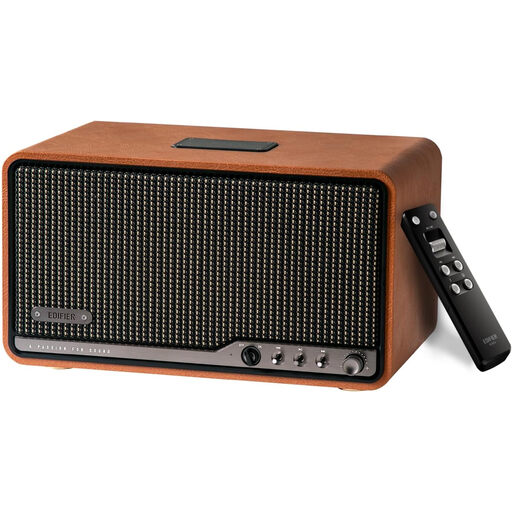
Brown Edifier S300 tabletop speaker

Edifier S300 wireless tabletop speaker, Brown

Consider two S300 speakers if you have safe positions for seated stereo listening; the product information describes configuring two as a left and right pair.

Check that both positions are clear of water and heat before planning the pair.

View on Joybuy

Edifier M60 multimedia speakers

Edifier M60 multimedia speakers, Bluetooth 5.3

This compact speaker set may suit two-position listening where its desktop-style arrangement fits the room; confirm the connections and placement before treating it as a kitchen-diner stereo setup.

The product name lists 66 W RMS, USB-C and AUX inputs, 3-inch mid-bass drivers and 1-inch tweeters. Keep the speakers away from water and heat.

View on Joybuy
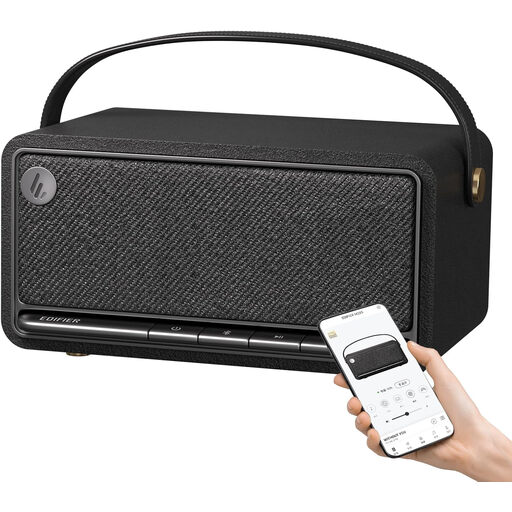
Edifier MP330 portable Bluetooth speaker

Edifier MP330 portable Bluetooth speaker

One MP330 offers a portable playback route; the product information also describes pairing two MP330 speakers for left and right playback if you can position both safely.

The product name lists 40 W RMS, a 19-hour playtime claim and dual stereo pairing. Check the exact Bluetooth version if it affects your choice, and keep the speaker away from water and heat.

View on Joybuy
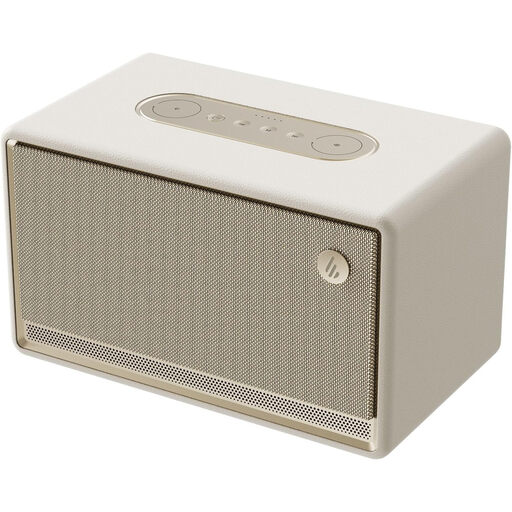
Ivory Edifier ES300 tabletop speaker

Edifier ES300 tabletop speaker, Ivory

Consider the ES300 for playback from one suitable surface rather than planning around a separated stereo pair.

The product name lists Bluetooth 5.3 and a 12-hour playtime claim; the product information also describes Wi-Fi playback. Measure your intended position and keep the speaker away from water and heat.

View on Joybuy
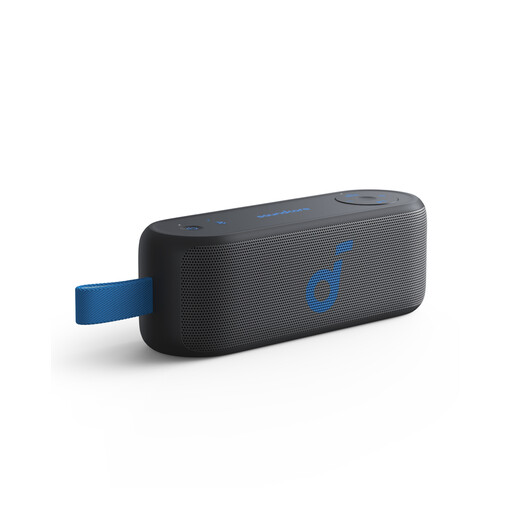
Soundcore Select 3 Bluetooth speaker

Soundcore Select 3 Bluetooth speaker

This is a portable, single-speaker option if Bluetooth playback from your intended device meets your needs. Its product name describes stereo sound, but that alone does not establish a separated left and right speaker setup.

Check its connection options against any CD player or other wired source you plan to use.

View on Joybuy

Common questions

Do live concert albums need two speakers?

No: one speaker is practical when there is only one safe position or you mainly play albums in the background. If you regularly listen from the dining table and can place two matching speakers sensibly, Sonos says a same-model pair provides a wider stereo presentation; its suggested 8–10-foot speaker spacing is a starting point, not a universal requirement.

Can a speaker go beside the kitchen sink?

Keep a powered speaker where it cannot be splashed and avoid handling electrical equipment with wet hands. Sonos warns that humidity resistance is not waterproofing. Electrical Safety First advises keeping socket-outlets and switches a safe distance from the sink, where possible at least 30 cm horizontally.

Can I connect a CD player or turntable to a wireless speaker?

Yes, if the exact source output and speaker input are compatible. Audio Pro lists RCA input on the Addon C10 MkII, Sonos uses a separate Line-In Adapter for an auxiliary source on Era 100, and KEF says LSX II LT has no 3.5 mm analogue input. For a turntable, establish whether its output is line level or needs a phono pre-amplifier.

What else might I need for a stereo or wired-source setup?

A stereo pair needs two compatible speakers and workable positions; depending on the layout, you may also need stands or cable management. For a wired source, check whether the connection needs an adapter, such as the separate Sonos Line-In Adapter used with Era 100, and confirm what comes with the product you choose.

Can I use a kitchen extension lead for the speakers?

Only use an extension lead that is suitable for the connected equipment, undamaged and within its stated load rating. Electrical Safety First advises against overloading or daisy-chaining extensions; keep the lead and its connections away from water and heat.