
24/7 Customer Support

Free returns

Same-day & Next-day Delivery

Quality Guaranteed

Unlock Your Welcome Offers: FREE Delivery | Up to 80% OFF | Free 30-day JoyPlus trial
Download the APP
Choosing between kitchen knives and utility knives is less straightforward than a product page may suggest. A low price can be attractive, but the wrong blade profile, poor locking mechanism or lack of replacement blades may make a knife frustrating—or unsafe—to use.
This guide helps UK households, cooks, DIY enthusiasts, tradespeople, crafters and gardeners compare the features that matter before buying.
A 15-piece kitchen knife set may appear to offer value, but not every household needs six steak knives, several slicing profiles or a large storage block. More pieces can also mean more cleaning and storage requirements.
For everyday preparation, a chef’s knife, fruit knife, vegetable knife, paring knife and kitchen shears may cover most tasks. A smaller kitchen knife set can be more practical if cupboard space is limited.
A very sharp blade is not automatically the right blade. A chef’s knife is designed for chopping and slicing food, while a utility knife or carpet knife is intended for materials such as cardboard, packaging, paper, carpet or foam board.
Using a kitchen knife for DIY work can damage the edge and increase slipping risks. Similarly, a utility blade should not be used for food preparation unless the product is specifically designed and supplied for that purpose.
Some retractable utility knives include only one blade, while others come with replacement blades or built-in storage. Check this before purchase, especially if the knife will be used frequently.
For kitchen knives, safe storage is equally important. A knife block, blade guard or secure drawer insert helps prevent accidental contact with exposed edges and protects the blades from knocking against other utensils.
Stainless steel is widely used for kitchen knives because it is relatively easy to clean and offers resistance to staining when maintained properly. High-carbon stainless steel may provide a firm cutting edge, but it still needs drying after washing to reduce the risk of corrosion.
A ceramic knife set can be lightweight and resistant to rust, but ceramic blades are more vulnerable to chipping if dropped, twisted or used on hard surfaces. Use a suitable cutting board and avoid using ceramic blades for bones, frozen food or prying.
For utility tools, SK5 carbon steel blades are common replacement blades. They are designed for cutting materials such as packaging, vinyl, carpet and board. Their service life depends on the material being cut, pressure applied and storage conditions.
A folding utility knife should have a dependable locking mechanism that holds the blade securely during use. A liner lock, sliding lock or lockback design can help prevent unintended closure, but the user must still check that the lock is fully engaged.
A retractable utility knife with several blade positions allows the cutting depth to be adjusted for different materials. This can reduce the amount of exposed blade, which may make controlled cutting easier. Always retract the blade fully when the tool is not in use.
Look for a handle that remains stable when used with moderate pressure. ABS, TPR rubber, aluminium, stainless steel and wood each offer different handling characteristics. A rubberised grip may be useful for extended packaging or craft work, while a compact folding design is more convenient for carrying.
A belt clip is practical for tradespeople and gardeners, but a folding knife with a locking blade should be carried responsibly. UK knife laws can restrict carrying knives in public, particularly locking-blade designs, unless a lawful reason or exemption applies. Check current official guidance and use the tool only for an appropriate task.
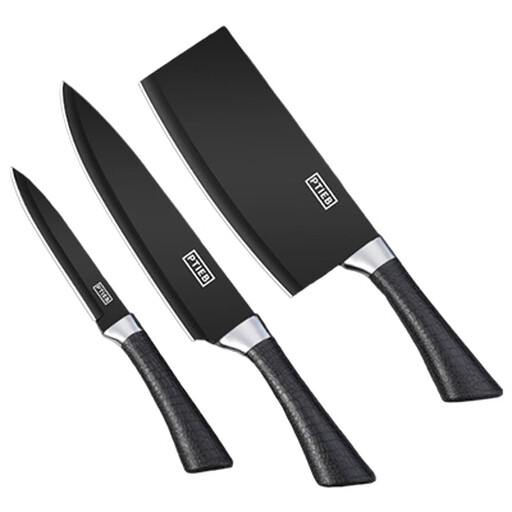
Why This Fits Their Persona: A compact option for renters, students or smaller UK kitchens that need core preparation knives without a large block.
The three-piece format avoids paying for multiple specialist knives that may remain unused.
Includes a fruit knife, chef knife and slicing knife for common food preparation tasks.
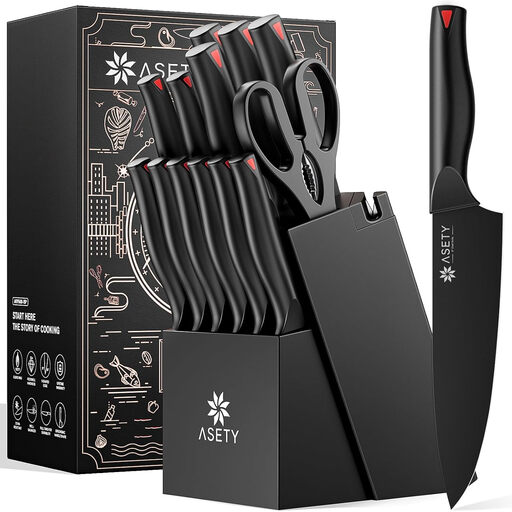
Why This Fits Their Persona: Suits households wanting a coordinated kitchen set with storage and a broad selection of food preparation blades.
The listed contents make it easier to assess whether the extra pieces match your cooking routine before buying.
The 15-piece set includes chef’s, bread, slicing, santoku, utility and paring knives, plus a block and shears.
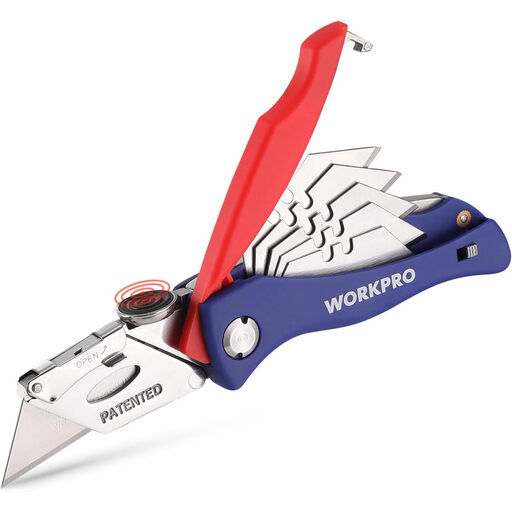
Why This Fits Their Persona: A practical match for tradespeople, decorators, crafters and DIY users cutting packaging, carpet or similar materials.
It includes five replacement SK5 blades and a built-in blade magazine, rather than requiring an immediate separate blade purchase.
Features a lockback mechanism, belt clip, quick-release system and stainless steel handle with ABS components.
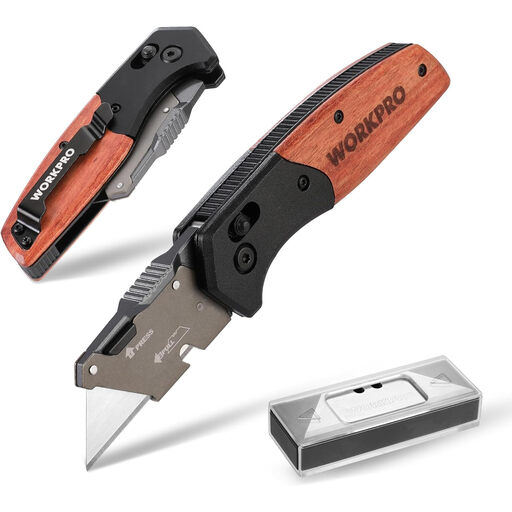
Why This Fits Their Persona: Its compact format suits users who move between a workshop, garden, van or campsite and need a portable cutting tool.
The external sliding lock and tool-free blade change address two common concerns: blade movement and difficult maintenance.
Weighs 130g, includes 10 SK5 replacement blades and has an integrated belt clip.
We have compiled a complete, real-time list of products that fully satisfy these strict selection criteria and UK safety regulations.
No. Kitchen knives are intended for food preparation, while utility knives use replaceable blades for materials such as cardboard, tape, carpet and packaging. Selecting the correct tool helps preserve the blade and improves control.
Replace a blade when it becomes blunt, damaged or starts requiring excessive pressure. A dull blade can slip because the user may force it through the material. Snap-off blades allow a fresh segment to be exposed, while other designs use replacement blades.
Retract or fold utility blades immediately after use and engage the locking mechanism. Store kitchen knives in a block, guard or secure drawer position. Keep all sharp tools away from children, inspect them for damage and dispose of used replacement blades safely.