
24/7 Customer Support

Free returns

Same-day & Next-day Delivery

Quality Guaranteed

Unlock Your Welcome Offers: FREE Delivery | Up to 80% OFF | Free 30-day JoyPlus trial
Download the APP
Choosing kitten wet food can seem straightforward until you compare pouches, jelly textures, fish recipes and claims such as “natural”, “grain-free” or “high protein”. For UK households, the right choice should be based on the label, life stage, feeding role and your kitten’s individual preferences—not just attractive packaging.
Not every wet product provides everything a growing kitten needs. Creamy snacks, shredded fillets and complementary foods may be suitable as occasional extras, but they should not replace a complete kitten food.
Look for wording such as “complete pet food for kittens” and check the stated age range. A product labelled for adult cats or as a complementary food may not be suitable as the sole diet for a kitten.
“Chicken kitten food” or “fish kitten food” on the front of a pouch does not necessarily mean that ingredient makes up most of the recipe. Check the composition list for percentages and ingredient descriptions. For example, a recipe may contain a named fish at 4%, while the rest includes meat and animal derivatives, vegetable ingredients, minerals and other components.
This does not automatically make a product unsuitable, but it helps you compare like for like rather than relying on the front-of-pack flavour name.
Grain-free kitten food may suit owners who prefer recipes without cereals, but the absence of grain alone does not confirm that a product is nutritionally complete. Similarly, “natural” is not a replacement for checking protein, fat, moisture, calories and feeding guidance.
A practical choice is one with clear labelling, a suitable growth-stage formulation and feeding instructions that match your kitten’s age, weight and activity.
Kittens grow rapidly, so check whether the food is designed for 2–12 months, up to one year or from eight weeks. A product for adult cats should not be substituted simply because your kitten enjoys the flavour.
The label should also identify whether it is complete or complementary pet food. Complete wet food for kittens is designed to be fed as the main diet when used according to the manufacturer’s instructions. Complementary products, including many treats and toppers, should be fed alongside a complete food.
The analytical panel gives useful, objective figures:
For example, the Felix fish selection lists 13.5% protein and 2.8% fat with 77.5% moisture. The Blink selection lists 14.5% protein and 4.0% fat with 80% moisture, and provides 81 kcal per 85g pouch. These figures are not a ranking; they simply show why checking the complete panel is more informative than comparing one headline claim.
Jelly kitten food can be easy to portion and serve, while gravy or broth textures may appeal to kittens with different preferences. Individual kitten food pouches help reduce exposure to air after opening and make small meals easier to manage.
Check the storage instructions carefully. Most products should be kept in a cool, dry place before opening and refrigerated after opening. The stated usage period varies: some products advise using an opened pouch within two days, while others specify up to three days. Always follow the product label, serve fresh drinking water and introduce a new diet gradually.
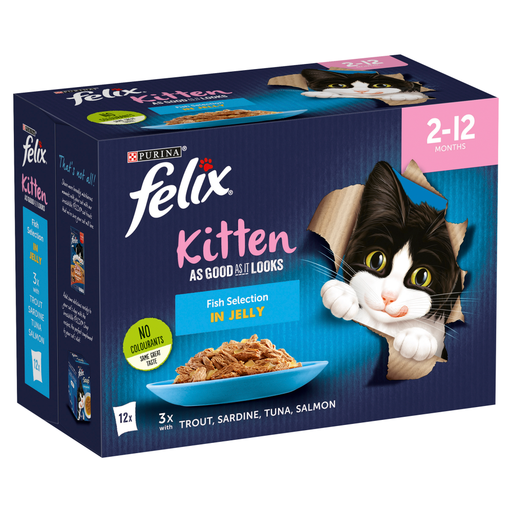
Why This Fits Their Persona: A practical starting pack for owners who want several flavours and individually portioned meals without buying a large case.
It is labelled as complete wet pet food for kittens aged 2–12 months, rather than a treat or adult formula. The composition and analytical constituents are provided for comparison.
12 x 85g pouches, four fish varieties and a jelly texture. The listed recipe contains taurine and vitamins including A, D3 and E.

Why This Fits Their Persona: Suitable for owners prioritising clearly listed meat and fish recipes, varied flavours and a smaller selection pack for testing preferences.
The pack is specifically described for kittens aged 2–12 months and lists the proportions of chicken, turkey, tuna, salmon oil and stock for each recipe.
Four flavours, 14.5% crude protein, 4.0% crude fat and 81 kcal per 85g pouch. The recipe is listed as free from grains, salt and sugar.
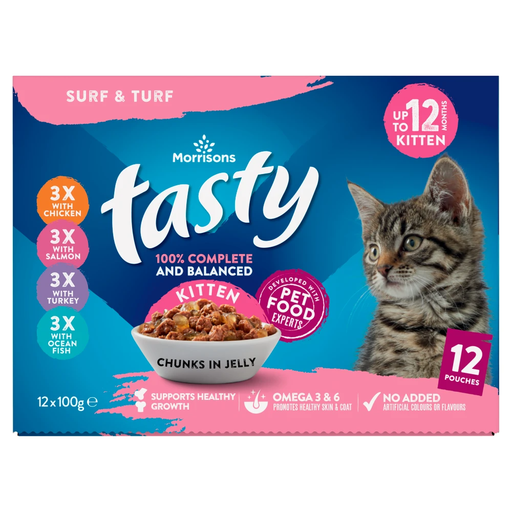
Why This Fits Their Persona: A larger 12 x 100g format for households managing regular wet meals and wanting both meat and fish flavour options.
The product is identified as complete food for kittens up to 12 months and provides separate analytical information for chicken, salmon, turkey and ocean fish recipes.
12 x 100g pouches, jelly chunks, 7.0% crude protein, 7.5% crude fat and listed omega 3 and omega 6 content.
We have compiled a complete, real-time list of products that fully satisfy these strict selection criteria and UK safety regulations.
Feed according to the product’s instructions, adjusting portions for age, weight, activity and whether dry food is also served. Kittens often eat several smaller meals, so individual pouches can make portion planning easier.
When changing food, mix the new recipe with the current one gradually over several days. Watch for persistent vomiting, diarrhoea or loss of appetite and contact a veterinary professional if concerns continue. Keep fresh water available, refrigerate unused food promptly and discard any pouch that is damaged, leaking or spoiled.
Some products are labelled for kittens from eight weeks, while others are intended for 2–12 months. Check the statutory name and feeding guidance on the specific product. Very young kittens may require tailored advice, particularly during weaning.
There is no single portion for every kitten. Follow the pack’s feeding guide and adjust for body size, age, activity and any dry food included in the daily diet. Use the energy information where provided, and avoid adding treats without accounting for them.
Yes, provided the overall daily diet remains appropriate and the wet product is complete. Reduce portions of each food when combining them, rather than feeding the full recommended amount of both. Introduce the combination gradually and monitor how your kitten responds.