Hosts making one shared batch
If you want to blend and pour drinks for several friends at once, compare jug capacity and the amount your recipe will make before considering personal cups.


For kiwi smoothies served to several friends, start with a jug blender if you want to blend and pour one shared batch; a cup-only blender means making portions separately. Choose among a conventional jug, a jug-and-cup system or a multi-function appliance according to the batch you plan to make and whether you will use the extra parts between visits. Controls, cleaning and the exact model's usable fill capacity also matter; a motor rating alone cannot establish the smoothie's texture.
If you want to blend and pour drinks for several friends at once, compare jug capacity and the amount your recipe will make before considering personal cups.
If fruit skin, seeds or optional frozen ingredients affect the drink you want to make, look at the exact model's controls and ingredient guidance rather than treating wattage as a texture result.
If you host only occasionally, a jug with personal cups or food-preparation attachments may be useful between visits. Consider whether you will also want to store and wash those parts.
For kiwi smoothies when friends visit, decide how much you want to pour in one batch, then consider texture controls and the work involved in using the appliance on ordinary days.
| Concern | What to check | Who this matters to |
|---|---|---|
| Shared-batch capacity | Compare the exact jug's usable fill capacity with the quantity you plan to blend; a cup's capacity is not the jug's capacity. | I want to pour drinks for my friends without repeating individual blending cycles. Around 42% of consumers put that shared-batch need first. |
| Smooth texture | Check the model's controls and ingredient guidance, and look for relevant independent tests where available. | When I include kiwi skin, seeds or frozen ingredients, I care most about the texture in the glass. This is the primary concern for around 33% of consumers. |
| Everyday use and cleaning | Confirm which cups and attachments are included and which individual parts can go in a dishwasher. | I will make single drinks or prepare other food between visits, but I do not want more parts to wash than I will use. Around 25% of consumers prioritise that everyday fit. |
A personal blender can make individual drinks, but serving several friends may mean repeating the blending and pouring process.
Work out the quantity you intend to serve at once. If one pourable batch matters, start by comparing jug models.
Motor specifications do not show how different models will handle your particular ingredients under comparable conditions.
Check the exact model's speeds, pulse or programme options and ingredient instructions. Treat an independent test as evidence only for the model it tested.
A jug-and-cup or food-processor system can give you more ways to use the appliance, but its additional containers, lids and blades also need storage and cleaning.
Check the included parts and the cleaning instructions for each one before choosing extra functions you may rarely use.
A familiar model name and headline capacity do not establish which accessories or electrical version comes with a particular listing.
Check the full model designation, supplied parts, plug arrangement and seller information on the product-detail page before ordering.
These model lines illustrate different ways to make a shared smoothie; the features below apply to the named models, not every blender from each brand.
The nutribullet UK Blender Combo pairs a 1.8L jug with three cups, making it relevant if you want shared drinks when friends visit and individual portions on other days.
The BN800UK listing pairs a 2.1L blending jug with a 1.8L processor bowl and 700ml cup for people who would use food-preparation functions as well as smoothie blending.
The Bosch MMB6174SG is a conventional glass-jug option for a medium shared batch.
The Vitamix E310 offers manual control for people making medium batches who want to adjust blending speed themselves.
These jug-format choices are relevant if you want to make kiwi smoothies for friends in a shared batch. Some also offer a personal cup or other food-preparation functions; compare each listing's usable fill level and supplied parts with your plans.
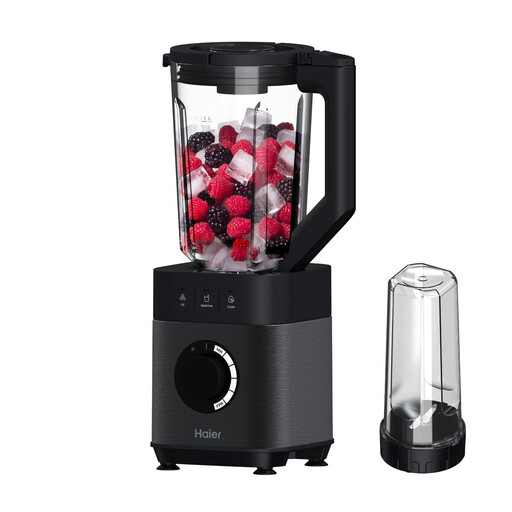 Image unavailable
The jug-and-cup format is worth considering if you make shared drinks for guests and smaller portions between visits.
The product name specifies a 1200W motor, six-tiered blades, a 1.7L jug and a 0.6L Tritan cup. Check the usable jug fill level for your recipe. The listing also uses a conflicting product-type label, so confirm that the item is the HBL5B2 blender and check its supplied electrical version before ordering.
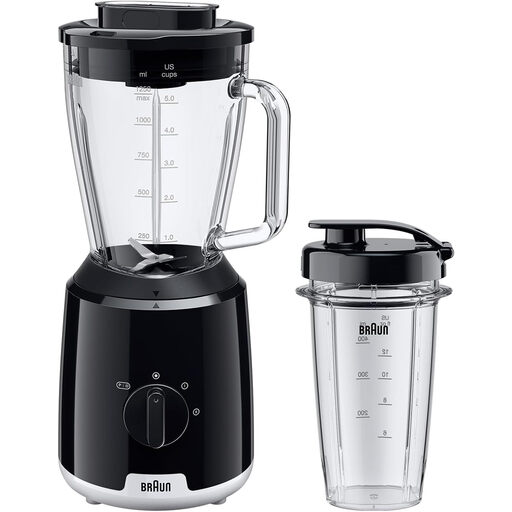 Image unavailable
This jug-and-bottle format suits someone who wants to serve a shared smoothie and make individual drinks on other days.
The product name specifies 600W, a 1.5L triangular glass jug and two speeds. Confirm the jug's usable fill level against your planned batch and check the supplied electrical version before purchase.
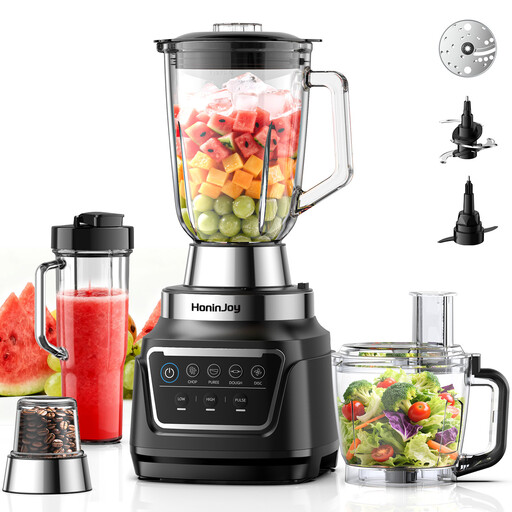 Image unavailable
Consider this format if smoothies are one of several food-preparation tasks you want the appliance to handle, and you have room for its components.
The product name identifies blending, ice crushing, chopping, grinding, slicing and shredding functions. Check the exact pitcher's usable capacity, included components, cleaning instructions and supplied electrical version before planning a guest-sized batch.
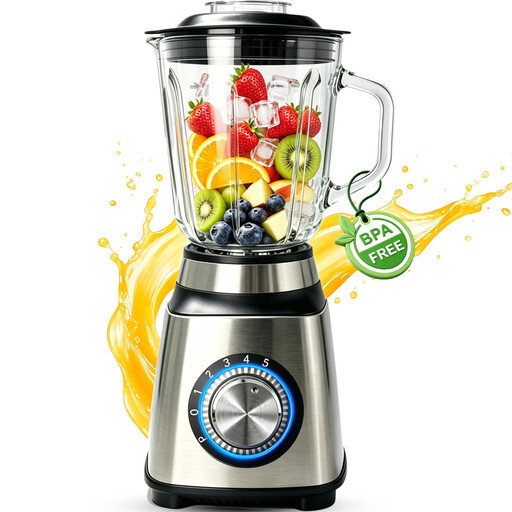 Image unavailable
The jug format makes this a model to assess for a shared smoothie rather than individual cup servings.
The product name lists six blades and an ice-crusher function; those features do not establish the texture it will produce. Check the usable fill level, controls, cleaning instructions and supplied electrical version before choosing it for your recipe.
Choose a jug with a usable fill level that accommodates the amount you intend to make in one batch. For comparison, Vitamix UK lists a 1.4L container for the E310, Bosch Home UK specifies a 1.5L usable jug for the MMB6174SG, nutribullet UK lists a 1.8L jug for the Blender Combo, and the Joybuy UK BN800UK listing describes a 2.1L jug. Check whether each stated figure is the jug size or its usable fill level before planning your recipe.
Not necessarily: wattage alone is not a comparable measure of finished smoothie texture. Check the exact blender's controls and ingredient instructions. Good Housekeeping UK reported good results with raspberry seeds in its test of the Ninja BN495UK, but that result does not establish how another Ninja model will handle kiwi.
Follow the appliance's instructions for cleaning every food-contact part before preparing the next drink, and take particular care to prevent ingredients from a previous drink carrying over. Food Standards Agency guidance for food operations emphasises cleanable food-contact equipment and preventing allergen cross-contamination; use your household blender's manual for its specific cleaning method.
Check that the exact product supplied has a voltage and plug arrangement suitable for where you will use it, and review its manufacturer instructions and seller details. For equipment placed on the Great Britain market, the Office for Product Safety and Standards explains that the Electrical Equipment (Safety) Regulations 2016 set applicable requirements; do not assume a similarly named overseas variant is the same supplied product.