
24/7 Customer Support

Free returns

Same-day & Next-day Delivery

Quality Guaranteed

Unlock Your Welcome Offers: FREE Delivery | Up to 80% OFF | Free 30-day JoyPlus trial
Download the APP
If you've ever enjoyed a steaming bowl of noodles at a traditional Chinese restaurant, you know that not all noodles are created equal. Among the most memorable are knife-cut noodles, or dao xiao mian. Known for their delightfully irregular shape and wonderfully thick chewy texture, they offer a bite that standard noodles simply can't match. Yet, finding high-quality versions in the UK to replicate that experience at home can be a challenge.
As the Joybuy Product Recommendation Officer, my role is to help you find practical, high-quality products for your kitchen. This guide will walk you through what to look for when purchasing knife-shaved noodles and provide a few of our top recommendations to help you bring that authentic taste to your dining table.
Navigating the world of Chinese wide noodles can be simple if you know what to focus on. Here are a few key points to consider before you buy.
The defining characteristic of authentic Shanxi noodles is their unique form. They are traditionally made by shaving a large block of dough directly into boiling water, resulting in noodles that are thick in the centre with thinner, ruffled edges. This uneven surface is not just for show; it allows the noodles to cling onto more sauce and broth, ensuring every mouthful is full of flavour. When shopping, look for descriptions that mention this specific texture, as it's the secret to a satisfyingly chewy bite.
High-quality dried noodles often have a very short ingredient list. For traditional knife-cut noodles, you should expect to see little more than high-quality wheat flour, water and salt. Some variations might include other flours like konjac for added texture, but simplicity is often a sign of an authentic product that lets the quality of the wheat shine through.
Consider how you plan to use the noodles. Their robust structure makes them incredibly versatile. They hold up well in rich, hearty broths, don't fall apart in a vigorous stir-fry and are a fantastic addition to a communal hot pot. Check the packaging for recommended cooking times and suggested uses. A good pack of noodles for stir-fry or noodles for hot pot will be sturdy enough for various culinary applications.
Based on their ingredients, texture and suitability for home cooks in the UK, here are a few standout options available right now.
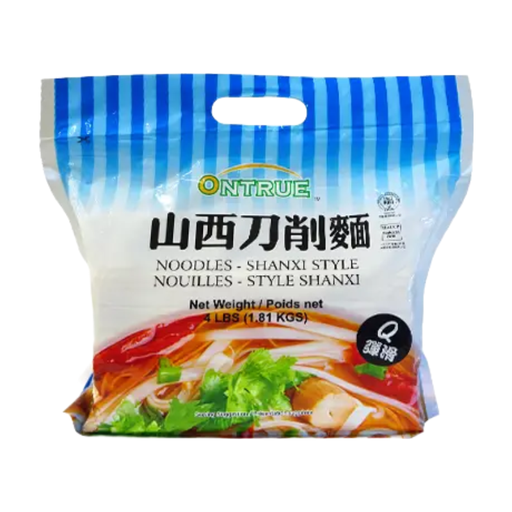
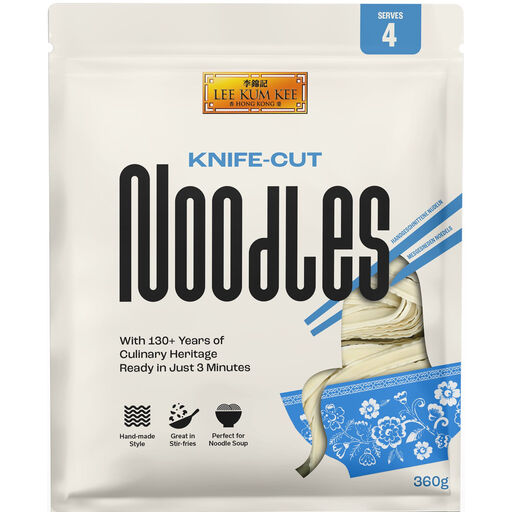
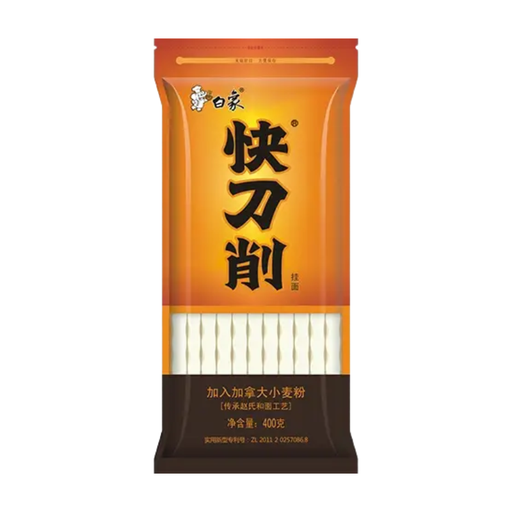
The name dao xiao mian literally translates to "knife-shaved noodles," a reference to the culinary art of slicing noodles from a block of dough with a special blade. While making them from scratch is a skill that takes practice, exploring the tools can deepen your appreciation for Chinese culinary traditions. If you're looking to equip your kitchen with authentic tools, you might be interested in browsing our curated selection of Chinese knives.
The main difference lies in the shape, texture and preparation method. Unlike hand-pulled la mian or uniform extruded noodles, knife-cut noodles are shaved from a block of dough. This creates an irregular, rustic shape—thick in the middle with thin, wavy edges. This results in a uniquely firm, chewy and springy texture that is very different from other noodle types.
To prevent sticking, use a large pot with plenty of rapidly boiling water. This gives the noodles enough space to move around. Add the noodles and stir them gently for the first minute of cooking to separate them. Once cooked to your desired firmness (usually 5-8 minutes), drain them immediately and either add them to your sauce or rinse them briefly with cold water if using for a cold dish or later use.
Their robust texture makes them incredibly versatile. They are famously used in Shanxi oil-splashed noodles (you po mian), where their nooks and crannies trap the fragrant hot oil and seasonings. They are also excellent in rich beef noodle soups, hearty stir-fries with meat and vegetables and as a satisfying addition to a bubbling hot pot, as they won't disintegrate during prolonged cooking.