
24/7 Customer Support

Free returns

Same-day & Next-day Delivery

Quality Guaranteed

Unlock Your Welcome Offers: FREE Delivery | Up to 80% OFF | Free 30-day JoyPlus trial
Download the APP
Buying knives and cutting tools can seem straightforward until a blade slips, a handle becomes uncomfortable or replacement blades do not fit. UK shoppers also face a wide range of overlapping terms, including utility knives, carpet knives, kitchen cleavers and camping multi-tools.
The right choice depends less on impressive-sounding marketing and more on blade compatibility, handle control, intended material and safe storage. This guide explains the practical details to check before ordering.
A utility knife may cut cardboard, carpet and packaging, but it is not designed for food preparation. Likewise, a kitchen cleaver is unsuitable for opening parcels or cutting flooring. Using the wrong tool can damage the blade, reduce control and increase the chance of injury.
Match the blade to the material:
A sharp blade is useful only when it remains secure during cutting. Check whether the knife has a locking slider, lockback mechanism, blade-blocking system or retractable design. A blade that moves during use can be more difficult to control, particularly when cutting dense carpet or layered cardboard.
For folding utility knives, confirm how the blade opens and locks. For snap-off cutter knives, check that the slider holds the blade at the required length. Retract or fold the blade fully before placing the tool in a pocket, drawer or toolbox.
Blades are consumable parts. Dull edges can require extra force and may increase the chance of slipping. Before purchasing, check:
A knife with built-in blade storage can be more practical for decorators, carpet fitters and tradespeople who work away from a fully equipped workshop.
Stainless steel knives are useful where resistance to moisture and straightforward cleaning matter, especially in kitchens and outdoor settings. Carbon steel, including SK5 steel, is commonly used for utility blades because it can provide a firm cutting edge, although it still needs safe handling and appropriate storage.
Edge design also matters. A bevelled edge suits stripping paint and wallpaper, while a straight edge is common on kitchen cleavers and general cutting blades. A snap-off blade provides multiple fresh sections, but the used segment must be removed and disposed of safely.
Look for a handle that provides a stable grip without excessive pressure. Rubberised ABS or TPR handles may feel more secure during repetitive cutting, while aluminium or stainless-steel handles can offer a compact, durable format.
For trade use, useful features include:
These details are particularly relevant for long DIY sessions, carpet fitting and decorating work.
Blade length and width affect control. An 18mm snap-off cutter is suited to general craft and packaging work, while a 50mm or 75mm stripping knife covers more surface area when removing wallpaper. Kitchen blades around 190mm to 280mm offer different balances of reach, weight and manoeuvrability.
Do not use a kitchen cleaver on frozen food, hard surfaces or bones unless the product instructions specifically allow it. Always follow the supplied guidance and keep sharp tools away from children. When carrying a knife in public, UK laws require a lawful reason for carrying many types of knife; check current official guidance if transport is necessary.
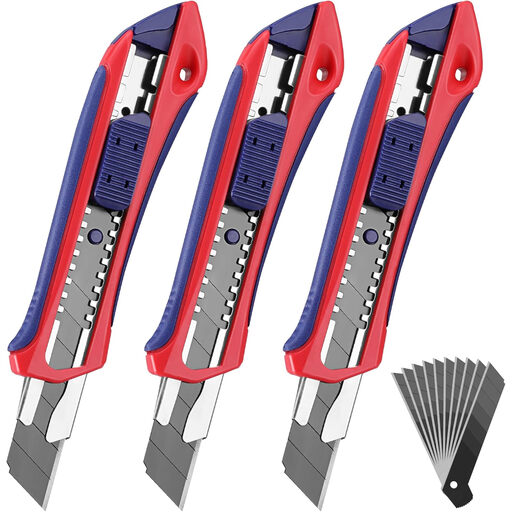
Why This Fits Their Persona: A practical option for household repairs, craft projects, packaging and light DIY tasks where having more than one cutter is useful.
The snap-off design provides fresh cutting sections, while the blade-blocking mechanism helps prevent unwanted movement during use.
Three 18mm cutters, 10 SK5 carbon steel replacement blades and ABS plus TPR rubber handles.
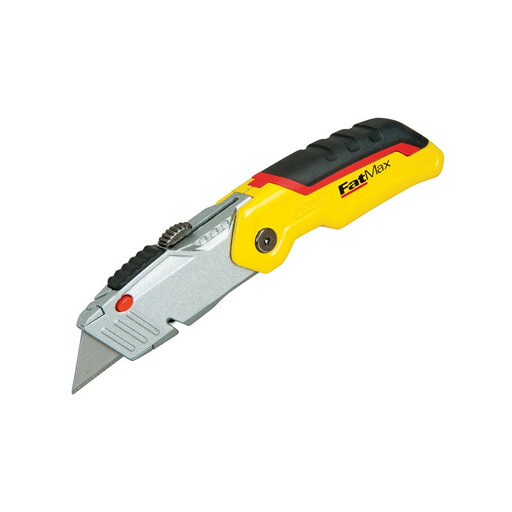
Why This Fits Their Persona: Suitable for users who want a compact folding format for regular decorating, carpet fitting, model making or electrical installation tasks.
The retractable blade reduces exposure during storage, while the instant blade-change mechanism avoids using a damaged or blunt edge for too long.
140mm compact length, ergonomic grip, retractable blade and handle storage for spare blades.
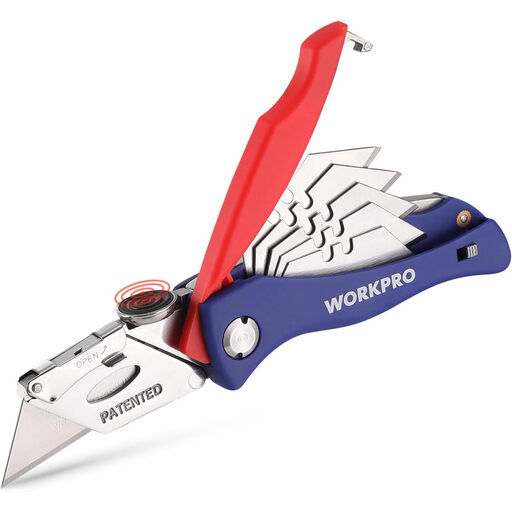
Why This Fits Their Persona: Designed around the needs of carpet fitters, craftsmen and tradespeople who need portable access to a utility knife and spare blades.
It uses a lockback design, quick-release mechanism and retractable folding format rather than leaving a loose blade exposed in a tool bag.
Stainless-steel handle, belt clip, built-in storage and five included SK5 high-carbon steel blades.
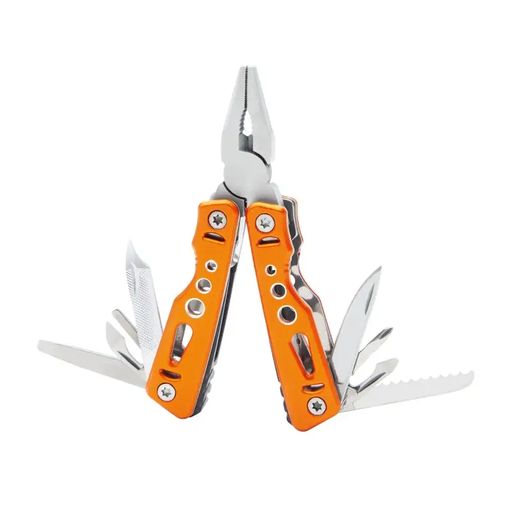
Why This Fits Their Persona: A compact choice for camping, hiking, household fixes and occasional outdoor jobs where carrying several separate tools is inconvenient.
Its folding format keeps the knife and other functions together, with a pouch for storage instead of loose tools in a rucksack.
Ten functions, stainless steel and aluminium construction, 10.5cm length and included pocket pouch.
For home cooks and professional kitchens, consider the blade’s purpose rather than its appearance. A medium stainless-steel cleaver can handle vegetables, fish and meat preparation, while a heavier meat cleaver is intended for more demanding chopping. A Chinese chef knife may combine slicing, chopping and mincing, but the exact use depends on its construction and the manufacturer’s instructions.
Hand-wash and dry kitchen knives promptly where recommended. Use a suitable chopping board, avoid hard surfaces and store blades securely. Kitchen knives are age-restricted products in the UK, so retailers may require age verification.
For garden maintenance, a patio knife with a heat-treated carbon steel head is shaped for clearing weeds and moss from paving joints. It is not a substitute for a general-purpose utility knife.
A retractable utility knife or snap-off cutter is a practical starting point for cardboard, packaging, paper and light DIY work. Choose one with a secure lock, comfortable handle and available replacement blades. Add a stripping knife or patio knife only when the task requires its specialised edge.
Replace a blade when it feels dull, requires excessive pressure, catches in the material or shows damage. The replacement interval depends on the material and frequency of use. Always use compatible blades and dispose of used segments in a suitable sharps container.
Folding or retractable designs can reduce exposed blade length during storage, but they are not risk-free. Check that the blade locks securely, retract it after every cut and keep the tool away from children. Follow the product instructions and UK rules when transporting knives outside the home.