
24/7 Customer Support

Free returns

Same-day & Next-day Delivery

Quality Guaranteed

Unlock Your Welcome Offers: FREE Delivery | Up to 80% OFF | Free 30-day JoyPlus trial
Download the APP
Korean BBQ sauce can turn sliced beef, pork, chicken, tofu or vegetables into a quick Korean-style meal. However, bottles labelled Korean barbecue sauce are not interchangeable. Some are designed mainly for marinating, while others work better as a finishing glaze or dipping sauce.
For UK shoppers, the main challenge is separating practical differences from vague packaging claims. A sauce described as “authentic” may still be very sweet, too salty for your preference or unsuitable for your dietary requirements. Before choosing, check the flavour profile, intended use, ingredient list and storage instructions.
A bulgogi sauce usually contains soy sauce, sugar or syrup, fruit purée, garlic and other seasonings. A Korean dipping sauce, by contrast, may be a dry or pourable condiment designed to accompany cooked food rather than tenderise raw meat.
Using a dipping sauce as a marinade may produce limited flavour penetration. Likewise, using a very thick Korean BBQ marinade as a table dip can result in an overly intense taste. Check whether the label specifically mentions marinating, glazing, stir-frying or dipping.
There is no single UK-wide heat scale for Korean cooking sauces. A mild and sweet bulgogi sauce may suit children or diners who prefer gentle seasoning, while a hot and spicy version may contain gochujang, chilli powder or capsicum extracts.
If you are unsure, start with a smaller amount and add more during cooking. Chilli intensity can also seem stronger after reduction on a grill or in a frying pan.
A larger bottle is not automatically more economical if you only use the sauce occasionally. Once opened, many products require refrigeration and should be consumed within a stated period. A 190g or 250ml bottle may be more practical for one or two meals, while a 500g bottle suits regular BBQ cooking or larger households.
Compare the price per 100g or 100ml, then consider how often you will use it.
For classic bulgogi, look for soy sauce combined with fruit such as pear or apple, garlic, onion, ginger or sesame oil. These ingredients create a sweet and savoury BBQ sauce suitable for thinly sliced beef, pork, chicken or tofu.
A Korean kalbi sauce is generally aimed at beef short ribs or other grilled cuts. It may be thicker and sweeter to support longer marinating and caramelisation. A Korean pork BBQ sauce may include red pepper paste or chilli for a stronger savoury and spicy profile.
Ready-made sauces often contain noticeable amounts of sugar and salt. This is useful for browning and concentrated flavour, but it also means the sauce should be used as a seasoning rather than poured freely over every dish.
For comparison, the listed nutrition values include:
Always check the physical packaging because recipes and labelling can change.
Soy and wheat are common because many Korean cooking sauces use soy sauce. Sesame is also frequently present through sesame oil or seeds. Some products may contain barley, peanuts, fish, crustaceans, milk or tree nuts.
Read the bold allergen information on the bottle before purchase, particularly when cooking for guests. Kikkoman Teriyaki BBQ Sauce Korean Style is listed as vegan-certified by V-Label International, but it still contains soy and wheat. A product being suitable for a vegan diet does not mean it is free from common allergens.

Why This Fits Their Persona: Its mild and sweet profile is a straightforward starting point for UK home cooks preparing beef, pork, chicken, tofu or a quick stir-fry.
The product information gives a clear method: coat 400–500g of food with around 150–200g of sauce and marinate for at least 30 minutes.
Pear purée, garlic, onion and sesame oil provide a recognisable bulgogi-style ingredient base; the sauce is listed at approximately 20g sugar per 100g.
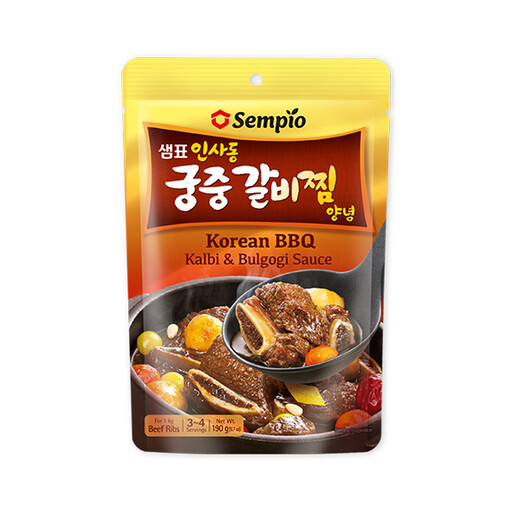
Why This Fits Their Persona: The smaller 190g format suits cooks seeking a dedicated Korean kalbi sauce for short ribs, pork or chicken without committing to a large bottle.
The instructions specify at least two hours of marinating, making it clear that this is not simply a last-minute dipping sauce.
The listed ingredients include pear, onion, garlic, ginger, Korean chilli flakes and sesame oil; it is intended for grilling, pan-frying or baking.
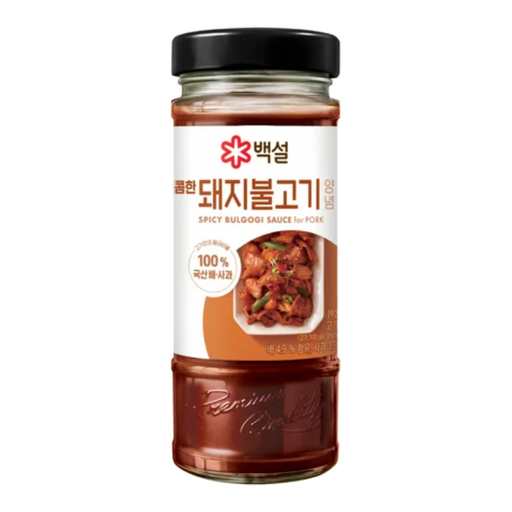
Why This Fits Their Persona: The 500g format is practical for frequent BBQ cooking, family portions, pork belly, ribs, chops and repeated stir-fry meals.
It is specifically positioned for pork rather than relying on a generic BBQ label, and the packaging information clearly identifies soy, wheat and sesame allergens.
The sauce contains red pepper paste, pear and apple purées, garlic and pepper; it can be used as a marinade or glaze.
We have compiled a complete, real-time list of products that fully satisfy these strict selection criteria and UK safety regulations.
For food safety, keep raw meat refrigerated, wash utensils used for marinating and cook meat thoroughly. Refrigerate opened bottles according to the label.
They overlap, but not always. Bulgogi sauce is usually a sweet and savoury Korean beef sauce containing soy, fruit, garlic and related seasonings. Korean BBQ sauce is a broader description that may include beef, pork, kalbi, spicy or dipping varieties.
Only if the product instructions allow it and the sauce has not touched raw meat. For safer serving, reserve a clean portion before marinating, or use a product specifically labelled as a Korean dipping sauce.
There is no universal period. Some listed products advise refrigeration and use within roughly one month, while others state four to six weeks or up to three months. Follow the bottle’s storage guidance, use clean utensils and discard the sauce if its appearance, smell or seal seems abnormal.