
24/7 Customer Support

Free returns

Same-day & Next-day Delivery

Quality Guaranteed

Unlock Your Welcome Offers: FREE Delivery | Up to 80% OFF | Free 30-day JoyPlus trial
Download the APP
Korean instant noodles are a practical cupboard option for students, families, office workers and anyone who enjoys Korean cuisine at home. However, colourful packaging and dramatic spice claims can make it difficult to compare products fairly. Before buying Korean ramen or Korean noodles online, check what you are actually getting: a soup or stir-fry format, the number of servings, the seasoning strength and the allergen information.
Not every Korean instant ramen product is a soup. Some varieties are designed to be drained and mixed with a thick sauce. Buying a stir-fry noodle when you want a warming broth can lead to disappointment.
For example, Chapagetti and jjajangmyeon noodles are typically prepared by draining most of the water before mixing in a black bean sauce. By contrast, kimchi ramen, seafood ramen and Shin Ramyun are generally served in broth.
Terms such as “hot”, “fire” or “nuclear” are not a consistent measurement across brands. Spicy Korean noodles can vary considerably, and products with creamy or cheesy seasoning may still contain a strong chilli sauce.
If you are new to Korean ramen, consider starting with a milder broth or using only part of a chilli sauce sachet. Products such as Buldak Original, Buldak Cheese and Buldak Carbonara are marked as extremely spicy in their product information, so they may not suit every household.
Instant noodles are convenient, but the seasoning sachet can make a significant contribution to the product’s salt content. For example, the supplied information lists 4.5g salt per 100g for Nongshim Kimchi Ramyun and 4.7g per 100g for Nongshim Ansung Tangmyun. Check the label and consider the rest of your meal when planning portions.
Allergens also vary by flavour. Wheat and soya are common, while seafood varieties may contain cuttlefish, crab, mussel, shrimp, fish and clam. Some jjajangmyeon noodles contain shrimp, peanuts, sesame or mustard. Always read the current UK packaging, particularly if you have an allergy or are buying for children.
Start by identifying the cooking format:
Preparation details affect both taste and texture. A sauce noodle may become watery if too much cooking water is retained, while a soup noodle may taste overly concentrated if you use less water than stated.
A single 120g to 140g pack is convenient for one meal, but a Korean instant ramen multipack can be more suitable for shared accommodation, family cupboards or regular lunches. Common formats in the selection include five packs, four packs and a 40-pack box.
Before choosing a bulk box, check storage space and use-by or best-before details on the packaging. A large quantity only represents practical value if the noodles will be eaten within a reasonable period and stored in a cool, dry place.
Cooking times range from approximately 3 minutes for Nissin Demae Ramen to around 4–5 minutes for many Korean ramyun products, while jjajang varieties can take around 5 minutes. Thick, chewy noodles may be preferable when adding vegetables, an egg or meat, as they can provide a more substantial texture.
Follow the packet instructions rather than relying on appearance. Drain and mix sauce-based noodles immediately after cooking, and consume prepared noodles straight away.

Why This Fits Their Persona: Five 100g portions and a stated 3-minute cooking time make this a straightforward option for students, first-time buyers and quick weekday lunches.
The sesame flavour is clearly identified, and the pack uses a soup preparation method rather than an unexpectedly dry stir-fry format.
Three-minute preparation; includes sesame seasoning oil; five individual packs.

Why This Fits Their Persona: Suitable for shoppers looking for a sauce-led Korean meal inspired by jjajangmyeon rather than a standard spicy broth.
The instructions specify draining the noodles and retaining approximately 60ml of water, helping prevent a thin or diluted sauce.
Thick noodles; black bean seasoning and oil; vegetable flakes and textured protein.

Why This Fits Their Persona: A 40-pack suits offices, large households, food businesses or regular Korean ramen shoppers who have sufficient dry-storage space.
The quantity is stated as 40 individual 120g packs, so buyers can compare the total volume instead of relying on promotional wording.
40 servings; soup format; stated cooking time of approximately 4–5 minutes.
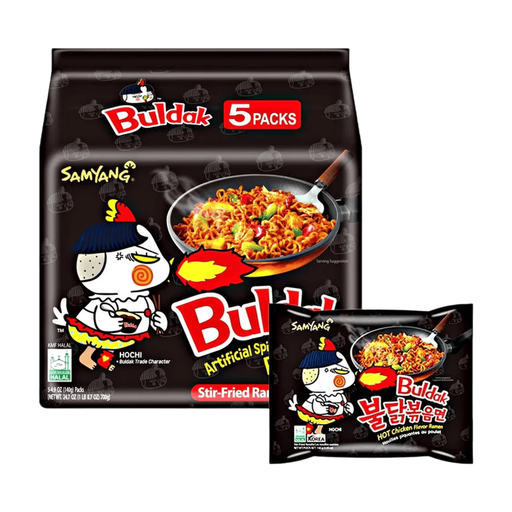
Why This Fits Their Persona: Designed for shoppers specifically seeking a highly spicy, sauce-coated noodle experience associated with Korean food challenges and online food culture.
The product information explicitly warns that it is extremely spicy, allowing heat-seekers to make a more informed choice.
Five 140g servings; stir-fry preparation; separate spicy seasoning paste.
We have compiled a complete, real-time list of products that fully satisfy these strict selection criteria and UK safety regulations.
The simplest way to customise Korean instant noodles is to add ingredients that suit the flavour:
Keep preparation equipment simple: a saucepan, 500–600ml of boiling water and a bowl are usually sufficient. Follow the product instructions, especially where sauce noodles require draining.
Some are, but not all. Samyang Buldak varieties are labelled as extremely spicy, while mild Jin Ramen and sesame-flavoured noodles provide less intense alternatives. Spice tolerance differs, so check the product description and use less seasoning if appropriate.
Most require around 4–5 minutes. NISSIN Demae Ramen Sesame states 3 minutes, while Chapagetti requires approximately 5 minutes. Always follow the instructions on the specific packet.
Multipacks can be practical for regular consumers because they provide several individually packaged servings and reduce repeat purchases. A 5-pack is suitable for occasional home use, while a 40-pack is more appropriate for offices, large households or frequent noodle meals. Compare total weight, storage requirements, flavour preference and best-before information before ordering.