
24/7 Customer Support

Free returns

Same-day & Next-day Delivery

Quality Guaranteed

Unlock Your Welcome Offers: FREE Delivery | Up to 80% OFF | Free 30-day JoyPlus trial
Download the APP
Welcome, I'm Joy, your Joybuy Product Recommendation Officer. My role is to help you navigate the crowded online marketplace and find products that offer genuine value. Today, we're diving into the world of Korean noodles. With their rising popularity in the UK, it's easy to get lost in a sea of flashy packaging and bold claims. Let's cut through the clutter and find the right noodles for your pantry.
Many shoppers, excited to try the flavours they've seen online, often fall into a few common traps. Understanding these can save you from a disappointing meal and wasted money.
To ensure you get exactly what you're looking for, focus on these three core parameters. They are the true indicators of quality and suitability for your taste.
Not all Korean noodles are the same. The type of noodle is fundamental to the dish it's intended for.
Look beyond generic descriptions and check the ingredient list for clues to the true flavour profile.
To get the most for your money when you buy Korean noodles online UK, consider how you'll be using them.
Here are a few selections that align with different needs and preferences, helping you avoid the common pitfalls.

Why This Fits Their Persona: For the UK foodie who loves the heat of the viral spicy noodle challenge but also appreciates a more complex flavour. The carbonara powder adds a creamy richness that balances the intense fire of the original Buldak sauce, creating a uniquely satisfying dish.
It sidesteps the "vague spice" trap by delivering a famously high and consistent level of heat. The addition of the carbonara element also provides a clear flavour profile beyond just "spicy."
Features the signature fiery Buldak sauce combined with a creamy cheese and carbonara powder. The thick, chewy noodles are perfect for this stir-fry style dish.
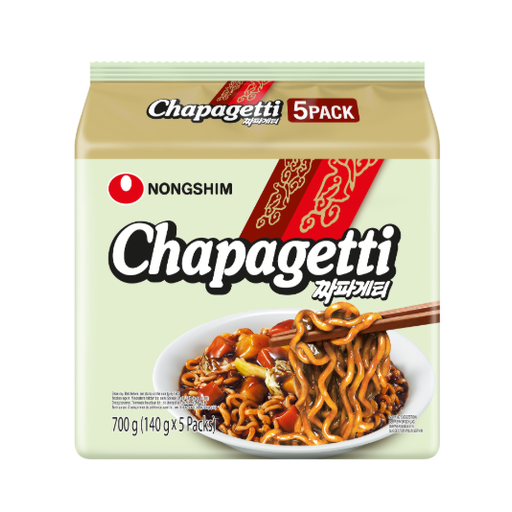
Why This Fits Their Persona: For those in the UK wanting to explore classic Korean flavours beyond the spice. Chapagetti is the instant version of Jjajangmyeon, offering a rich, savoury and slightly sweet black bean sauce that is a staple comfort food in Korea.
This product avoids the "authentic flavour" mirage by delivering a taste profile that is genuinely representative of a beloved, non-spicy Korean dish. It's not trying to be something it isn't.
Features a rich, dark and savoury black bean sauce (jjajang). The thick noodles are specifically designed to pair with the sauce, and it includes a sachet of seasoned oil to finish.

Why This Fits Their Persona: Perfect for students, large families or anyone who relies on instant noodles as a quick, reliable meal. Buying in bulk provides significant savings and ensures the pantry is always stocked with a dependable and flavourful classic.
This bulk box directly counters the "multipack value illusion." By purchasing 40 standard 120g packs, you achieve a much lower cost-per-serving than with smaller multipacks, offering genuine long-term value.
Excellent cost-effectiveness for a globally recognised brand. Shin Ramyun offers a consistent, satisfyingly spicy beef broth and chewy noodles that serve as a great base for customisation.
We have compiled a complete, real-time list of products that fully satisfy these strict selection criteria and UK safety regulations.
Elevating a simple pack of instant Korean ramyun is easy. A popular method is to crack an egg into the boiling broth during the last minute of cooking. You can also add a slice of processed cheese for a creamy, rich texture or top the finished bowl with chopped spring onions for freshness. For non-spicy noodles like jjajangmyeon, adding some fresh, thinly sliced cucumber provides a refreshing crunch.
Not at all. While spicy ramyun is very popular, there is a huge variety of non-spicy options. Jjajangmyeon (black bean noodles) is savoury and slightly sweet. Kalguksu (knife-cut noodles) are often served in a mild, clear anchovy or chicken broth. Janchi-guksu (banquet noodles) are thin wheat noodles in a light broth. There is a Korean noodle dish for every palate.
While both are noodle soup dishes, there are some general differences. Korean instant ramen often features a spicier, bolder broth, with flavours like kimchi and gochujang being common. The noodles themselves are typically thicker and chewier. Japanese ramen broths are often more nuanced and complex, focusing on bases like tonkotsu (pork bone), shio (salt), shoyu (soy sauce) or miso, with a wider variety of toppings and thinner, straighter noodles.