
24/7 Customer Support

Free returns

Same-day & Next-day Delivery

Quality Guaranteed

Unlock Your Welcome Offers: FREE Delivery | Up to 80% OFF | Free 30-day JoyPlus trial
Download the APP
The aisles of UK supermarkets are increasingly filled with vibrant packaging promising the unique tastes of East Asia. In particular, Korean snacks have captured our attention, offering a world of flavour beyond the standard packet of crisps. But with so much choice, it's easy to make a purchase you regret. Many items that look appealing on the shelf can be a letdown once you get them home.
As a Joybuy Product Recommendation Officer, my role is to help you navigate the market. We will look at the common pitfalls that lead to disappointing purchases and highlight the key factors to check, ensuring you choose a snack that delivers on its promise of flavour and quality.
Before you add that eye-catching packet to your basket, be aware of a few common issues that can lead to buyer's remorse.
To avoid these traps, focus on a few core product characteristics. This will help you distinguish a high-quality snack from a mediocre one.
The format of a seaweed snack dictates its primary use. Understanding the difference is key to choosing the right product for your needs.
The ingredient list is your most reliable guide. Look for a short list with recognisable ingredients. For flavoured snacks like bulgogi flavour snacks or wasabi seaweed, check where the flavour comes from. Is it a powder, an oil or a complex seasoning blend? Also, pay close attention to the salt and sugar content per 100g to make an informed decision that aligns with your dietary preferences.
For snacks where crispness is paramount, packaging is non-negotiable. Look for products that come in multi-packs of smaller, individually sealed servings. This not only helps with portion control but is the single most effective way to ensure that every time you open a packet, the contents are as fresh and crispy as the manufacturer intended.
Based on these practical criteria, here are a few recommendations matched to different snacking preferences.

Why This Fits Their Persona: This is for the person who wants a savoury crunch without straying from their health goals. It is a straightforward, no-fuss snack that satisfies a craving for something salty and crispy in a very light format.
It directly counters the "healthy halo" trap by actually being a low-calorie option. With just three ingredients and a very low salt content per serving, what you see is what you get.
The primary advantage is its low calorie count (around 26 kcal per 5g pack). The multi-pack format also ensures each portion remains perfectly crisp.
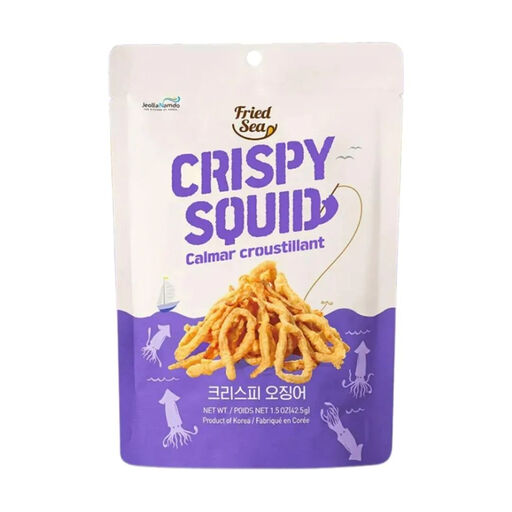
Why This Fits Their Persona: For the foodie who has tried all the standard Asian snacks and wants something genuinely different. This offers a more complex texture and a savoury seafood flavour that stands out from the crowd.
It avoids the flavour inconsistency pitfall by offering a distinct taste of squid, not just a generic "seafood" seasoning. The texture is a unique combination of crispy and chewy, delivering on its promise.
This is a protein-rich snack that provides a more substantial bite. Its origin in South Korea points to an authentic flavour profile that adventurous eaters in the UK will appreciate.

Why This Fits Their Persona: Perfect for busy parents looking for convenient, portion-controlled options for lunchboxes or after-school snacks. The savoury-sweet bulgogi flavour has wide appeal, and the snack is versatile enough to be eaten alone or with meals.
The individual 5g packs are the solution to texture disappointment. This format guarantees that the seaweed remains perfectly crisp until the moment it is eaten, avoiding the sogginess that plagues larger, single-bag products.
Its main advantage is convenience. The multi-pack format is easy to store and distribute. It is also highly versatile, working equally well as a standalone snack or as a flavourful topping for rice and noodles.
We have compiled a complete, real-time list of products that fully satisfy these strict selection criteria and UK safety regulations.
The healthiness of a seaweed snack depends entirely on its preparation and seasoning. Seaweed itself is a source of iodine and other minerals. However, to make an informed choice, you must check the nutritional label for salt, sugar and fat content. A minimally seasoned, roasted seaweed snack can be a great low-calorie crisps alternative, while others may be higher in calories and sodium.
While both cuisines feature seaweed snacks, there are general differences. Korean seaweed (gim) is often thinner and more heavily seasoned, typically with sesame oil and salt, and then roasted. Japanese snacks using seaweed (nori) are often thicker and may be simply toasted and salted, or seasoned with soy sauce and mirin for a different flavour profile. Korean gim is very popular as a standalone snack, whereas Japanese nori is famously used for sushi.
Moisture is the enemy of crispness. The most effective way to maintain texture is to buy snacks in individually sealed portion packs. If you buy a larger bag, transfer the contents to an airtight container immediately after opening and store it in a cool, dry cupboard. Do not refrigerate, as condensation can make the seaweed limp.