
24/7 Customer Support

Free returns

Same-day & Next-day Delivery

Quality Guaranteed

Unlock Your Welcome Offers: FREE Delivery | Up to 80% OFF | Free 30-day JoyPlus trial
Download the APP
Creamy sauce, chewy noodles and a noticeable chilli kick make Korean spicy carbonara noodles popular with students, busy professionals and fans of Korean food. However, choosing a suitable pack is not simply a matter of picking the most colourful packaging. Heat strength, preparation style, allergens and pack size can all affect whether your purchase suits your routine.
As the Joybuy Product Recommendation Officer, I focus on practical details that help UK shoppers avoid marketing distractions and select noodles that match how they actually eat.
Carbonara powder can soften the sharpness of chilli, but it does not necessarily make the noodles mild. Products described as hot chicken noodles, “volcano” noodles or Buldak carbonara ramen may still contain chilli oil, habanero seasoning or red pepper extract.
If you are new to spicy Korean ramen, check whether the sauce can be added gradually. This gives you more control than assuming “carbonara” means gentle heat.
A 40-pack may offer practical cupboard storage for a household or regular noodle eater, but it can be excessive for occasional use. Conversely, buying individual cups for every lunch may cost more per serving than a multi-pack of packets.
Compare the total number of portions, individual weight and preparation method before deciding. A 130g packet is generally more substantial than an 80g cup, while a smaller cup may be more suitable for a snack or lighter meal.
Many Korean instant noodles contain wheat, gluten and soya. Carbonara-style varieties commonly include milk, cheese powder or milk powder. Some sauces may also contain celery, and “may contain” statements can refer to shared production lines.
Always read the current UK packaging, particularly if you have an allergy or are buying for someone else. Instant noodles can also be high in salt and saturated fat, so they are more suitable as an occasional convenient meal within a varied diet.
Packet noodles usually require boiling in a saucepan, draining most of the water and mixing the sauce through the noodles. This can produce a thicker, more concentrated coating, but it requires access to a hob or suitable cooking facility.
Korean cup noodles are more convenient for offices, student accommodation and travel. They typically need boiling water and a short standing time, although some products still require draining through the lid. Check the instructions rather than assuming every cup is soup-based.
Common sizes in this range include:
For value comparisons, divide the price by the number of portions, not just the pack price. Also check whether a multipack contains full-size servings or smaller cups.
Preparation varies between products. Some stir-fried noodles require around 600ml of boiling water, three to five minutes of cooking and a small amount of water left behind before adding the sauce. Others are prepared by filling a cup to its line and waiting for approximately three to four minutes.
For a less intense bowl, use part of the spicy carbonara sauce and keep the remainder refrigerated only where the label permits. Do not store prepared noodles for later unless the packaging specifically provides safe instructions. Follow the product label, ensure the food is fully heated and take care when handling hot water.
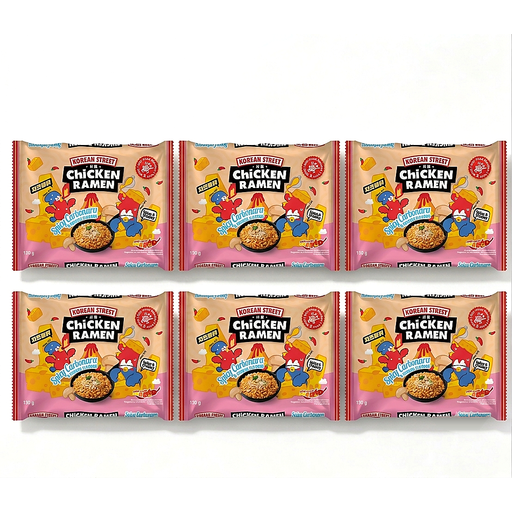
Why This Fits Their Persona: Six 130g portions provide a straightforward way to try creamy spicy instant noodles without committing to a large case. The noodles are prepared in around three to four minutes.
The listed chilli level is 3, helping shoppers set expectations instead of relying only on the carbonara description. The 6-pack also limits over-purchasing.
130g portions; stir-fried format; preparation instructions specify three to four minutes.
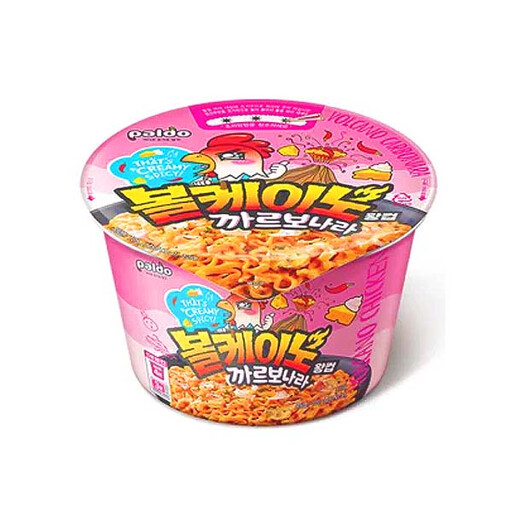
Why This Fits Their Persona: This 105g cup combines thick noodles with separate sauce and powder components, offering a more involved carbonara ramen preparation in a convenient format.
The preparation method clearly states that water must be drained before mixing. This avoids the thin sauce that can result from treating stir-fried noodles like soup.
105g king-cup format; separate sauce and powder; four-minute hot-water preparation.
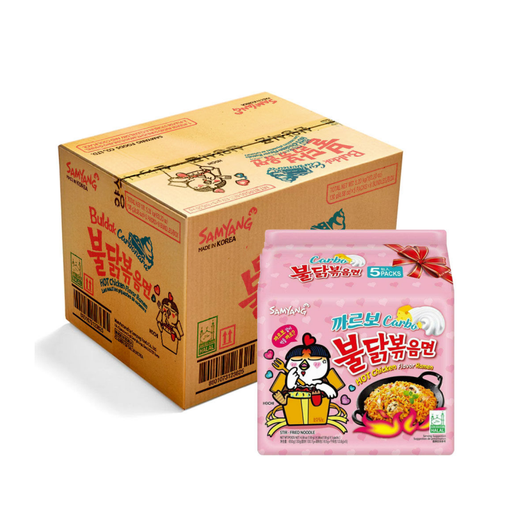
Why This Fits Their Persona: A 40-pack is designed for regular noodle eaters, shared households or anyone wanting a substantial cupboard supply of Samyang carbonara noodles.
The quantity is explicit: 40 individual 130g packs. Shoppers can calculate total portions before ordering rather than mistaking a large outer pack for a small trial bundle.
130g packet portions; Korean product origin listed; liquid sauce and soup powder supplied separately.
If you already have noodles at home, Korean spicy carbonara sauce can be a flexible option. The Korean Street Seongsu Spicy Carbonara Sauce is supplied in a 260ml bottle and is described for use with pasta, rice, chicken, noodles and dipping. It is listed as suitable for vegan and vegetarian diets, but it contains soya and corn and may have traces of other allergens, so check the label carefully.
For a different meal texture, Samyang Carbonara Buldak Dumplings provide a 700g frozen-style dumpling option with a filling containing vegetables, tofu and seasoned ingredients. They can be paired with a small amount of carbonara sauce or served alongside Korean instant noodles.
You can browse the wider carbonara range to compare packets, cups, sauces, dumplings and non-spicy creamy pasta products.
We have compiled a complete, real-time list of products that fully satisfy these strict selection criteria and UK safety regulations.
Some shoppers may find the creamy seasoning more approachable than a plain chilli noodle, but heat varies considerably. Start with a product that lists a moderate heat level or add only part of the sauce. Avoid “volcano” or explicitly extreme-heat products if you are sensitive to chilli.
Not always. Many cup formats need only boiling water, a short standing time and stirring. Packet formats commonly require a saucepan and draining. Check whether the instructions call for 600ml of boiling water, a draining step or microwave preparation before buying for an office or student room.
Add toppings such as spring onions, cooked vegetables, tofu or an egg where suitable. Cheese can increase creaminess, while using less sauce can reduce intensity. Cook all added ingredients safely and check the allergen information for the complete meal.