
24/7 Customer Support

Free returns

Same-day & Next-day Delivery

Quality Guaranteed

Unlock Your Welcome Offers: FREE Delivery | Up to 80% OFF | Free 30-day JoyPlus trial
Download the APP
Korean tteokbokki is a convenient way to enjoy Korean street food at home, but the variety of cups, pouches, rice cakes and sauces can make choosing difficult. Some products are designed for a quick microwave snack, while others require a saucepan and additional ingredients. Flavour descriptions can also be misleading if you do not check the actual sauce, serving size and allergen information.
Before buying, watch for three common pitfalls:
The chewy texture is central to Korean rice cakes, or tteok. Check whether the product contains ready-to-cook rice cakes or a dried noodle-style kit. Products with a high rice percentage may offer a more substantial texture, but preparation still matters.
For example, the Chil Kab King Rice Cake Topokki 400g contains 99% rice in the rice cake ingredient and is supplied frozen. It is a cooking ingredient rather than an instant tteokbokki meal, so it suits shoppers who want to control the sauce and add their own ingredients.
By contrast, many instant tteokbokki cups contain pre-portioned rice cakes and seasoning. These are more suitable for students, office lunches or quick snacks, but the portion is usually smaller.
Check whether the product is:
Microwave instructions are not interchangeable. For instance, several 120–140g cups specify two minutes at 1,000W or three minutes at 700W. Follow the packaging instructions, leave the lid positioned as directed and ensure the food is piping hot before eating.
Tteokbokki sauce commonly combines chilli, sugar, garlic, soya sauce or gochujang-style seasoning. A sweet and spicy tteokbokki may be more approachable for beginners, while hot and spicy varieties suit shoppers who specifically enjoy chilli heat.
Always read the current UK packaging label. Several products in this range contain wheat and soya, while cheese varieties may contain milk, wheat and soya. Some products may also carry “may contain” warnings for fish, crustaceans, sesame, nuts or other allergens.
Nutrition also varies. Sempio Spicy Topokki Sauce lists approximately 225 kcal and 2.5g salt per 100g, while the sauce contains approximately 40g sugar per 100g. This does not make it unsuitable, but it is useful information when planning portions and add-ins.
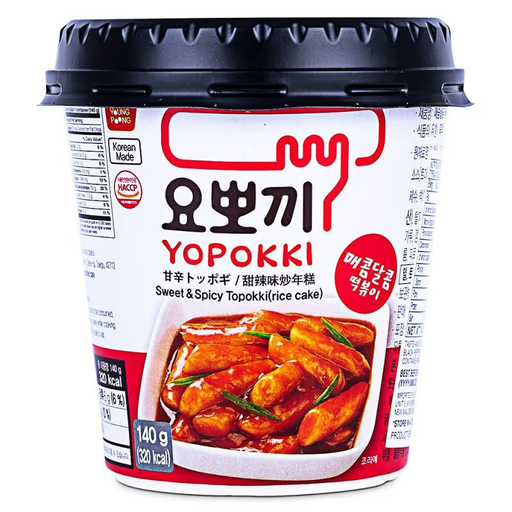
Why This Fits Their Persona: The single-serving cup offers a straightforward introduction to Korean topokki without requiring separate sauce, rice cakes or specialist ingredients.
The preparation time and microwave wattages are clearly specified, helping buyers avoid assuming that every cup cooks identically.
140g single serving; microwave preparation in approximately two to three minutes; sweet and spicy sauce profile.
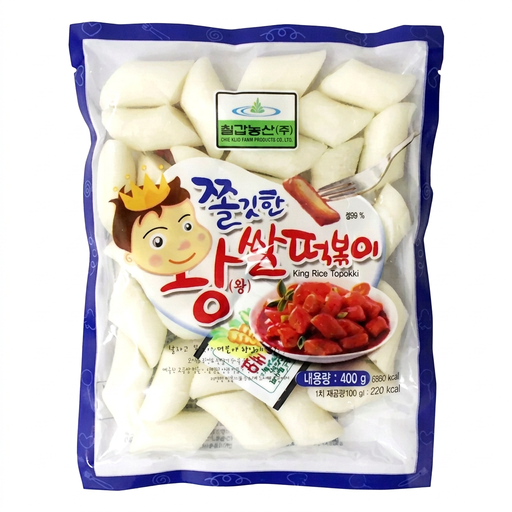
Why This Fits Their Persona: It gives home cooks control over the sauce, cooking time and toppings, making it suitable for a more involved Korean meal.
The listing identifies it as a frozen cooking ingredient, so buyers know to plan freezer storage and provide their own tteokbokki sauce.
400g pack; 99% rice ingredient in the rice cake; suitable for tteokbokki, soup and stir-fries.
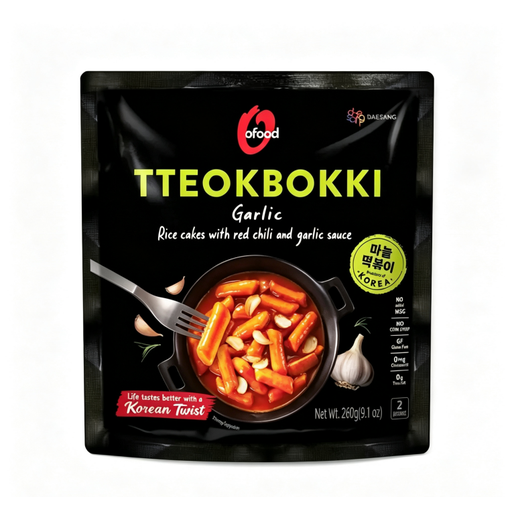
Why This Fits Their Persona: The larger pack is practical for sharing, a filling snack or a quick meal for two, with garlic adding a distinct savoury note.
Its stated 260g quantity and two-serving description make the portion clearer than a small snack cup marketed as a full meal.
260g pack; listed as two servings; cooks in a saucepan in approximately two to three minutes.

Why This Fits Their Persona: This pouch is labelled Halal and offers a larger format for a casual meal, sharing or keeping as an ambient cupboard staple.
The product description identifies its Halal status and lists wheat and soya allergens, allowing shoppers to check suitability before purchase.
Halal-labelled; 240g pouch; stovetop preparation in approximately five to seven minutes; ambient storage before opening.
We have compiled a complete, real-time list of products that fully satisfy these strict selection criteria and UK safety regulations.
You can adjust many Korean rice cake snacks without changing the basic cooking method. Add spring onions, boiled egg or sesame seeds to a spicy cup. A slice of cheese can soften the heat and create cheese tteokbokki, while fish cakes and vegetables make a pouch more substantial.
For a milder, savoury option, consider a jjajang-style product such as Yopokki Halal Jjajang Pouch 240g. Its black bean sauce is described as mildly spiced, with wheat listed as an allergen. Garlic, BBQ-style and soya-garlic flavours provide alternatives to traditional chilli-heavy sauces.
Yes, a sweet and spicy cup or pouch is generally the simplest starting point because the rice cakes and seasoning are portioned together. Beginners should still check the heat description and allergen label, then follow the microwave or stovetop instructions precisely.
Many microwave cups take around two to three minutes, while stovetop pouches commonly take five to seven minutes. Frozen rice cakes take longer because they need thawing and separate cooking with sauce.
Product instructions commonly advise consuming it immediately after preparation. For unopened products, follow the stated ambient or frozen storage conditions. After opening, check the label; some pouches advise refrigeration and consumption within 24 hours.