Volunteers making occasional labels
For a few shelf, cupboard or box labels, a keyboard-led machine avoids setting up software. A preview screen and saved labels can help different volunteers repeat familiar wording.


For occasional short shelf labels made by one person, choose a keyboard-led label maker; for recurring labels across several rooms, consider a connected model that can reuse layouts. Check the tape width against the shelf face and intended viewing distance before choosing wider formats or batch-printing features. A shelf identifier must not replace the supplier hazard label on a hazardous chemical.
For a few shelf, cupboard or box labels, a keyboard-led machine avoids setting up software. A preview screen and saved labels can help different volunteers repeat familiar wording.
Staff and volunteers maintaining several storage areas may need consistent wording and type sizes. Templates and repeat printing become more useful when the same format appears across rooms.
Larger location labels, asset identifiers or frequent batches may call for wider media and a connected workflow. Labels for cupboards containing hazardous chemicals also need a separate safety check; an organisation label is not a substitute for a supplier hazard label.
Start with a sample label on the actual shelf front, then decide whether volunteers need standalone operation or a repeatable design workflow. The concerns below describe different primary needs among consumers choosing a label maker for community-centre shelves.
| Concern | What to check | Who this matters to |
|---|---|---|
| Readable, durable shelf labels | Check the maximum tape width and compatible label material against the shelf face, viewing distance and cleaning conditions. | When I label shelves used by several groups, I need text that stays easy to read through routine handling; around 36% of consumers put legibility and durability first. |
| Ease of use for volunteers | Look at the keyboard, preview screen and ability to save or reprint a common label. | If different volunteers make only a few labels at a time, I want them to work without setting up a computer. Around 29% of consumers prioritise straightforward operation. |
| Consistency across rooms | Check compatibility with the centre's devices and whether layouts can be saved and printed again. | For cupboards in several rooms, I need names and layouts to remain consistent as contents change; roughly 21% of consumers make repeatable formats their primary concern. |
| Larger labels and batches | Test the required label width and check batch-printing and spreadsheet compatibility if those workflows are needed. | When I produce larger location identifiers or many asset labels in one session, individual typing becomes less practical. Wider or batch-produced labels come first for around 14% of consumers. |
A 12 mm label can work for short names but may leave too little room for larger type or two lines. Wider machines are not necessary simply because they offer more space.
Measure the shelf front and mock up the intended wording at its viewing distance before choosing the tape width.
The Health and Safety Executive explains that hazard pictograms and their supporting wording are set out in law. A general shelf or cupboard identifier does not carry the same information as a supplier hazard label.
Keep supplier hazard labels intact. Check the applicable COSHH assessment and Health and Safety Executive guidance before adding a supplementary internal identifier.
Wi-Fi and spreadsheet-linked printing are useful when several devices or repeated batches are involved, but may add little to occasional, individually typed shelf labels.
Count the labels normally made in a session and decide whether shared templates or batch output would actually be used.
Brother P-touch models span keyboard-led desktop labelling and connected printers for repeat work.
DYMO LabelManager models cover portable or desktop text labels, including keyboard-led options and selected computer-connected models.
Brady's label software is relevant when facilities work calls for templates, data import or repeatable printing beyond simple shelf names.
These portable label makers and desktop label printer are options to assess for shelf and cupboard identification. Match each model's label media and working method to the centre's shelves before choosing.
 No image available
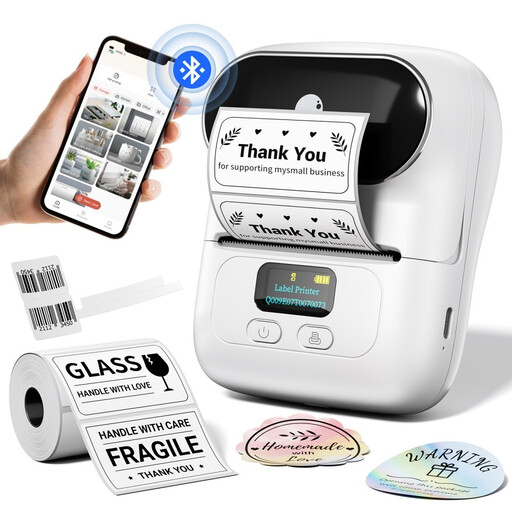
For labels made around the centre, consider this portable model if its compatible rolls fit the shelf fronts.
The product name includes one label roll; check its size, replacement-roll compatibility and material for the intended shelves.
 No image available
For shelf labels prepared at a desk, consider the QL-600B if the centre's computer setup and chosen label media suit the task.
Check the intended DK label material against shelf conditions before standardising a layout.
 No image available
For occasional short shelf labels, consider the portable D30 if its stated 0.59 inch label width accommodates the wording.
Check compatible replacement labels, their suitability for the shelf conditions and any mobile-device requirements.
The right width depends on the shelf front, wording and viewing distance. A short label may fit on 12 mm tape, while larger text or a two-line layout may need more space; test a sample before choosing an 18 mm or wider machine.
Not for occasional labels made individually: a keyboard-led model can handle that task. Consider a connected model if several rooms need matching layouts or staff will regularly reprint labels from saved designs or spreadsheet data; confirm compatibility with the centre's devices.
No: an internal shelf or cupboard identifier must not replace a supplier hazard label. For hazardous chemicals in Great Britain, the Health and Safety Executive explains that hazard pictograms and supporting wording are prescribed; keep the product label intact and check the relevant COSHH assessment before adding internal identifiers.
Check the exact model's compatible tape or roll family, available widths and suitability for the shelf conditions. Also confirm what comes with the machine and which power accessories the centre will need; do not assume media from another model will fit.