What matters when choosing?
Start with how the trays will be handled, then match the available flat space and your preferred way of creating labels to a machine and its compatible tape.
| Concern |
What to check |
Who this matters to |
| Readable labels after handling |
Check the exact compatible tape and its stated resistance properties, then try a label on the tray surface. |
For trays that are handled or wiped often, I want names that remain readable. Around 42% of consumers would put label durability first. |
| Simple, direct labelling |
Check the on-device keyboard and preview, supported tape widths and power arrangement. |
When I only need a few short tray names, I would rather type them on the machine than set up software. Roughly 33% of consumers would make straightforward labelling their main concern. |
| Reusable layouts and visible headings |
Measure the flat tray front; check maximum tape width and compatibility with the device and software you plan to use. |
For labels repeated across trays and folders, I want to reuse a layout or make headings easier to spot. Around 25% of consumers would put design flexibility and visibility first. |
Joybuy product choices
These models offer different approaches to preparing home-office tray labels. Choose by the label-making workflow and tray space you need, and check the compatible label material if trays will be handled or wiped regularly.
 No image available
Phomemo D30 portable label maker, 0.59-inch label width
Consider this portable model if you want to design tray labels on a phone or tablet. Its listed label width is 0.59 inch; check that it fits the tray front and confirm the compatible label material before using it on frequently handled trays.
View on Joybuy
 No image available
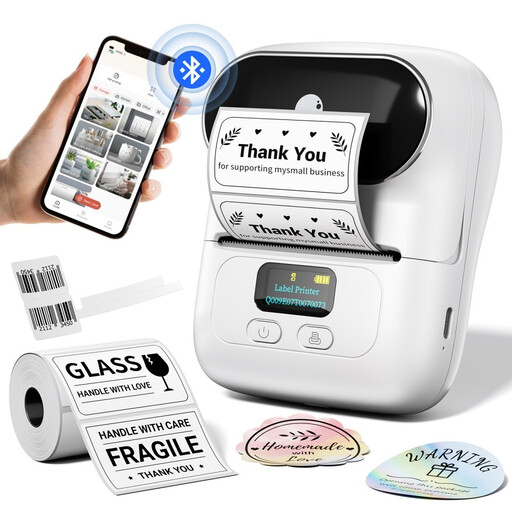
Phomemo M110 portable label maker with 1 label roll
Consider this model if you plan to make repeated designs or larger tray headings. Measure the tray’s flat area before selecting labels, and check the compatible material and adhesive for the surface and expected handling.
View on Joybuy
 No image available
Brother QL-600B label and address printer
Consider this model for filing-style tray labels prepared at a computer. Check that its wired workflow suits where you will work, and choose a compatible DK roll whose material and adhesive suit the tray surface.
View on Joybuy
Common questions
What tape width do I need for classroom trays?
Choose a width that fits the tray’s flat, visible front and keeps your intended text readable. DYMO specifies widths up to 12 mm for the LabelManager 280, Brother up to 18 mm for the PT-D410, and DYMO up to 24 mm for the LabelManager Executive 640 CB; a wider-capable machine is only useful if your label design and tray have room for it.
Are laminated labels worth considering for frequently handled trays?
They are worth considering if tray labels are likely to be rubbed or wiped, provided the tape is compatible with the machine and adheres to the tray. Brother states that compatible TZe tape for the PT-D410 resists water, abrasion, chemicals and temperature extremes; that claim does not establish performance on every tray surface.
Do I need a computer or phone to make tray labels?
No, if you choose a model with on-device entry: Brother’s PT-D410 and DYMO’s LabelManager 280 both offer physical keyboards and preview displays. Consider a connected workflow when you need to reuse layouts or prepare many related labels, and check compatibility with the device and software you intend to use.
How should I dispose of an old electrical label maker in the UK?
Use an appropriate electrical-recycling route rather than putting it in ordinary household rubbish. GOV.UK’s waste electrical and electronic equipment guidance covers electrical equipment, while the UK Recycle Your Electricals campaign advises recycling items with a plug, battery or cable; check the collection options available locally.


