Staff labelling frequently handled bottles
Short, legible names and use instructions need to remain attached through routine handling, splashes and wiping. Check the tape’s stated resistance and test its adhesion on the bottles used in the shop.


Choose the label tape before the printer: bottles that are wiped, handled frequently or exposed to cleaning products need tape suited to those conditions, tested on the actual bottle. A narrow tape may work for a short name, while longer instructions need more label space; if a cleaner is hazardous, a name label cannot replace the supplier’s safety information or the shop’s controls for using it.
Short, legible names and use instructions need to remain attached through routine handling, splashes and wiping. Check the tape’s stated resistance and test its adhesion on the bottles used in the shop.
Clear identification helps staff distinguish bottles, but a short printed name does not replace the supplier’s hazard information. The Health and Safety Executive says employers must assess risks from hazardous substances and manage their use under COSHH.
For labels used mainly on clean, flat surfaces, a portable machine and straightforward tape system may be enough. Do not assume that ordinary adhesion also means the label will withstand cleaning-product contact.
Start with how the bottles are handled and cleaned, then choose a compatible tape and a printer that makes labels in the size you need.
| Concern | What to check | Who this matters to |
|---|---|---|
| Label durability | Check the exact tape’s claims for moisture, abrasion and chemical contact, then test adhesion and readability on the bottle. | If bottles are wiped or handled often, I need their names to stay readable and attached. Around 50% of consumers put label durability first. |
| Routine labelling | Check onboard typing, the cutter and compatible tape widths for the short labels you make repeatedly. | When several bottles need marking during shop work, I want to make consistent labels without interrupting the task for long. Roughly 33% of consumers prioritise a repeatable labelling routine. |
| Occasional use | Check that the tape adheres to the bottle surface and that the machine is practical to store and use when needed. | If I label bottles and supplies only now and then, I value a simple setup more than specialised functions. About 17% of consumers place occasional-use simplicity first. |
The compatible tape determines the available widths and whether its stated properties suit the bottle-marking task. A machine alone does not establish how its labels will behave after wiping.
Check the replacement tape family, width and adhesive option before settling on a printer.
Adhesion to clean, flat plastic is different from resistance to splashes or repeated wiping. Brother and Epson make durability claims for specified tapes; those claims do not cover every tape sold for their machines.
Match the claim to the expected exposure and trial the exact tape on the bottle before labelling the shop’s supply.
Some cleaning products are hazardous. The Health and Safety Executive says employers must assess risks from hazardous substances and provide appropriate information, instruction and training under COSHH.
Use the product’s supplier label and safety data sheet when deciding what information and controls are needed; do not replace hazard information with an improvised bottle name.
Epson identifies the LW-C610 printer as discontinued, even though compatible tape appears in its supplies information.
Before choosing that tape system for a new setup, confirm a currently sold printer accepts the particular tape you intend to use.
Brother’s P-touch range includes the PT-D210VP desktop machine and PT-E110VP handheld model, both supporting tape up to 12 mm wide.
The portable LabelManager 160 accepts D1 tapes in 6 mm, 9 mm and 12 mm widths for straightforward in-shop labels.
Epson’s LabelWorks supplies include a specified 12 mm matte tape for buyers considering a compatible label-making system.
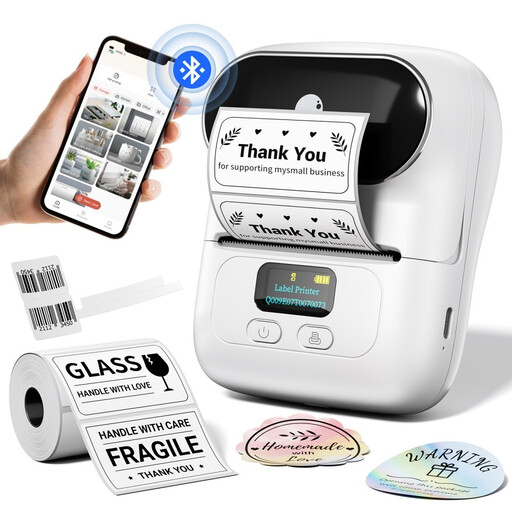
This portable label maker is an option for in-shop bottle identification if its label stock suits the bottles and the way they are cleaned.
 No image available
For marking bottles around the shop, check that the chosen labels will adhere to the actual bottle and remain readable after routine wiping.
Check the roll’s material and adhesive before relying on it where cleaning products may contact the label. Keep the printer dry.
It can serve as an identification label if it adheres and stays readable under the bottle’s actual conditions. DYMO describes standard D1 tape as adhering to clean, flat plastic, metal and glass; for bottles exposed to cleaning products, check the chosen tape’s durability claims and test it on the bottle.
It may be enough for a short bottle name if the text remains legible at that width. Brother’s PT-D210VP and PT-E110VP support tape up to 12 mm; if the label needs larger text or more instructions, check a compatible system with a wider tape.
No: a name label alone does not address the risks of using a hazardous cleaner. The Health and Safety Executive says employers must assess risks from hazardous substances under COSHH; use the actual product’s supplier label and safety data sheet to determine the relevant information and controls.
No. The Health and Safety Executive distinguishes GB CLP for chemicals placed on the Great Britain market from EU CLP for chemicals placed on the Northern Ireland market. Check the requirements that apply to the shop’s location and the particular product rather than assuming one set of rules covers both.