Walk-up filing volunteers
For a few labels made beside the filing cabinet, a keyboard-equipped machine avoids relying on a shared computer. Check that its compatible tape width fits the folder spine or front.


Choose a label maker with its own keyboard if volunteers mainly print a few folder labels at the filing cabinet. For repeated runs with consistent wording, consider a computer- or mobile-connected printer instead, provided the centre has a compatible device and a workable template. In either case, check the tape system and folder fit, and keep personal information on visible labels to what the filing purpose requires.
For a few labels made beside the filing cabinet, a keyboard-equipped machine avoids relying on a shared computer. Check that its compatible tape width fits the folder spine or front.
When many folders need the same naming structure, a connected printer may help an administrator prepare labels from a template or list. The centre will also need a suitable device and software workflow.
Where visible labels could reveal personal information, agree a clear folder-code or category convention before printing. The Information Commissioner’s Office advises that personal data be limited to what is necessary for its purpose.
Decide where and how often labels will be made before comparing printers. Then check the label surface, compatible supplies and what information staff need to see.
| Concern | What to check | Who this matters to |
|---|---|---|
| Quick labels at the filing point | Look for an integrated keyboard and a compatible tape width that fits the intended folder surface. | If I only label a few folders at a time, I want volunteers to type a title without finding a shared computer. Around 40% of consumers put that self-contained workflow first. |
| Consistent labels across a filing run | Check compatibility with the centre’s device and software, and whether templates or list-linked labels are needed. | For a long run of programme files, I need the wording to follow one format rather than retyping each title. Roughly 30% of consumers prioritise that repeatable workflow. |
| Readable, appropriate folder labels | Match the tape family and width to the printer and folder; agree which identifiers may appear on visible labels. | When folders receive regular handling or contain personal information, I need labels staff can read without exposing unnecessary details. About 30% of consumers place those handling and records needs first. |
Brother’s PT-D210VP uses TZe cassettes, while the DYMO LabelManager 160 uses D1 tapes. A matching width does not make the cassettes interchangeable.
Choose the required width and label format alongside the printer, then check how the centre will obtain replacement cassettes.
Keeping two incompatible printer families means maintaining separate replacement-tape supplies.
Templates and list-linked labels are useful for repeated runs, but a volunteer making a few titles still needs access to the connected device and its software.
If labels are mostly made one at a time at the cabinet, compare that setup with a machine that has its own keyboard.
A folder title can be seen by people who do not need the details inside. The Information Commissioner’s Office says personal data should be limited to what is necessary for the purpose.
Check the centre’s records policy and use a consistent code or category where it lets authorised staff retrieve the folder without putting names or sensitive descriptions on the outside.
Changing an unsuitable labelling convention can also mean relabelling existing folders.
Brother’s P-touch range includes keyboard-equipped and connected approaches to file and folder labelling.
DYMO’s LabelManager system uses D1 tapes; DYMO identifies files and binders as uses for those labels.
Epson’s LabelWorks LW-K400 provides a reference for centres checking tapes for existing equipment.
These printers are relevant to folder-label work using a computer or mobile-device workflow. If labels must be typed directly at the filing cabinet without another device, check the controls before choosing one.
 No image available
Consider this model for repeated folder-label work if its computer-based workflow suits the administrator preparing the labels.
Measure the folder surface and confirm that the chosen label-roll format fits before ordering supplies.
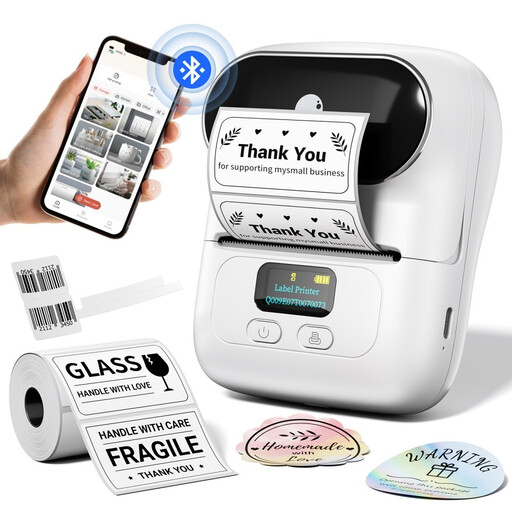 No image available
For an administrator making folder labels away from a desk, check whether the mobile-device workflow fits the centre’s routine.
Confirm that the required label size fits the folders and that compatible replacement supplies can be obtained.
 No image available
Consider this portable model for office-file labels if its mobile-device workflow suits the person making them.
The product title states a 0.59 inch label width. Check that width against the usable folder surface and confirm compatible replacement supplies.
Choose a width that fits the usable flat area of the folder spine or front and is compatible with the printer. Brother lists tape up to 12 mm wide for the PT-D210VP and up to 24 mm for the PT-P710BT; a wider tape is only useful where the folder has room for it.
Not unless the tape is specified as compatible with each model. Brother’s PT-D210VP uses TZe cassettes, whereas DYMO’s LabelManager 160 uses D1 tapes; check both the tape family and width when buying replacements.
Only if that information is necessary for the centre’s filing purpose. The Information Commissioner’s Office says personal data must be limited to what is necessary; check the centre’s policy and whether a code or category lets authorised staff find the file instead.
Yes, a short convention can help staff apply folder identifiers and classifications consistently. The Information Commissioner’s Office’s records-management guidance addresses documented record-creation and classification processes; agree the visible wording and who may change labels before a large filing run.