Shared-workshop organisers
Organisers need members to use the same album names, project codes and return locations. A straightforward way to enter and preview short labels helps people follow one agreed format rather than improvising each time.


For several people making short, consistent album or box labels, a standalone keyboard label maker is a practical starting point; choose its tape width to fit the surface you will actually label. Consider more durable tape for frequently handled external storage, or an app-led printer if one person will prepare labels in batches. For valued or historic photographs, keep ordinary adhesive labels off the photographs and uncertain album materials: identify an external box, slipcase or removable holder instead.
Organisers need members to use the same album names, project codes and return locations. A straightforward way to enter and preview short labels helps people follow one agreed format rather than improvising each time.
Labels on boxes, shelving and suitable album exteriors need to remain legible through regular handling. Brother and DYMO describe resistance to wear for particular tape ranges, but the chosen adhesive must also suit the surface.
When albums contain older or sensitive photographs, label placement matters more than adhesive strength. The National Archives warns that self-adhesive materials can contribute to photograph deterioration; an external enclosure or removable identification holder keeps an ordinary workshop label away from the collection.
Decide where the identification can go before choosing a printer. Then check whether its workflow and compatible labels suit the people making them and the surface being labelled.
| Concern | What to check | Who this matters to |
|---|---|---|
| Lasting legibility | Check the exact tape range, width and intended external surface. Brother describes its TZe laminated tape as resistant to water and abrasion; DYMO makes wear-resistance claims for its durable D1 range. | If storage boxes are handled repeatedly, I need their labels to stay readable without choosing an adhesive that is unsuitable for the surface. Around 42% of consumers put durability first. |
| A repeatable workflow | Check how users enter and preview text, cut labels and share a consistent format. Decide whether everyone needs to print independently or one person will manage an app. | When several people return albums, I want each person to make the same short, recognisable label without waiting for a designated printer operator; for around 33% of consumers, an easy shared workflow is the primary need. |
| Photograph care | Check whether adhesive would touch a photograph or uncertain album material. For sensitive collections, use an external enclosure, holder or suitably specified conservation material. | If an album contains old or fragile photographs, I would rather identify its box or a removable holder than stick ordinary tape onto it. Avoiding unsuitable adhesive comes first for around 25% of consumers. |
Resistance to rubbing or moisture says nothing about whether an adhesive belongs on a photograph or an ageing album. The National Archives cautions that self-adhesive materials can contribute to photograph deterioration.
Put ordinary durable labels on suitable external boxes or shelving. For historic or uncertain albums, use an enclosure, removable holder or identification material specified for the collection.
A printer is useful only if its compatible cassette or label stock comes in a width that fits the intended spine, box or holder.
Measure the usable surface, choose a legible format and confirm the exact consumable family before buying. Brother lists 3.5, 6, 9 and 12 mm labels for the PT-D210VP; those widths should not be assumed to fit another model.
Specialised identification features may not help when the workshop mainly prints titles and owner codes. Brother positions the PT-E110VP as a trade-oriented handheld model.
Choose those controls if your wider labelling work calls for them; otherwise, concentrate on a suitable tape, readable text and a workflow the album users can share.
Different abbreviations and text layouts make albums harder to recognise and return, even if the labels themselves remain attached.
Agree on a short convention, such as collection name and project code, then try it on the intended external surface before making labels for the whole collection.
A standalone tape-label route with models for everyday identification and trade-oriented work.
A LabelManager tape-label route with portable and desktop options and different D1 tape types.
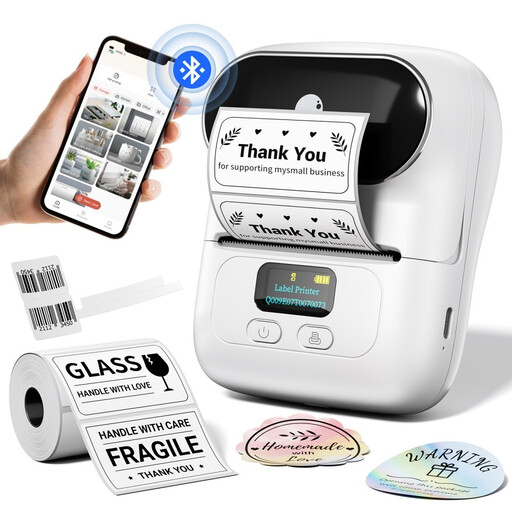
An app-led route for a designated person preparing workshop labels.
These choices include portable label makers and a desktop label printer to consider for external album-storage labels. Compare their label formats and printing workflows with your workshop routine; none should be treated as an archival label for direct contact with photographs.
 No image available
Consider this portable model if one organiser will prepare labels for external storage in batches. The listed bundle includes one label roll; check the compatible label dimensions, adhesive and printing workflow against your chosen format.
 No image available
Consider its stated 0.59 inch label width against a measured album holder or box face. Check the compatible stock, adhesive and printing workflow before relying on it for frequently handled workshop labels.
 No image available
Consider this desktop printer if labels will be prepared at a designated workstation rather than independently by each album user. Check its connection requirements and the dimensions and surface suitability of compatible labels before choosing it.
Keep ordinary adhesive labels off photographs and albums with old, fragile or uncertain materials. A robust modern cover calls for a separate decision about its surface and whether you can accept difficult removal; for a sensitive collection, label a slipcase, storage box or removable holder instead. The National Archives cautions that self-adhesive materials can contribute to photograph deterioration.
Measure the flat area first, then try a short title or code at a legible size. The Brother PT-D210VP accepts 3.5, 6, 9 and 12 mm labels according to Brother; check the widths and cassette family of whichever printer you choose rather than assuming they are interchangeable.
Yes, if you choose a standalone keyboard model that fits your label format. That avoids making every user depend on a designated person’s phone, though you should still check the exact model’s text-entry controls, compatible tape and power arrangements before buying.